In today’s global marketplace, shipping Japanese products overseas can be challenging without the right partner. This article guides international buyers and cross-border sellers through the essential steps to export from Japan to New Zealand, covering regulatory basics, packaging and documentation, and practical tips to reduce costs. You’ll learn how to identify trustworthy Japan-forwarding services, compare pricing and coverage, and understand insurance and tracking options to protect your shipments. With clear workflows—from pickup to customs clearance and delivery—you’ll discover how a reliable forwarding solution can streamline EC shipments (Amazon, eBay, Shopify, Shopee), bulk business cargo, and direct-from-supplier transfers. Practical examples illustrate common shipping scenarios, such as customer orders from Japan to New Zealand, direct pickups from Japanese suppliers, and preparations for CFAs or FBA deliveries. This guide emphasizes not only cost efficiency and speed but also risk minimization through inspection, proper packaging, and compliant documentation, empowering you to expand your international reach with confidence.
- Understanding the Basics of Shipping Japanese Products to New Zealand
- Shipping Rates from Japan to New Zealand
- How It Works
- Transit Time
- Cost Components
- Knowledge About Restricted and Dangerous Goods (Including CITES/Washington Convention Items)
- Smart Ways to Choose a Cost-Effective and Reliable Forwarding Partner
- Introduction: Affordable and Reliable Shipping Partners from Japan to Overseas
- Preparation Before Shipment and Packing Tips
- How to Place an Order (Easy Japan Proxy Buying & International Shipping)
- Japanese Product Shopping Agent Service – Buy from Japan and Ship Worldwide
- Supported Japanese Shopping Platforms
- Shipping Procedure Flow
- Buying Japanese Products from Overseas – Easy, Safe, and Reliable Worldwide Delivery
- Japanese Product Shopping Agent Service – Buy from Japan and Ship Worldwide
- Supported Japanese Shopping Platforms
- Important Operational Notes
- Final Summary and Business Advantage
Understanding the Basics of Shipping Japanese Products to New Zealand

For overseas buyers and businesses, sending Japanese products to New Zealand hinges on clear export and import fundamentals. This section outlines the essential rules, requirements, and practical steps to ensure smooth cross-border logistics from Japan to New Zealand. By aligning documentation, duties, and regulatory expectations early, you can minimize delays, prevent compliance issues, and optimize total landed cost.
Export and Import Fundamentals: Rules and Requirements
To ship Japanese goods to New Zealand efficiently, it is crucial to grasp both sides of the border: export from Japan and import into New Zealand. Key considerations include:
– Trade classification and HS codes: Accurately classify products to determine duties, taxes, and any controlled status. Incorrect codes can trigger delays or penalties.
– Commercial invoice and packing list: Provide detailed item descriptions, quantities, unit values, country of origin, and total value. This supports validation by customs and accurate duty assessment.
– Export declarations: Some goods require export documentation submitted by the Japanese exporter, including consignee and destination details. Ensure accuracy to avoid hold-ups at departure.
– Certificates and licenses: Certain items (such as electronics with restricted components, textiles, or food products) may need special licenses, safety certifications, or conformity assessments. Verify requirements before shipment.
– Incoterms and responsibility: Establish who bears costs and risk at each stage (ex works, FOB, CIF, DAP, etc.). A clear agreement reduces disputes and hidden charges.
– Compliance with Japan’s export controls: Confirm that your product is not restricted or prohibited for export, and adhere to declarations for value, quantity, and end-use.
– New Zealand import duties and taxes: Prepare for duties, Goods and Services Tax (GST), and possible border processing fees. Some items may be eligible for preferential rates under trade agreements or relief programs.
– Packaging and labeling: Use durable packaging that meets carrier and regulatory standards. Labeling should reflect accurate product information, including country of origin and handling instructions if necessary.
Practical tip: Work with a forwarding partner that offers end-to-end export documentation and knows New Zealand customs requirements to minimize errors and delays.
Key Points for Verifying New Zealand Import Regulations
Before shipping, confirm these regulatory checkpoints to ensure your goods clear customs smoothly in New Zealand:
– Product eligibility: Verify that the item is permitted for import and not restricted or prohibited. Some goods require authorizations or have import prohibitions (e.g., certain plant or animal products, cosmetics with restricted ingredients).
– Customs tariff classification: Determine the correct tariff code to calculate duties and GST accurately. Incorrect classification can lead to post-entry adjustments and penalties.
– GST registration and collection: NZ GST applies to most imports. If you or your business exceed threshold values or operate as a non-resident supplier, understand GST obligations and filing timelines.
– Biosecurity and sanitary standards: New Zealand maintains strict biosecurity controls. Food, agricultural, or animal-origin products may face additional inspections or prohibitions. Some items require treatment or accompanying certificates (e.g., phytosanitary or veterinary clearance).
– Safety and product standards: Electrical compliance, product safety markings, and labeling requirements (such as language, safety warnings, and certifications) must be satisfied prior to import.
– Origin and preferential schemes: If applicable, verify origin criteria to benefit from reduced duties via free-trade agreements or tariff concessions.
– Documentation: Prepare a complete set of documents, including commercial invoice, packing list, airway bill or bill of lading, certificate of origin, and any licenses or certificates required for the specific product.
– Regulatory changes: Keep an eye on updates to NZ customs rules, biosecurity notices, and product-specific guidance, as changes can affect clearance times and costs.
Proactive due diligence with a knowledgeable forwarding partner can dramatically shorten clearance times and reduce the risk of surprises at the border.
Shipping Rates from Japan to New Zealand
◇Shipping Rate Table (Prices Shown as Rate per Weight)
Japan→New Zealand
【New Zealand Export — Preferred Rates】
0.5kg :3,649 JPY
1kg :4,353 JPY
1.5kg :5,195 JPY
2kg :5,822 JPY
2.5kg :6,485 JPY
3kg :7,095 JPY
3.5kg :7,741 JPY
4kg :8,316 JPY
4.5kg :8,981 JPY
5kg :9,554 JPY
5.5kg :10,298 JPY
6kg :10,870 JPY
6.5kg :11,317 JPY
7kg :11,836 JPY
7.5kg :12,356 JPY
8kg :12,559 JPY
8.5kg :12,764 JPY
9kg :12,930 JPY
9.5kg :13,209 JPY
10kg :13,431 JPY
10.5kg:25,080 JPY
11kg :25,552 JPY
11.5kg:26,020 JPY
12kg :26,492 JPY
12.5kg:26,994 JPY
13kg :27,463 JPY
13.5kg:27,857 JPY
14kg :28,292 JPY
14.5kg:28,723 JPY
15kg :29,266 JPY
15.5kg:29,481 JPY
16kg :29,555 JPY
16.5kg:29,626 JPY
17kg :29,660 JPY
17.5kg:29,731 JPY
18kg :29,768 JPY
18.5kg:29,808 JPY
19kg :29,950 JPY
19.5kg:30,024 JPY
20kg :30,058 JPY
※UPS fastest service level with tracking number included.
※We also support Japan Post EMS, International ePacket, standard air shipping, SAL, and sea freight. If you prefer any of these options, please let us know.
【New Zealand Export — Preferred Rates】
・21-49kg :1,000 JPY per 1kg
・50-99kg :890 JPY per 1kg
・100-299kg:750 JPY per 1kg
・300-499kg:730 JPY per 1kg
・500-999kg:720 JPY per 1kg
・1000-2000kg:690 JPY per 1kg
The above rates are quoted as a per-kilogram unit price. For the total shipping cost by weight bracket, please refer to the examples on the right.
In addition to the shipping charges above, a fuel surcharge will apply. Fuel surcharge rates may be revised monthly or weekly depending on the carrier you use.
Customs duties, import VAT/sales tax, and other destination charges incurred at local customs clearance will be billed to the consignee (recipient) by the carrier.
How It Works
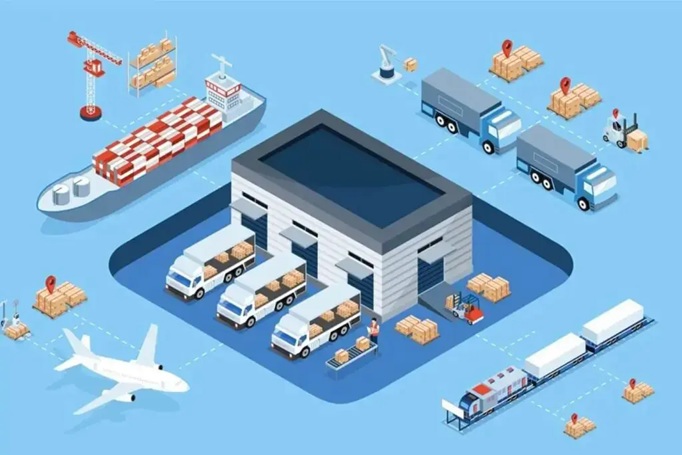
world wide courier provides international logistics and air freight forwarding services for trading businesses that need professional shipping support.
We support both export and import shipments to and from New Zealand, China, Hong Kong, South Korea, Europe, North America, Southeast Asia, Africa, and many other countries worldwide.

By using major courier networks (FedEx, UPS, DHL), we ensure stable and fast delivery. In addition, our highly competitive shipping rates help reduce your ongoing logistics costs and lower your overall procurement cost.
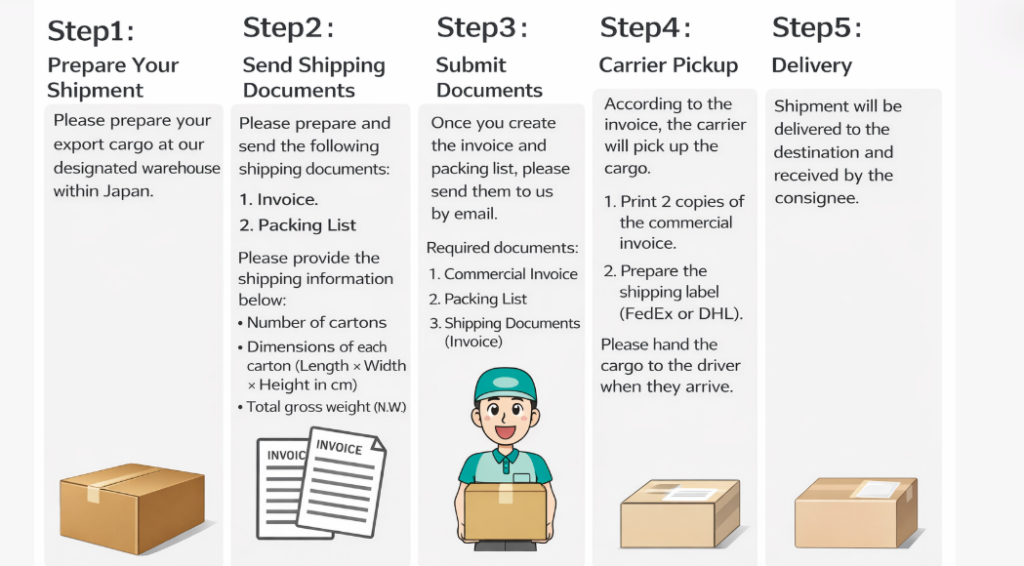
Step 1: Prepare the Shipment
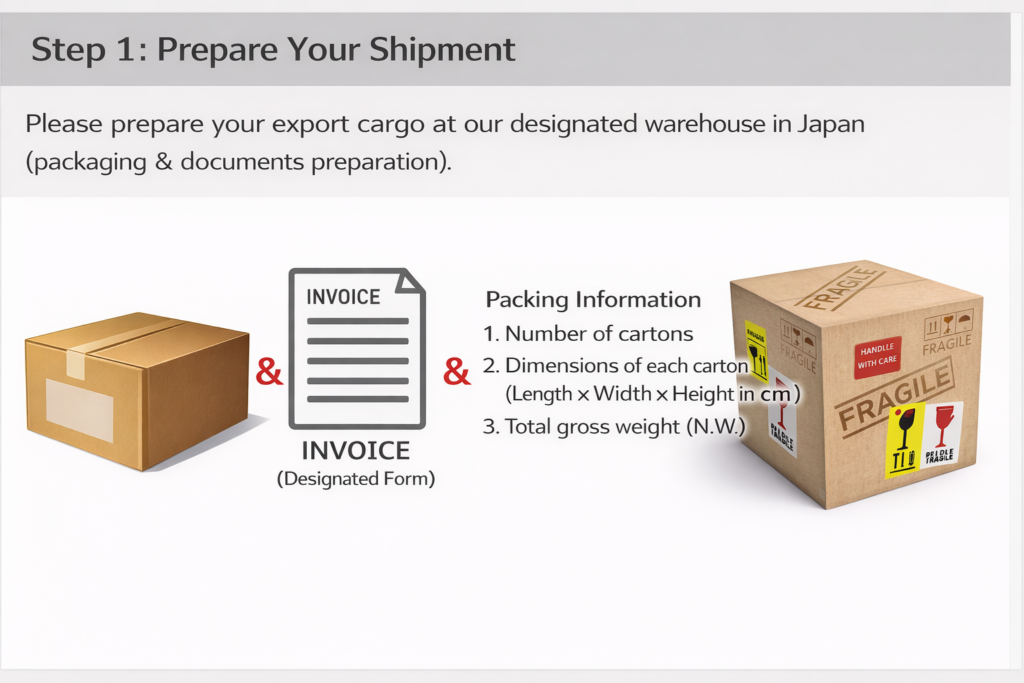
Prepare the shipment at the domestic pickup location (packing and documentation preparation).
Step 2: Email the Shipping Documents to Us (Invoice + Packing Details)
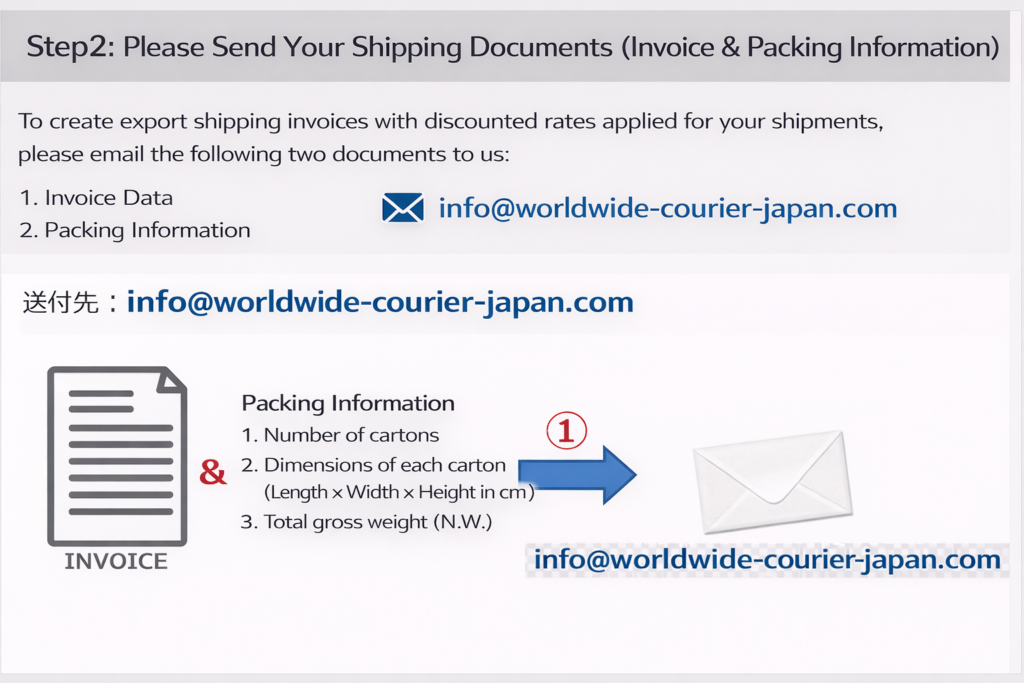
We will create the shipping documents using the special discounted rates provided for each customer. Please email the following two documents to our office as attachments.
1. “Invoice”
2. “Packing List”
Email: info@worldwide-courier-japan.com
<Common Invoice Items That Are Often Missing>
1. Postal code (shipper side / pickup location)
2. Contact person name (shipper side)
3. Phone number for the pickup location (shipper side)
※The above three items are required to create the documents.
If any of these are missing, we cannot issue the documents, so please confirm in advance before requesting shipping.
<Required Packing List Information>
1. Total number of cartons/boxes
2. Dimensions of each carton (L cm × W cm × H cm — all three sides required)
3. Total weight (N.W.): total weight after packing
※In some cases, the packing list is missing these required details. These are necessary for document creation, so please confirm in advance.
※If you do not have a packing list, please confirm the above information with the shipper and share it with us.
<About “Chargeable Weight,” Which Determines the Shipping Cost>
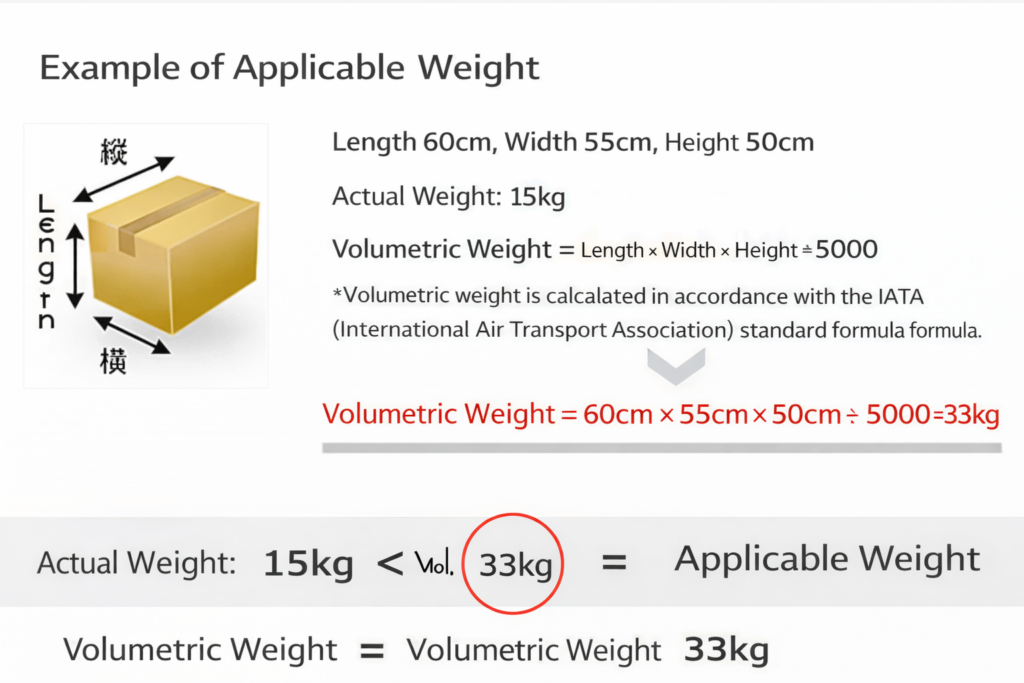
Based on IATA (International Air Transport Association) standards, the greater of the “actual weight after packing” and the “volumetric (dimensional) weight” is used as the “chargeable weight.”
Step 3: We Email You the Two Documents Required for Shipment (Air Waybill/Label + Invoice)
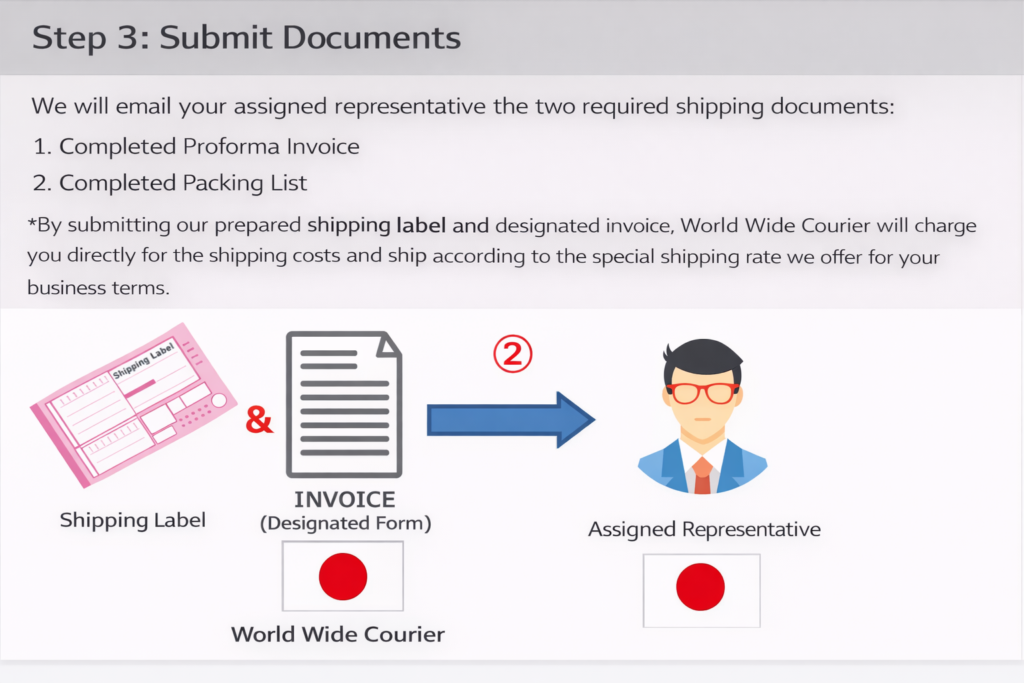
We will email the two documents required for shipping (air waybill/label and invoice) to your 담당者.
1. We confirm missing details in the “Invoice” and “Packing List” you provided.
2. Based on those documents, we create the “Air Waybill/Label” and the “Invoice (official format)” and email them to you.
※When you ship using the documents created by us, the shipping charges are billed to us. This allows you to ship using your customer-specific discounted rates. Under your trading terms, we will invoice you for the shipping charges accordingly.
Step 4: Courier Pickup at Your Location / Domestic Warehouse — Shipment Dispatched
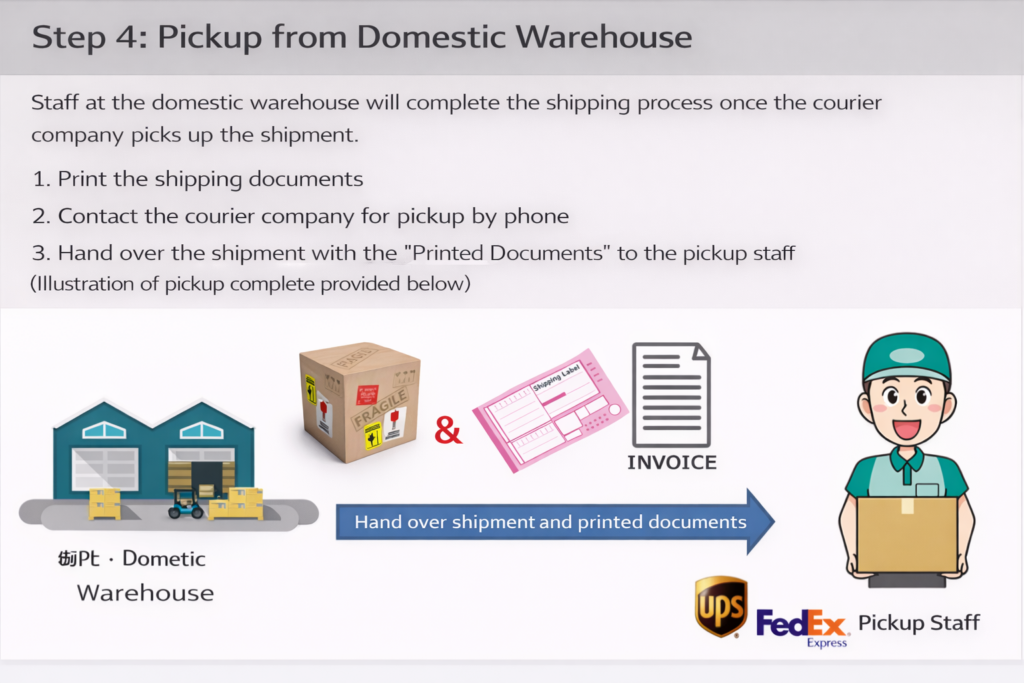
At the pickup location in Japan:
1. Print the documents
2. Call the courier to request pickup
3. Hand the shipment and the two printed documents to the pickup driver to complete dispatch
Step 5: Delivery and Receipt
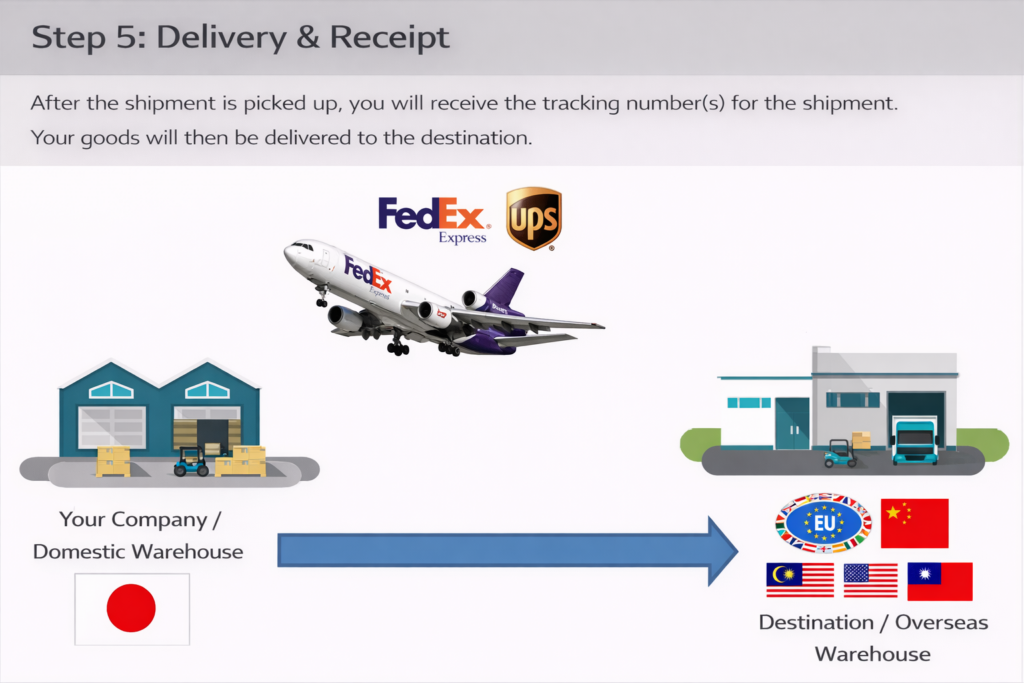
After dispatch, we will provide your tracking number. The shipment will then be delivered to the destination.
We offer good service. world wide courier offers affordable international delivery from Japan to New Zealand via air freight and sea freight.
Transit Time

Estimated Delivery Days (Japan → New Zealand)
Estimated delivery time is approximately 4–7 days from the local dispatch date.
Delivery may be delayed due to customs conditions, weather, or other unforeseen circumstances. Thank you for your understanding.
world wide courier provides affordable delivery from Japan to New Zealand via air freight and sea freight. We support both exports and imports, so please contact us for inquiries or consultations.
Cost Components
1. Shipping fee + fuel surcharge (billed by us to you)
2. Import duty, import VAT/sales tax, customs clearance fees, and other charges incurred at destination customs (billed by the carrier to the recipient)
About “chargeable weight,” which determines shipping costs:
Based on IATA standards, the larger of “actual packed weight” and “volumetric (dimensional) weight” is used as the chargeable weight.
Knowledge About Restricted and Dangerous Goods (Including CITES/Washington Convention Items)
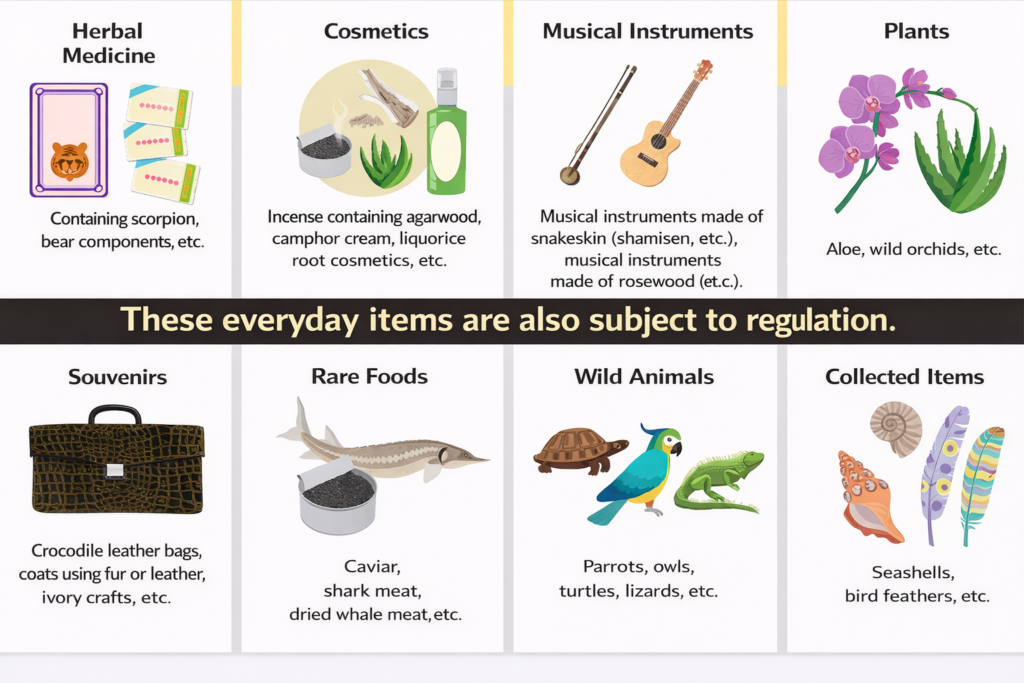
A–E: Compressed gas, alcohol products, flammable liquids, medicines, medical devices, liquids
F–K: Firearms, ammunition, stock certificates, precious metals, fruits, woven mats, volatile items, stamps, ice
S–T: Securities, bonds, oxidizing substances, sprays, plants, firearms-related items, perishable foods, letters/documents, magnets
T–N: Swords/blades, seeds, tobacco products, animals, poisons/toxins, currency, gambling items
N: Perishable goods, meat products
H–M: Jewelry, explosives, spoiled/rotting items, artwork, pornography, powders
M: Narcotics
Y–R: Chemicals/drugs, valuables/securities
R–W: Dairy products, lighters, items regulated under the Washington Convention (CITES)
In addition to the items listed above, there may be other prohibited items. Please contact us directly for details.
Some items may also be subject to handling restrictions or value limits.
The above is a complete guide to affordable shipping from Japan to New Zealand.
The cost of shipping from Japan to New Zealand depends on several factors including package weight, parcel dimensions, and shipping speed. Express courier services generally cost more but provide faster delivery.
For example, sending a small parcel weighing two kilograms from Japan to New Zealand using EMS may cost approximately 5,000 to 9,000 yen depending on size and delivery options.
Smart Ways to Choose a Cost-Effective and Reliable Forwarding Partner

Choosing the right forwarding service from Japan to overseas markets is crucial for cost efficiency, reliability, and smooth logistics. This chapter provides practical guidelines on evaluating pricing, service quality, and risk management. By focusing on total value rather than just the lowest quote, you can ensure consistent delivery times, proper customs handling, and secure transit for your shipments.
Pricing Structure and Tips for Cutting Costs
Understanding how forwarders price their services helps you compare offers accurately and identify savings opportunities. Key elements to review include:
• Base rates vs. supplemental charges: Look for hidden fees such as fuel surcharges, remote area collection/delivery fees, documentation handling, and packaging surcharges. A transparent breakdown is essential for true apples-to-apples comparisons.
• Consolidation and route optimization: Forwarders that consolidate shipments and optimize routing can significantly reduce per-unit costs. Ask about their consolidation timelines and any minimum volume requirements.
• Door-to-door vs. port-to-port: End-to-end forwarding typically costs more but saves time and labor. If you only need certain legs handled, ensure the quote clearly indicates what is included and excluded.
• Incoterms and duties handling: Some providers include export documentation and duty/tax estimates, while others bill separately. Clarify who bears duties, taxes, and clearance fees for each shipment.
• Packaging and load optimization: Proper packaging reduces damage risk and may lower insurance premiums. Enquire about recommended packaging standards and whether the forwarder offers packaging services.
Practical tips to reduce costs without sacrificing service quality:
• Bundle shipments from the same supplier or buyer to maximize consolidation benefits.
• Use a single forwarder for recurring shipments to leverage volume discounts and better transit planning.
• Schedule shipments to avoid peak seasons when possible to reduce expedited or premium freight charges.
• Review and update product codes and HS classifications to minimize customs delays and misclassification retries.
• Ask for a monthly or quarterly rate review to adjust for changes in fuel or line-haul costs.
Checklist for Evaluating Track Record and Reputation
A forwarder’s track record influences delivery reliability, compliance, and risk management. Use this checklist to verify credibility and performance:
• Company background and accreditation: Confirm years in business, ownership structure, and industry certifications (e.g., customs brokerage licenses, IATA/FIATA affiliations).
• Global network and carrier relationships: Assess their ability to access reliable carriers, regional partners, and efficient routing to your target markets (200+ countries experience is a strong indicator).
• Compliance and regulatory expertise: Look for deep knowledge of export controls, import regulations, sanctions screening, and product-specific restrictions relevant to your goods.
• Transit time and reliability metrics: Request average transit times, on-time delivery rates, and recent performance reports for similar shipment profiles.
• Case studies and references: Ask for references from clients with comparable products, shipment volumes, and destinations. Follow up on feedback regarding communication and issue resolution.
• Claims and dispute handling: Inquire about their claims process, typical resolution timelines, and historical claim frequency.
• Visibility and communication: Ensure real-time tracking, proactive status updates, and clear escalation paths for exceptions or delays.
• Financial stability and insurance: Review credit terms, payment methods, and the scope of cargo insurance coverage offered or recommended.
Insurance and Tracking Service Comparison
Insurance and tracking are critical for protecting value and maintaining control across the supply chain. Compare these aspects across shortlisted providers:
• Cargo insurance coverage: Verify coverage limits, per-item limits, and whether the policy covers theft, loss, and damage during all legs (origin, transit, and destination). Check exclusions and whether you can customize coverage for high-value goods.
• Insurance pricing and deductibles: Understand premium structures (flat rate vs. percentage of goods value) and deductible amounts. Ask whether coverage applies to partial shipments or consolidated consignments.
• Claims process and service levels: Assess the ease of filing claims, required documentation, and typical settlement timelines. A provider with a responsive dedicated claims team reduces downtime.
• Tracking granularity and accessibility: Compare the level of shipment visibility (e.g., door-to-door scans, in-transit updates, ETA alerts) and whether updates are available via email, portal, or API integration.
• Customs and documentation tracking: Ensure the forwarder can monitor and inform you about customs clearance status, duties payments, and any documentation issues that arise.
• Security and tamper-evidence: Look for tamper-evident packaging options, secure handoffs, and verified pick-up/drop-off procedures to minimize loss risk.
• Service continuity and contingency planning: Confirm how the provider handles disruptions (weather, port congestion, strikes) and whether alternative routes or carriers are readily available.
• Cost-benefit balance: Weigh the added cost of premium tracking or insurance against the value of enhanced visibility, faster claims processing, and reduced risk of delays.
By systematically assessing pricing transparency, proven performance, and robust protection options, you can select a forwarding partner that delivers reliable overseas shipping from Japan while optimizing total cost and risk management.
Introduction: Affordable and Reliable Shipping Partners from Japan to Overseas

For overseas buyers and cross-border sellers, finding a shipping partner that combines cost efficiency with reliable service from Japan is essential. This article introduces how to identify affordable options, why Japanese products will continue to see growing demand abroad, and recommends service providers that handle both exports from Japan and imports to Japan, plus procurement support from Japanese sourcing agencies. By focusing on Japan-forwarding specialists who cover end-to-end logistics—from pickup to delivery—international buyers can streamline sourcing, reduce costs, and improve delivery times.
Why Japanese Products Will Continue to See Growing Overseas Demand
Japan’s reputation for high-quality, innovative goods spans electronics, cosmetics, automotive accessories, and craftsmanship. Consumers worldwide increasingly seek authentic Japanese products, driven by reliability, strong after-sales support, and trusted brands. E-commerce platforms amplify demand, while retailers and boutique shops push for steady, scalable supply. As cross-border shopping grows, the ability to efficiently move goods from Japan to international markets becomes a strategic differentiator. A robust, cost-effective shipping framework further accelerates market access for overseas buyers and sellers alike.
Recommended Logistics Partners That Handle Both Exports from Japan and Imports to Japan
Choosing a forwarder that manages exports from Japan and imports back into Japan can simplify compliance, reduce delays, and secure favorable rates. Look for providers offering:
- Nationwide pickup coverage in Japan, ensuring flexible collection from manufacturers, suppliers, or warehouses.
- End-to-end services including packing optimization, customs clearance, and route optimization for cost savings.
- Ability to handle commercial shipments, e-commerce orders, and large-volume cargo with scalable solutions.
- Transparent pricing with direct rates (no unnecessary middlemen) and robust insurance options.
These characteristics help ensure predictable timelines, lower total landed costs, and a smoother cross-border experience for buyers from Asia, Europe, the Americas, and beyond.
Japanese Sourcing Agencies that Can Help with Purchasing for Overseas Clients
Beyond shipping, some Japanese agencies specialize in procurement on behalf of overseas buyers. They can verify products, manage supplier communications, place orders, consolidate shipments, and coordinate export documentation. When selecting a procurement partner, consider:
- Expertise in the target product category and familiarity with Japanese supplier standards.
- Clear terms for payment, sampling, and quality control, including pre-shipment inspection.
- Ability to align with the chosen forwarder to minimize handling steps and reduce delays.
- Transparent pricing for sourcing, QA, and coordination with logistics partners.
Utilizing a procurement-focused partner in combination with a reliable Japan-to-overseas forwarding service can significantly shorten lead times, improve product consistency, and optimize landed costs for international buyers.
Preparation Before Shipment and Packing Tips

Effective pre-shipment preparation and robust packing are essential for smooth international shipping from Japan. By aligning packaging standards with destination regulations, carriers’ requirements, and buyer expectations, you can minimize delays, reduce damage, and ensure cost-efficient deliveries. This section provides practical guidance on packaging standards, material selection, and the key steps to complete accurate customs documentation.
Packaging Standards and Material Selection
Choosing the right packaging materials and adhering to shipping standards protects products during transit and supports faster clearance. Start with a packaging strategy that matches product type, weight, and fragility.
Core guidelines:
- Use corrugated cardboard with appropriate burst strength for the product weight, typically 5–7 layers for heavy items. Reinforce seams with high-strength packing tape to prevent openings during handling.
- For fragile goods, apply double boxing: place the item in a snug inner box with cushioning (bubble wrap, air pillows, or foam) and fit it into a larger outer carton with shock-absorbing materials in all directions.
- Vacuum-seal or heat-seal moisture-sensitive items where applicable. Include desiccant packs for electronic components or textiles to reduce moisture risk.
- Choose cushioning that minimizes movement; fill voids completely to prevent product shifting that can cause damage.
- Label cartons clearly with handling instructions (This Side Up, Fragile), weight, and dimensions. Ensure barcodes are unobstructed for automated scans.
- Protect electronics and glassware with anti-static inner packaging and impact-absorbing inserts. For perishable goods, use temperature-controlled packaging where required and mark expiry dates prominently.
- Ensure compliance with destination country packaging standards and any specific carrier requirements to avoid rejection at hubs or customs.
Material selection matters as much as technique. Prioritize sturdy outer cartons, recyclable materials where possible, and supply chain validation through your courier’s packaging guidelines. A well-planned packaging strategy reduces returns, minimizes damage fees, and accelerates customs processing by presenting a professional, consistent package.
Key Points for Customs Documentation
Accurate and complete customs paperwork is crucial for timely clearance and minimizing duties or delays. The following points help ensure your documents meet both Japanese export rules and the import requirements of the destination country.
- Commercial Invoice: Include seller and buyer details, complete product descriptions, HS codes, unit values, total value, currency, and incoterms. Use clear, non-ambiguous product names to avoid misclassification.
- Packing List: List each item with quantity, unit price, total price, weight, and dimensions. For bulk shipments, provide a consolidated summary and per-item details.
- Shippers’ Letter of Instructions: If using a freight forwarder, provide complete instructions and contact details to avoid misrouting.
- Export Control and Compliance: Verify any restricted items or export controls under Japanese law and ensure documentation supports any required licenses or declarations.
- Origin Certification: If required by the destination, present a proper certificate of origin to benefit preferential tariffs or to satisfy import conditions.
- Tariff Classification: Use accurate HS codes and confirm with the destination country’s customs system. Misclassification can cause delays or penalties.
- Incoterms and Incoterms-related Documentation: Align the shipment with the agreed terms (e.g., EXW, FOB, DDP) and reflect responsibilities for duties, taxes, and shipping costs in the paperwork.
- Digital Compatibility: Whenever possible, submit documents electronically in the preferred format (PDF, TIFF) and ensure legible scans of signatures and stamps to expedite customs.
- Insurance Details: If insured, attach proof of coverage and policy numbers. Clearly indicate whether coverage includes loss, theft, or damage during transit.
- Special Declarations: For contraband, hazardous materials, or restricted goods, provide additional declarations, handling instructions, and required permits in advance to prevent stoppages.
Best practices:
- Double-check product descriptions against HS codes to minimize reclassification issues at the border.
- Coordinate with your forwarder to confirm required documents for each destination country, as requirements vary widely.
- Keep copies of all documents for your records and to support any post-clearance inquiries.
By integrating rigorous packaging standards with precise customs documentation, you lay a solid foundation for efficient, cost-effective international shipments from Japan. If you need tailored guidance for specific products or destinations, contact our team for a comprehensive pre-shipment checklist aligned to your supply chain.
Japan product agent service
We can buy Japanese products and ship them to countries worldwide.
We provide both international shipping and purchasing services, so we can handle both the purchase of products in Japan and the shipment to your country.
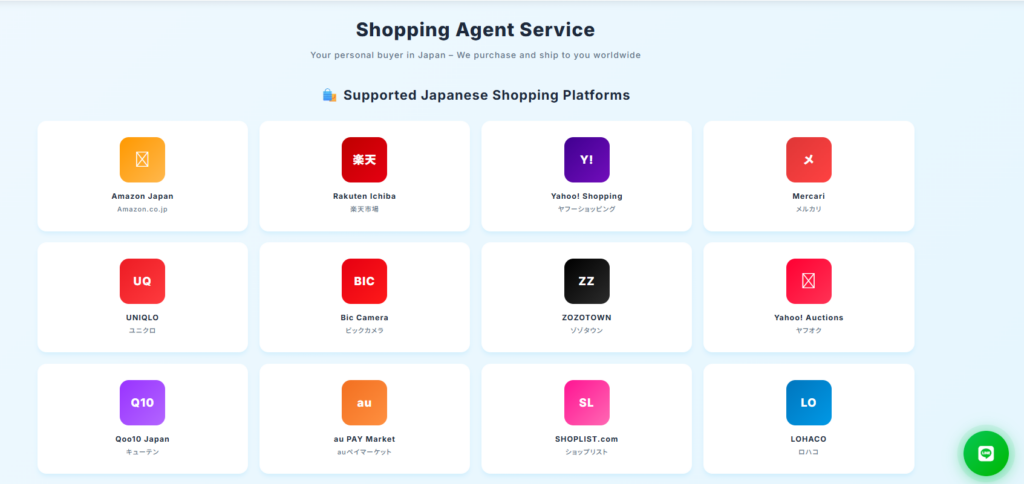
Buy Authentic Japanese Products with Our Trusted Shopping Agent Service. We help customers worldwide purchase items directly from popular Japanese online stores such as Amazon Japan, Rakuten, Yahoo! Shopping, Mercari, and more. If a store does not ship internationally, we buy on your behalf and deliver safely to your country. Enjoy access to exclusive Japanese brands, limited editions, electronics, fashion, cosmetics, and collectibles at competitive prices. Our service offers secure payments, careful inspection, reliable packaging, and fast international shipping.
How to Place an Order (Easy Japan Proxy Buying & International Shipping)
To place an order, please send us the required information via email, LINE, or our contact form. Once we confirm your details, we will issue a proforma invoice with a complete cost breakdown.
Required Information for Your Order
- Product URL(s) from Japanese websites (e.g., Amazon Japan, Rakuten, Mercari)
- Quantity (number of items)
- Delivery Address (full address including postal code and phone number)
- Preferred Delivery Schedule (desired shipping date or deadline)
Order Process
- Send your order details via email, LINE, or contact form
- Receive a proforma invoice including product cost, service fee, and shipping cost
- Confirm your order and complete payment
- We purchase the items from Japan on your behalf
- Your products are shipped safely to your destination
Why Choose Our Japan Proxy Buying Service?
- Access to popular Japanese marketplaces and exclusive products
- Affordable international shipping rates
- Secure payment and professional handling
- Reliable support for global customers and businesses
Contact us today to start your order and enjoy fast, reliable access to authentic Japanese products.
Japanese Product Shopping Agent Service – Buy from Japan and Ship Worldwide
Our Japanese Shopping Agent Service allows customers around the world to purchase authentic products directly from Japan. Many Japanese online stores do not ship internationally, which makes it difficult for overseas buyers to access popular and exclusive Japanese products. Our service solves this problem by purchasing items on your behalf and shipping them safely to your country.
We support a wide range of popular Japanese online marketplaces and retail stores. Whether you are looking for fashion, electronics, cosmetics, collectibles, hobby items, anime goods, daily-use products, or limited Japanese products, we can help you purchase them and arrange reliable international shipping.
We can also help you purchase products from smaller Japanese websites, specialty stores, local shops, and suppliers that may not support overseas customers. In many cases, if the product can be bought in Japan, we can help you buy it. This makes our service ideal for customers in Malta who want flexible access to almost anything sold in Japan.
Our service is suitable for:
• personal shopping from Japan
• Japan proxy buying
• e-commerce sourcing
• wholesale and bulk orders
• limited-edition and hard-to-find Japanese products
• combined shipping to reduce international delivery costs
CTA: If you have a product link, product name, screenshot, or shopping list, send it to us through our contact form. We will check availability, provide support, and help you buy and ship your items from Japan smoothly and safely.
Supported Japanese Shopping Platforms
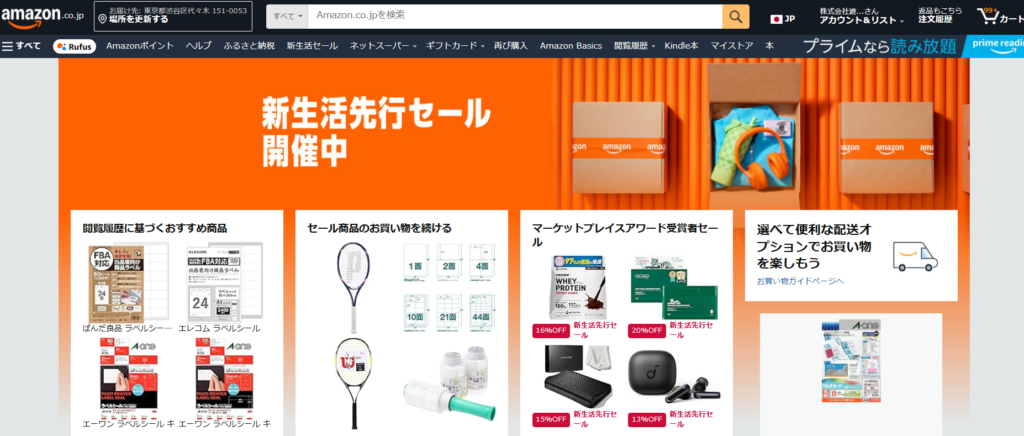
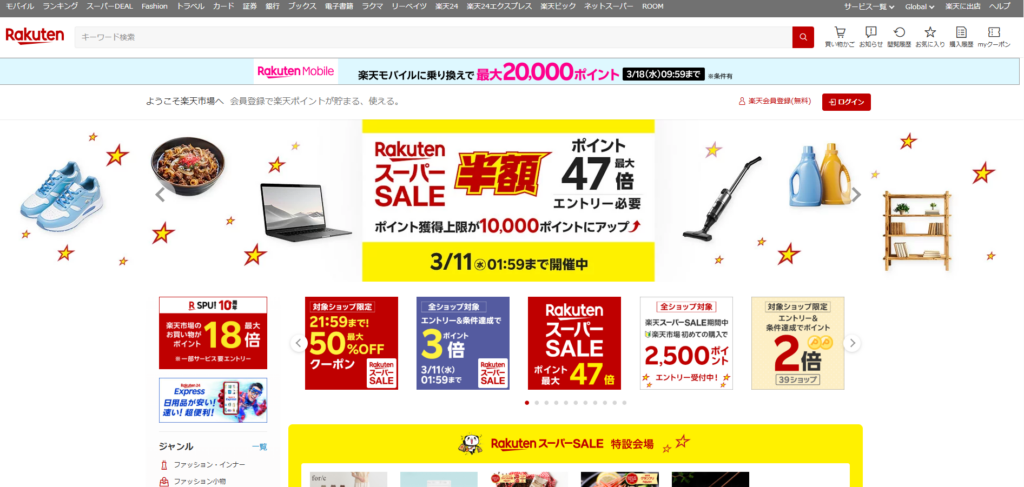
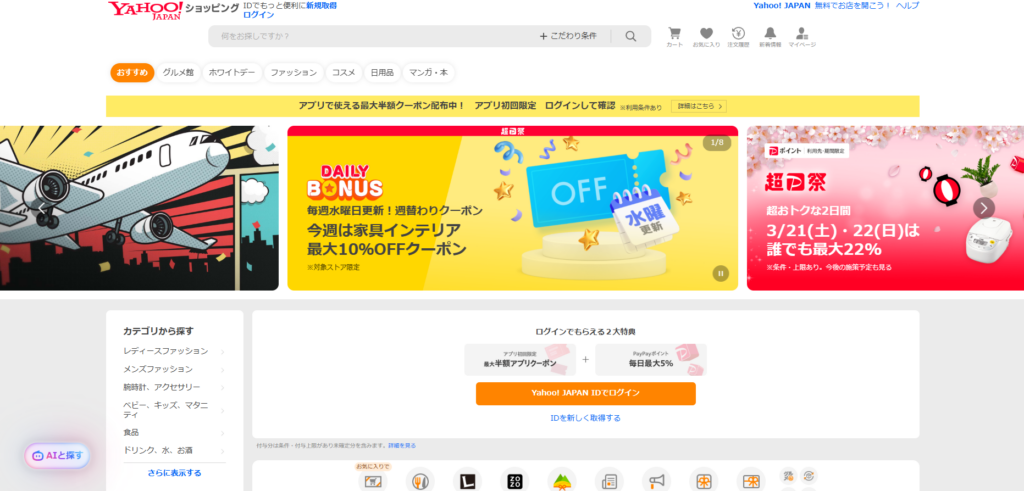
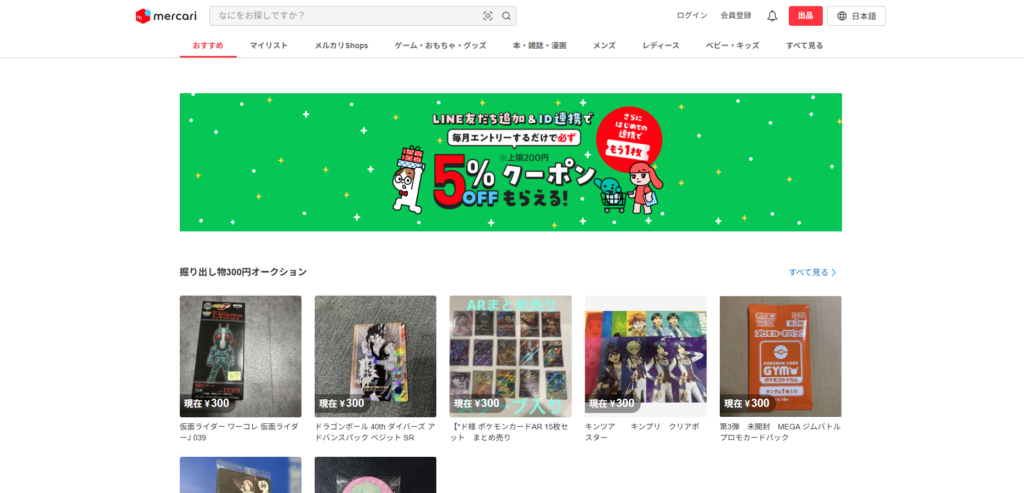

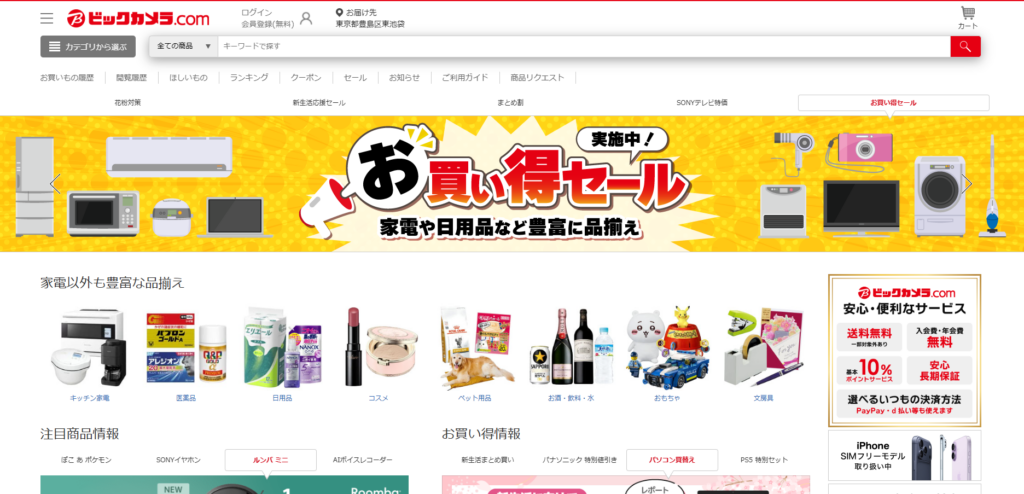
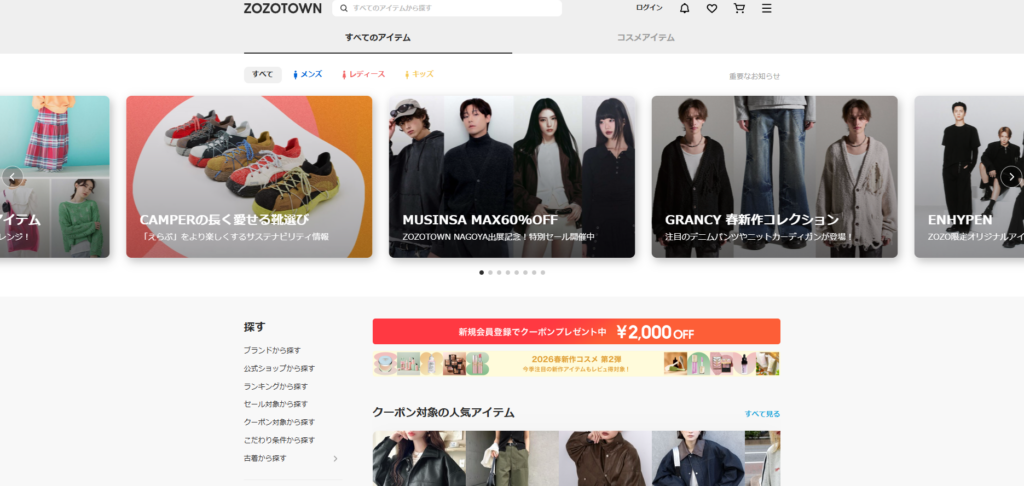
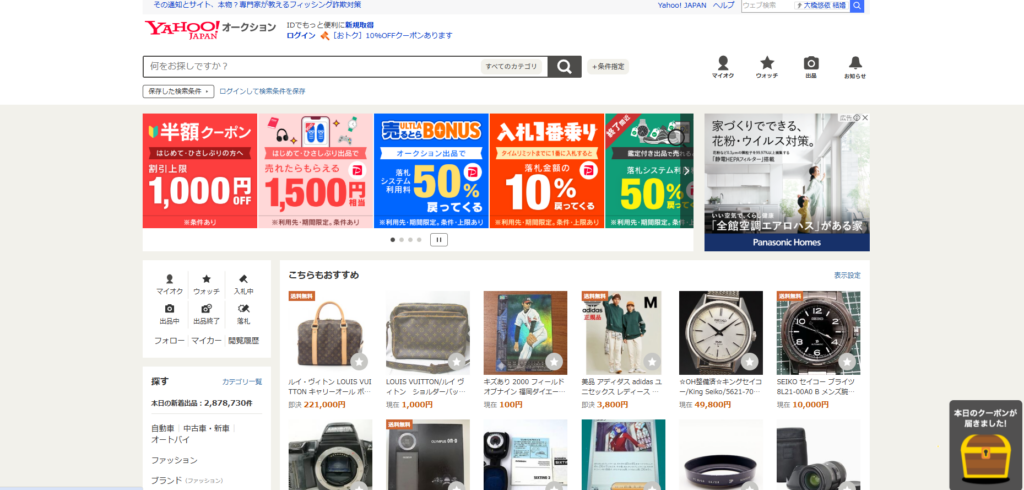
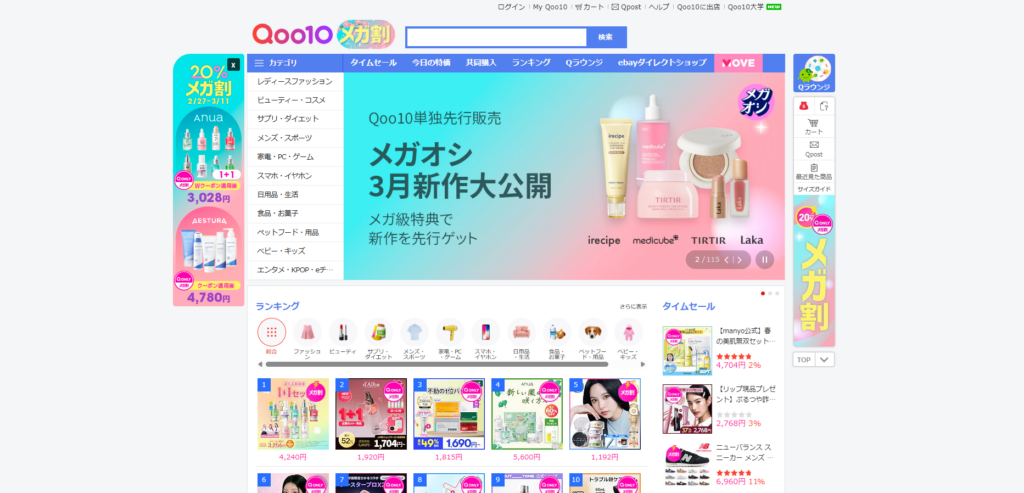
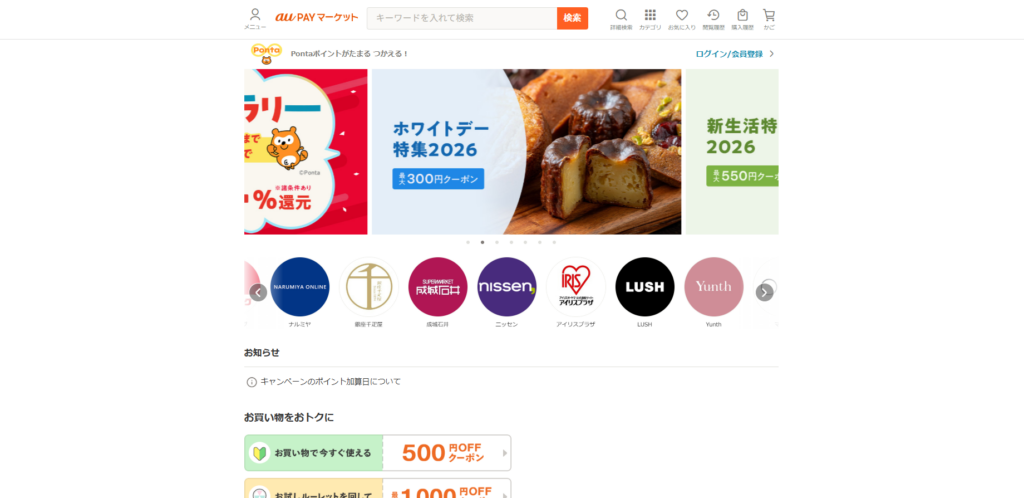
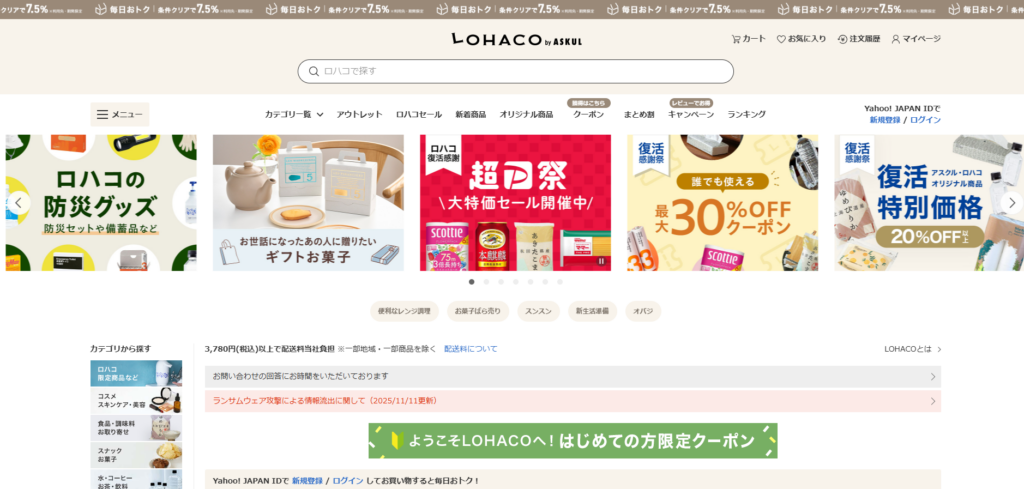
These platforms offer a huge variety of Japanese products that are highly popular worldwide. From the latest Japanese fashion brands to high-quality electronics, cosmetics, lifestyle goods, hobby items, and unique collectibles, you can access many of Japan’s best online stores through our purchasing service.
Even if the product you want is not listed on one of the major platforms above, you can still contact us. We can often assist with purchases from smaller Japanese websites, independent online shops, brand-specific stores, and selected offline products available in Japan. This makes our service highly flexible for customers who want to buy almost anything from Japan.
Contact us through the form below. Please send us your order item links or shopping list. Orders can be placed by chat or email, whichever is more convenient for you.
Shipping Procedure Flow

Understanding the end-to-end shipping process from Japan to international destinations helps businesses streamline imports and exports, reduce delays, and ensure compliance. This section outlines a practical sequence—from scheduling a pickup to final delivery—tailored for cross-border trade and optimized for efficiency, cost, and risk management. By following a clear workflow, buyers, sellers, and forwarders can coordinate seamlessly and avoid common bottlenecks in international logistics.
Steps from Pickup Request to Dispatch
Initiating a shipment begins with a pickup request, whether from a warehouse, supplier, or storefront in Japan. The key steps are:
1) Define shipment scope and documentation: clearly list product types, quantities, HS codes, target destination, preferred transit mode (air or sea), and required service level. Prepare commercial invoices, packing lists, and any customer-specific documents.
2) Schedule collective pickup: coordinate with the Japan forwarding service to arrange pickup from multiple origins if needed. A centralized pickup minimizes handling, consolidates cargo, and reduces unit costs.
3) Professional packing and labeling: ensure products are securely packed with appropriate materials to withstand handling and transit. Label resilience, barcodes, and palletization (when applicable) facilitate efficient loading and tracking.
4) On-site inspection and acceptance: verify item condition, count, and packaging integrity at pickup. Any anomalies are recorded and resolved before departure to prevent post-shipment disputes.
5) Documentation review and data entry: upload or enter essential details into the forwarding system, including consignee information, Incoterms, and required customs data. This step reduces errors during customs clearance.
6) Loading and dispatch: transfer to the chosen transport mode—air freight for speed or sea freight for cost efficiency. Consolidation with other shipments may occur to optimize capacity.
7) Tracking and communication: provide real-time tracking updates to all stakeholders. Proactive status alerts help manage expectations and support timely responses to any issues.
8) Delivery readiness and handover: before departure, confirm export compliance and ensure all export-related documents are in order. The forwarder confirms estimated transit times and final delivery windows.
Customs Brokerage and Import Permit Processing
Efficient customs clearance is the backbone of smooth cross-border shipping. The following practices underpin reliable processing:
1) Accurate classification and valuation: assign correct HS codes and declare goods with precise values. This ensures appropriate duties, taxes, and compliance with destination-country regulations.
2) Comprehensive documentation: prepare commercial invoices, packing lists, certificates of origin, import licenses (if required), and any product-specific documents (e.g., sanitary/phytosanitary certificates, conformity assessments).
3) Compliance with destination regulations: verify any import restrictions, prohibitions, or special handling rules for the destination country. This includes restricted items, safety standards, and labeling requirements.
4) Efficient brokerage workflow: leverage an experienced customs broker to handle submission, clearance, and post-clearance duties payment. Timely communication minimizes clearance delays.
5) Post-clearance activities: once cleared, arrange onward movement to the consignee, manage any duties-deferral programs if applicable, and finalize delivery arrangements under the agreed Incoterms.
6) Risk mitigation: identify potential red flags—misclassified goods, insufficient documentation, or value discrepancies—and implement corrective actions before the shipment reaches border inspection.
7) Transparency and accountability: maintain complete records of all customs interactions and clearances. Accessible documentation supports audits, cost verification, and dispute resolution if needed.
Task: Write 2 sections (main heading and two subheadings) as 1000–1200 characters each in English, SEO-focused, for Worldwide Courier Japan, with minimal fluff and clear, actionable content. Do not include meta information or headings beyond what’s requested, but ensure smooth flow from the main heading to subheadings. Use a natural, professional tone aimed at international buyers and EC sellers.
Buying Japanese Products from Overseas – Easy, Safe, and Reliable Worldwide Delivery
Many Japanese online stores do not offer international shipping. However, customers overseas can still purchase authentic Japanese products easily by using a professional Japan proxy shopping service.
A proxy shopping service purchases products on behalf of international customers in Japan and ships them overseas. This allows buyers worldwide to shop from popular Japanese marketplaces such as Amazon Japan, Rakuten, Mercari, and Yahoo Auctions, even when those stores do not ship internationally.
Our service can also combine multiple orders into a single shipment, which can significantly reduce international shipping costs. This is one of the most efficient ways to buy from Japan while keeping total costs low.
We introduce Worldwide-Courier.
①Shipping service
We offer Worldwide-Courier, providing low-cost delivery from Japan to Malta and worldwide by air and sea. We support both exports from Japan and imports into Japan, so please feel free to contact us for a consultation or inquiry.
We are one of the most affordable logistics companies in Japan. We provide competitive shipping rates and reliable international delivery services.
email:info@worldwide-courier-japan.com
wechat:tradingjapankei
tel:+81-3-6300-5745
We provide international export logistics from Japan to over 200 countries worldwide. As one of Japan’s most cost-effective shipping companies, we help reduce transportation costs between Japan and your country with competitive pricing and dependable service. We utilize trusted global carriers such as UPS and FedEx to ensure fast, secure, and trackable delivery.
Payment is accepted via Wise or major credit cards for safe and convenient international transactions. You can easily contact us through LINE, WhatsApp, email, or our online inquiry form.
If you are looking for affordable Japan export shipping, a reliable Japanese logistics partner, and lower international freight costs, we are your best choice. Contact us today and start saving on your shipments from Japan.
With the current weak Japanese yen (JPY), overseas customers can significantly reduce their total product purchasing and international shipping costs from Japan.
Because our Japan-origin freight forwarding rates are based in Japanese yen, overseas businesses and individual buyers can benefit from favorable exchange rates, resulting in lower effective costs for air freight, sea freight, proxy shopping, and international shipping services.
If you are looking for cheap shipping from Japan, low-cost air or ocean freight, or reliable customs clearance support, now is an excellent time to take advantage of the favorable currency difference.
Contact us today for a free consultation and a competitive shipping quotation.
②Japan product agent service
We can buy Japanese products and ship them to countries worldwide.
We provide both international shipping and purchasing services, so we can handle both the purchase of products in Japan and the shipment to your country.
Buy Authentic Japanese Products with Our Trusted Shopping Agent Service. We help customers worldwide purchase items directly from popular Japanese online stores such as Amazon Japan, Rakuten, Yahoo! Shopping, Mercari, and more. If a store does not ship internationally, we buy on your behalf and deliver safely to your country. Enjoy access to exclusive Japanese brands, limited editions, electronics, fashion, cosmetics, and collectibles at competitive prices. Our service offers secure payments, careful inspection, reliable packaging, and fast international shipping.
Japanese Product Shopping Agent Service – Buy from Japan and Ship Worldwide
Our Japanese Shopping Agent Service allows customers around the world to purchase authentic products directly from Japan. Many Japanese online stores do not ship internationally, which makes it difficult for overseas buyers to access popular and exclusive Japanese products. Our service solves this problem by purchasing items on your behalf and shipping them safely to your country.
We support a wide range of popular Japanese online marketplaces and retail stores. Whether you are looking for fashion, electronics, cosmetics, collectibles, hobby items, anime goods, daily-use products, or limited Japanese products, we can help you purchase them and arrange reliable international shipping.
We can also help you purchase products from smaller Japanese websites, specialty stores, local shops, and suppliers that may not support overseas customers. In many cases, if the product can be bought in Japan, we can help you buy it. This makes our service ideal for customers in Malta who want flexible access to almost anything sold in Japan.
Our service is suitable for:
• personal shopping from Japan
• Japan proxy buying
• e-commerce sourcing
• wholesale and bulk orders
• limited-edition and hard-to-find Japanese products
• combined shipping to reduce international delivery costs
CTA: If you have a product link, product name, screenshot, or shopping list, send it to us through our contact form. We will check availability, provide support, and help you buy and ship your items from Japan smoothly and safely.
Supported Japanese Shopping Platforms
These platforms offer a huge variety of Japanese products that are highly popular worldwide. From the latest Japanese fashion brands to high-quality electronics, cosmetics, lifestyle goods, hobby items, and unique collectibles, you can access many of Japan’s best online stores through our purchasing service.
Even if the product you want is not listed on one of the major platforms above, you can still contact us. We can often assist with purchases from smaller Japanese websites, independent online shops, brand-specific stores, and selected offline products available in Japan. This makes our service highly flexible for customers who want to buy almost anything from Japan.
Contact us through the form below. Please send us your order item links or shopping list. Orders can be placed by chat or email, whichever is more convenient for you.
Important Operational Notes
All shipment information must be provided accurately before dispatch. Incorrect or incomplete information may result in shipment delays, additional costs, or reprocessing fees.
Customers are required to provide carton dimensions and weight in advance, as shipping costs are calculated based on chargeable weight (actual weight vs volumetric weight).
For shipments involving special materials such as wooden packaging, additional processing fees may apply depending on carrier requirements.
While standard shipping fees are clearly defined, any exceptional charges imposed by carriers will be billed separately as actual expenses.
Final Summary and Business Advantage
Shipping from the USA to Japan requires a complete understanding of logistics processes, cost structures, and operational conditions. By preparing accurate documentation, optimizing packaging, and selecting the right logistics partner, businesses can significantly reduce costs while ensuring fast and reliable delivery.
For companies involved in international trade, mastering these logistics fundamentals is essential for maintaining competitive pricing, improving supply chain efficiency, and expanding successfully into the Japanese market.
Introducing Worldwide Courier Japan – Your Trusted International Shipping & Import/Export Logistics Partner.
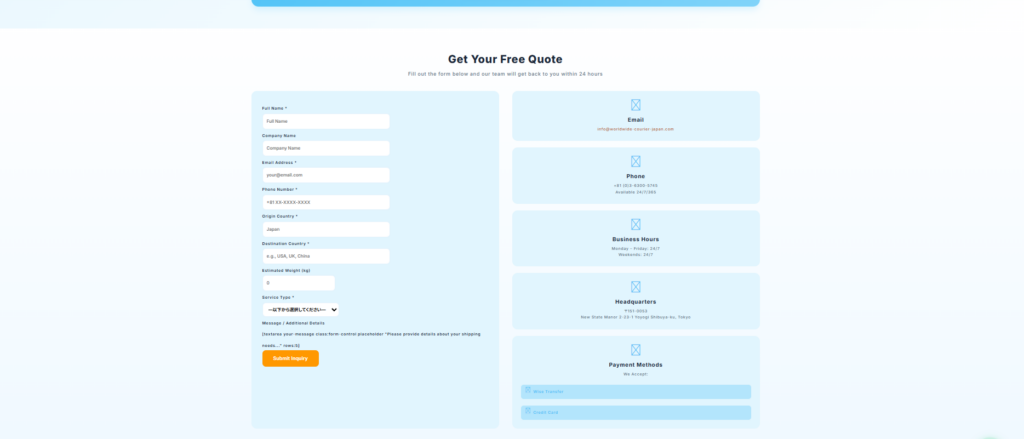
Worldwide Courier Japan provides low-cost international shipping services both from Japan to worldwide destinations and from overseas to Japan. We specialize in global import and export logistics, offering reliable air freight and sea freight solutions for businesses and individuals.
Our services cover export shipping from Japan as well as import shipping into Japan, including commercial cargo, e-commerce shipments, bulk freight, and personal packages. Whether you need to ship goods overseas or import products into Japan, we provide efficient, fast, and cost-effective logistics solutions.
If you are searching for cheap international shipping from Japan, import shipping to Japan, reliable freight forwarding companies in Japan, or global logistics services, Worldwide Courier Japan is your ideal partner. Contact us today for a free consultation.
Why Choose Worldwide Courier Japan for International Shipping & Import Services?
We offer competitive international shipping rates for both exports from Japan and imports into Japan. Our logistics experts help you choose the most efficient and affordable shipping method, whether via express courier, air cargo, or sea freight. We support small parcels, bulk shipments, and commercial cargo with optimized cost and delivery speed.
As one of the most cost-effective logistics companies in Japan, we help you reduce shipping costs for both outbound and inbound logistics while ensuring secure and reliable delivery worldwide.
Email: info@worldwide-courier-japan.com
WeChat: tradingjapankei
Tel: +81-3-6300-5745
We work with global carriers such as UPS and FedEx to provide fast, secure, and trackable international delivery services. Our network enables seamless shipping from Japan to the world and smooth import logistics into Japan from overseas.
We accept secure payments via Wise and major credit cards. Contact us easily via LINE, WhatsApp, email, or our online inquiry form for quick support and shipping quotations.
If you are looking for cheap shipping from Japan, import services to Japan, reliable freight forwarding in Japan, or cost-effective international logistics solutions, Worldwide Courier Japan is your best choice.
We support both exporting Japanese products worldwide and importing goods from overseas into Japan with efficient and affordable logistics solutions.
We provide both international shipping services and Japan purchasing (shopping agent) services.
Buy authentic Japanese products with our trusted shopping agent service. We also support importing products into Japan from overseas suppliers. Whether you are sourcing goods globally or purchasing from Japan, we handle procurement, inspection, packaging, and international delivery.
We support major platforms such as Amazon, Rakuten, Yahoo! Shopping, and Mercari. If international shipping is not available, we purchase on your behalf and deliver safely worldwide or import into Japan.
Enjoy secure payments, reliable logistics, and professional support for both export and import operations.
Contact us here:
https://worldwide-courier-japan.com/#contact