In today’s global landscape, businesses and individuals seeking Buy Japanese products from Japan can gain a clear, actionable path through expert guidance on aluminum supply dynamics and reliable logistics. This article synthesizes the current aluminum shortage, its root causes across global demand, production, and supply chains, and how future trends may unfold. It then presents practical strategies for cost-effective, trustworthy overseas shipping, emphasizing end-to-end solutions from purchase to delivery, including inspections, packaging, customs, and forwarding. Readers will discover why leveraging a Japan proxy shopping service and a Japan forwarding service can unlock access to a wide range of Japanese stores and marketplaces, from Amazon Japan to Rakuten, Mercari, UNIQLO, and more, while minimizing costs and risks. The piece also highlights concrete steps to optimize procurement, recycling, and production planning, along with concrete vendor comparisons and actionable tips to reduce expenses and improve reliability for cross-border commerce.
- Current Status and Root Cause Analysis of Aluminum Shortage
- International Shipping Rates to Japan (Per kg Pricing)
- Why Choose Worldwide Courier Japan?
- Complete International Shipping Process to Japan
- Chargeable Weight (Critical Cost Factor)
- Estimated Delivery Time to Japan
- International Shipping Cost Breakdown
- Prohibited & Restricted Import Items
- Impact of Aluminum Shortage and Future Outlook
- Introducing Affordable Freight Solutions from Japan to Overseas Markets
- Strategic Responses and Industry Initiatives
- About International Shipping Rates from Japan
- Canada Export Shipping Rates (Discount Contract Rates)
- Discount Export Shipping Rates from Japan (Asia & International Cargo)
- Hong Kong Export Shipping Rates
- South Korea Export Shipping Rates
- Taiwan Export Shipping Rates
- China (Northern Region: Shanghai, Zhejiang etc.) Export Shipping Rates
- China (Southern Region: Guangdong, Fujian etc.) Export Shipping Rates
- Macau Export Shipping Rates
- Southeast Asia Export Shipping Rates (Malaysia / Vietnam / Philippines / Singapore / Thailand)
- India & Australia Export Shipping Rates
- Europe Export Shipping Rates (Spain / Germany / France / Italy)
- How it works
- Step 1: Prepare the shipment
- Step 2: Email the shipment documents (invoice and packing information) to us.
- Step 3: We email two required documents for shipment (air waybill and invoice) to your shipper.
- Step 4: The carrier picks up the shipment from the pickup location / domestic warehouse, and the shipment is dispatched
- Step 5: Delivery and receipt of the cargo
- Input format
- Transaction flow (detailed version)
- Breakdown of Applicable Charges
- Knowledge About Restricted and Prohibited Items
- Affordable and Reliable International Freight Forwarding Partners: A Practical Guide
- Practical Guidelines for Successful Overseas Transportation
- Future Outlook and Key Preparations
- uying Japanese Products from Overseas – Easy, Safe, and Reliable Worldwide Delivery
- Japanese Product Shopping Agent Service – Buy from Japan and Ship Worldwide
- Supported Japanese Shopping Platforms
- Important Operational Notes
- Final Summary and Business Advantage
Current Status and Root Cause Analysis of Aluminum Shortage

The global aluminum market is experiencing sustained pressure from a surge in demand and a lag in supply growth. As the world rebounds from the pandemic and accelerates investments in green technologies, electric vehicles, and construction, aluminum’s lightweight, corrosion-resistant properties keep it a preferred material across industries. Production capacity has struggled to keep pace with this demand, while supply disruptions, energy price volatility, and market-specific bottlenecks exacerbate price volatility and availability. This chapter provides a concise synthesis of demand trends, production trajectories, and the factors shaping the aluminum shortage, with a forward-looking view on potential easing or persistence of supply gaps.
Global Demand Trends and Production Trajectories
Global aluminum demand has risen steadily in the past few years, driven by automotive electrification, aerospace, packaging, and infrastructure. Electric vehicles require substantial aluminum content for chassis, batteries, and power electronics thermal management, boosting per-vehicle aluminum intensity. Concurrently, aluminum production has faced a slow recovery from pandemic-era disruptions, with new capacity additions constrained by high energy costs, environmental regulations, and long lead times for smelter projects. As a result, demand outpaced supply growth, widening the market gap. Regions leading demand growth include China, North America, and Europe, while supply remains uneven due to smelter shutdowns and capacity limits in energy-intensive segments. The outcome is tighter markets, higher premiums, and longer lead times for finished extrusions, sheets, and foil products. A critical takeaway is that demand resilience across end-use sectors reduces the likelihood of a rapid stabilization unless substantial new capacity comes online or efficiency gains unlock greater usable output.
Factors Affecting the Supply Chain
The aluminum supply chain is sensitive to several intertwined factors. Energy costs are a primary driver, as electrolysis-based smelting is energy-intensive; fluctuations in electricity and alumina input prices directly affect production viability. Trade dynamics, including tariffs and import quotas, influence global liquidity and project feasibility. Logistics constraints—shipping bottlenecks, port congestion, and container shortages—delay material flows from refining to downstream fabrication. Environmental and social governance (ESG) pressures shape capex decisions, as plants pursue decarbonization and compliance with stricter emissions standards. Additionally, disruptions in alumina supply (the key input for aluminum smelting) due to mine disruptions, weather events, or geopolitical tensions can create secondary bottlenecks. Collectively, these factors create a fragile supply chain, where even modest shocks ripple through to lead times and prices for downstream products.
Shortage Factors in Metallurgy and Manufacturing Processes
Within metallurgy and manufacturing, several structural and operational constraints contribute to shortages. Smelter capacity expansions are lengthy, requiring multi-year timelines for permitting, construction, and ramp-up, delaying actionable relief. Energy intensity remains a bottleneck; regions with high energy costs see slower ramp-up and higher production costs, narrowing feasible supply. Scrap recycling, a potential mitigator, faces constraints from collection, sorting, and contamination challenges that limit the volume of recoverable aluminum. Downstream processing—rolling, extrusion, and casting—depends on stable input quality and reliable supply of semi-finished stock; any disruption upstream translates into downtime and backlogs. Quality controls, process innovations (e.g., improved electrode consumption, recycled content integration), and co-product management also influence overall output and cost structures. In summary, both upstream metallurgy constraints and downstream fabrication readiness shape the magnitude and duration of current aluminum shortages.
International Shipping Rates to Japan (Per kg Pricing)
Preferential Import Shipping Rates to Japan (Fuel Surcharge Excluded):
Hong Kong / India / Vietnam / Singapore / Philippines Import Rates
4–10kg: 1,450 JPY/kg
10–19kg: 985 JPY/kg
20–49kg: 590 JPY/kg
50–99kg: 440 JPY/kg
100–299kg: 340 JPY/kg
300–499kg: 330 JPY/kg
500–999kg: 329 JPY/kg
1000–2000kg: 315 JPY/kg
Canada / Mexico Import Rates
4–10kg: 1,950 JPY/kg
10–19kg: 1,300 JPY/kg
20–49kg: 1,060 JPY/kg
50–99kg: 580 JPY/kg
100–299kg: 460 JPY/kg
300–499kg: 450 JPY/kg
500–999kg: 440 JPY/kg
1000–5000kg: 435 JPY/kg
China Import Rates (Southern China)
4–10kg: 1,270 JPY/kg
10–19kg: 1,050 JPY/kg
20–49kg: 590 JPY/kg
50–99kg: 480 JPY/kg
100–299kg: 355 JPY/kg
300–499kg: 340 JPY/kg
500–999kg: 335 JPY/kg
1000–2000kg: 335 JPY/kg
2000kg and above: 330 JPY/kg
South Korea / Taiwan Import Rates
20–49kg: 750 JPY/kg
50–99kg: 520 JPY/kg
100–299kg: 430 JPY/kg
300–499kg: 420 JPY/kg
500–999kg: 400 JPY/kg
1000–2000kg: 389 JPY/kg
2000kg and above: 385 JPY/kg
Indonesia / Thailand / Australia Import Rates
4–10kg: 1,280 JPY/kg
10–19kg: 970 JPY/kg
20–49kg: 950 JPY/kg
50–99kg: 890 JPY/kg
100–299kg: 730 JPY/kg
300–499kg: 730 JPY/kg
500–999kg: 695 JPY/kg
1000–5000kg: 665 JPY/kg
Europe Import Rates (France / Germany / Italy / United Kingdom etc.)
4–10kg: 2,550 JPY/kg
10–19kg: 1,790 JPY/kg
20–49kg: 850 JPY/kg
50–99kg: 710 JPY/kg
100–299kg: 570 JPY/kg
300–499kg: 560 JPY/kg
500–999kg: 550 JPY/kg
1000–2000kg: 520 JPY/kg
These international shipping rates are structured to reduce the shipping cost per kilogram as shipment volume increases. Consolidated shipping and bulk freight are among the most effective methods for reducing overall logistics expenses.
Please note that the above rates exclude fuel surcharges, customs duties, Japanese consumption tax, customs inspection fees, and additional handling charges. Fuel surcharge rates fluctuate depending on global crude oil prices and airline carrier policies.
Introducing Worldwide Courier Japan – Your Trusted International Shipping & Import/Export Logistics Partner.
Worldwide Courier Japan provides low-cost international shipping services from overseas countries to Japan and export shipping services from Japan to worldwide destinations. We specialize in global import and export logistics solutions for businesses, e-commerce sellers, trading companies, and individual customers.
Our international logistics services include air freight, sea freight, express courier services, commercial cargo transportation, bulk freight forwarding, e-commerce shipping, and Japan purchasing agent support.
We support import shipping from China, Hong Kong, Taiwan, South Korea, Southeast Asia, Europe, North America, and many other global regions with competitive pricing and reliable transportation networks.
If you are searching for affordable international shipping to Japan, reliable import logistics companies in Japan, or cost-effective global freight forwarding services, Worldwide Courier Japan is your ideal logistics partner.
Why Choose Worldwide Courier Japan?

We provide highly competitive international shipping rates and customized logistics solutions for both imports into Japan and exports from Japan. Our logistics specialists help customers optimize transportation costs while maintaining fast and secure delivery performance.
We handle small parcels, consolidated shipments, commercial cargo, e-commerce freight, pallet cargo, and bulk transportation with flexible shipping options tailored to each customer’s budget and delivery requirements.
As one of the most cost-effective freight forwarding companies in Japan, we help reduce international logistics costs while ensuring reliable customs clearance support and secure cargo transportation.
Email: info@worldwide-courier-japan.com
WeChat: tradingjapankei
Tel: +81-3-6300-5745
We cooperate with global carriers such as UPS and FedEx to provide secure, trackable, and fast international delivery services worldwide.
We accept secure payments via Wise and major credit cards. Customers can contact us easily through LINE, WhatsApp, email, or our online inquiry form.
We provide both international shipping services and Japan purchasing (shopping agent) services.
Purchase authentic Japanese products with our trusted Japan shopping agent service. We support product sourcing, supplier communication, product inspection, repacking, export shipping, and international delivery worldwide.
We support major Japanese platforms including Amazon Japan, Rakuten, Yahoo! Shopping, Mercari, and many other Japanese online marketplaces. Even if overseas shipping is unavailable, we can purchase products on your behalf and ship them internationally.
Contact us here:
https://worldwide-courier-japan.com/#contact
Complete International Shipping Process to Japan
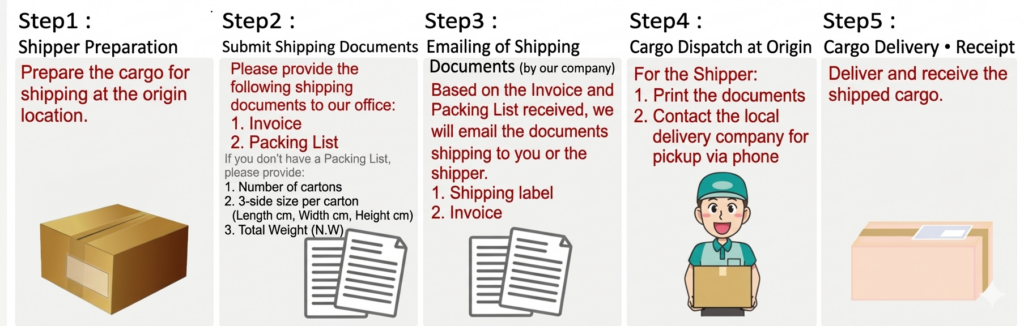
Step 1: Cargo Preparation
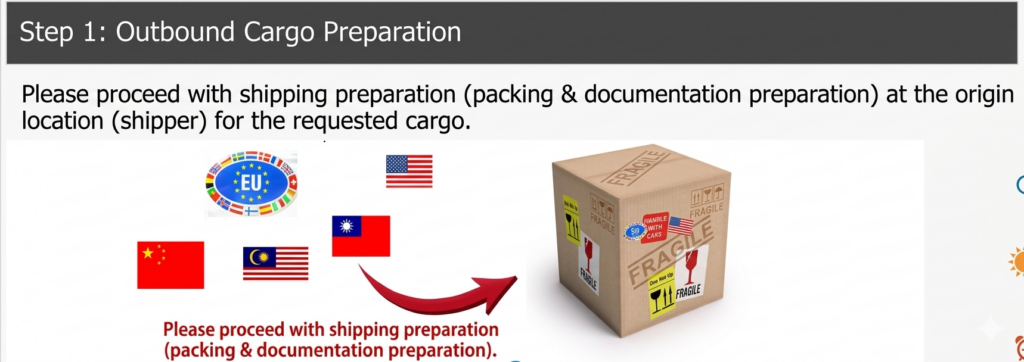
The shipper prepares the cargo, including export packaging and document preparation. Proper packaging is essential not only for protecting products during transportation but also for minimizing volumetric weight and reducing international shipping costs.
Step 2: Commercial Invoice & Packing List Submission
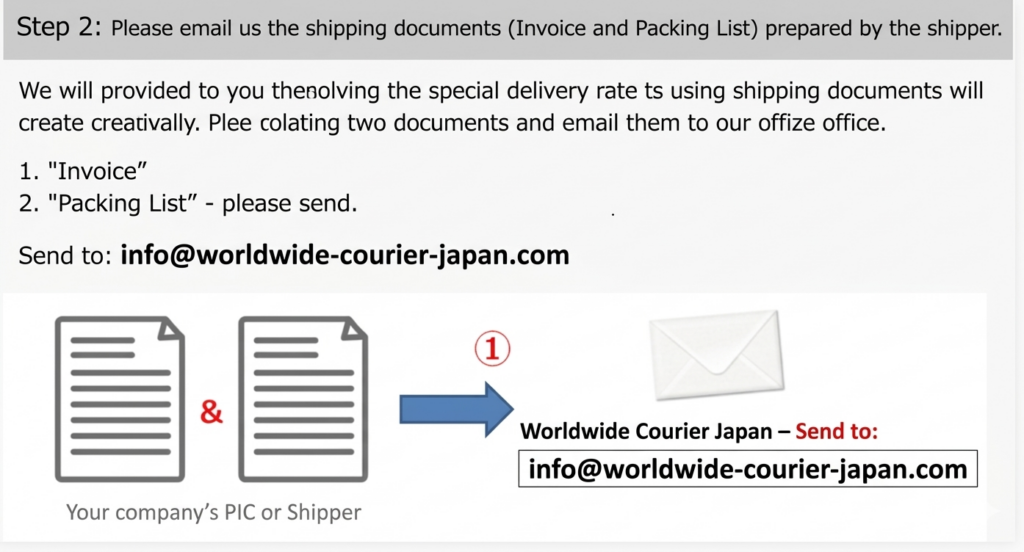
The shipper submits a commercial invoice and packing list containing product descriptions, HS codes, carton quantities, dimensions, unit prices, and total shipment weight. Accurate documentation is essential for smooth customs clearance procedures in Japan.
Step 3: Shipping Document Creation
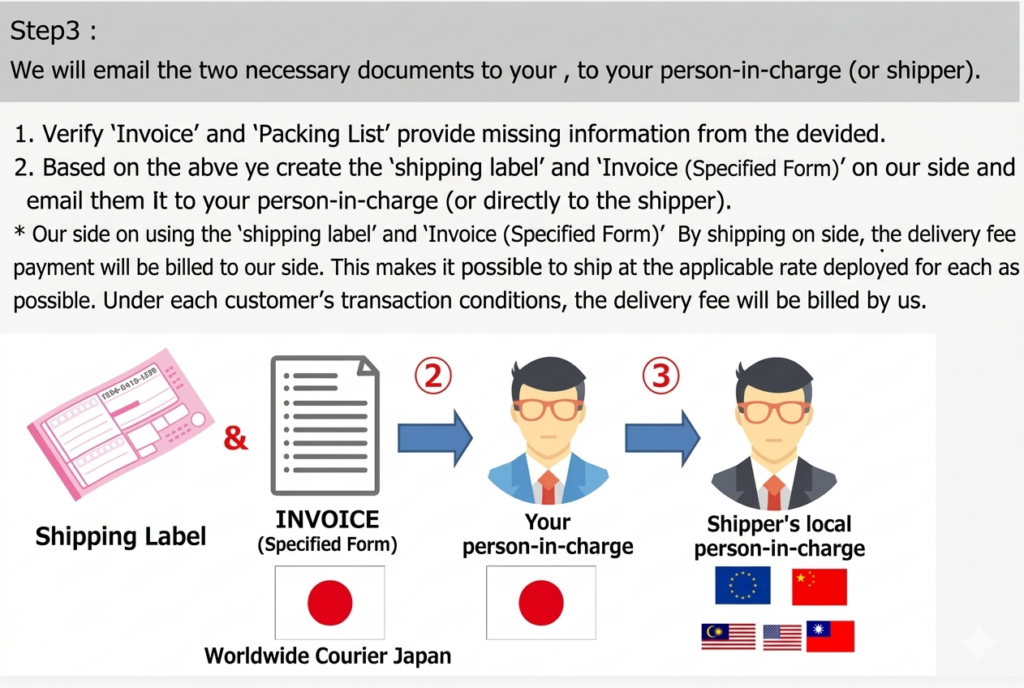
Our logistics team creates the airway bill, shipping invoice, and transportation documents based on the submitted cargo information.
Step 4: Cargo Pickup & International Transportation
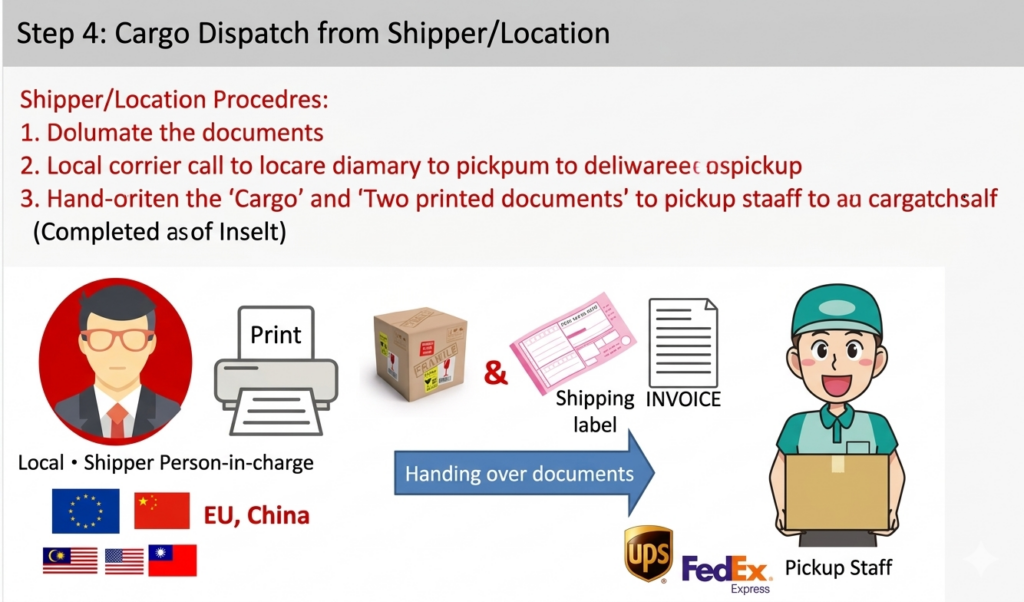
The shipment is collected from the shipper’s address and transported internationally via air freight, sea freight, or express courier service depending on shipment size, urgency, and budget requirements.
Step 5: Customs Clearance & Final Delivery
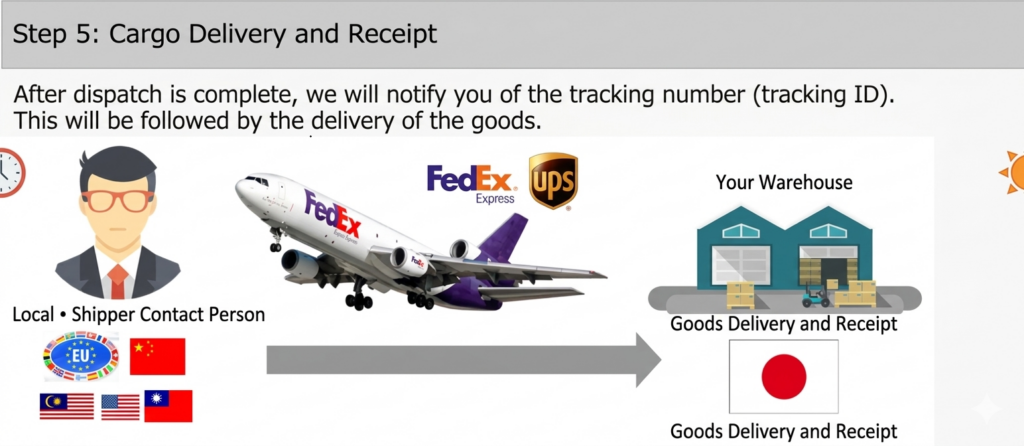
After customs clearance in Japan, tracking numbers are issued and the cargo is delivered safely to the consignee’s final destination.
Chargeable Weight (Critical Cost Factor)
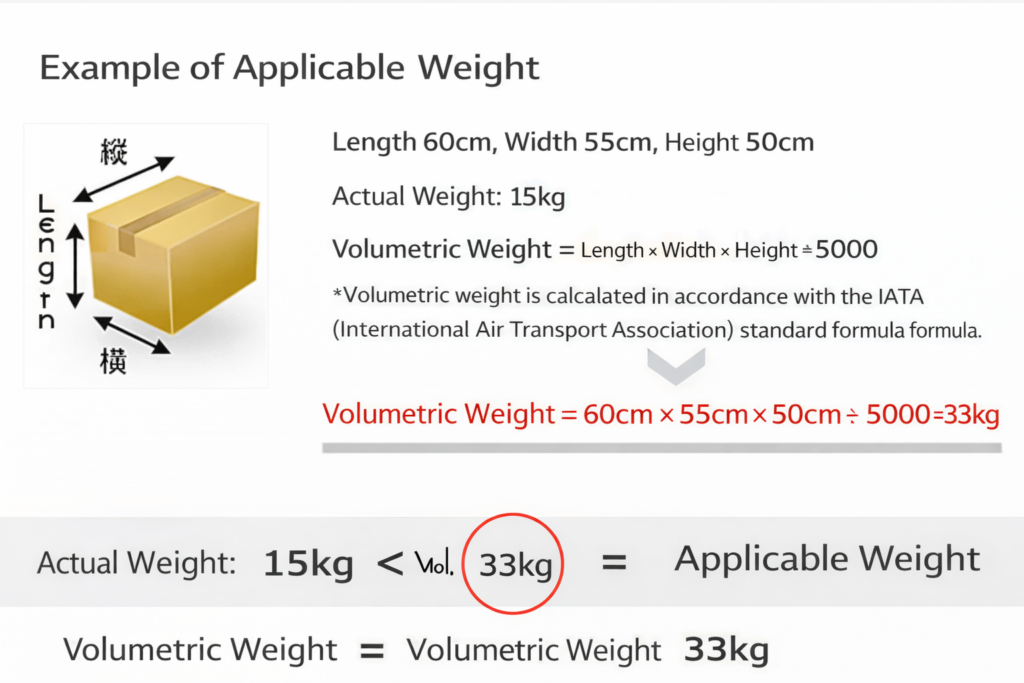
International shipping charges are calculated based on the greater of actual weight or volumetric weight. Oversized cartons and inefficient packaging methods can significantly increase freight costs even for lightweight cargo.
Estimated Delivery Time to Japan
International air freight shipments to Japan generally require approximately 4–7 business days, while sea freight shipments may require several weeks depending on origin country, customs clearance conditions, port congestion, and seasonal demand fluctuations.
International Shipping Cost Breakdown
Shipping expenses generally include base freight charges, fuel surcharges, Japanese customs duties, import consumption tax, customs inspection fees, oversized cargo fees, and remote area delivery surcharges where applicable.
Prohibited & Restricted Import Items
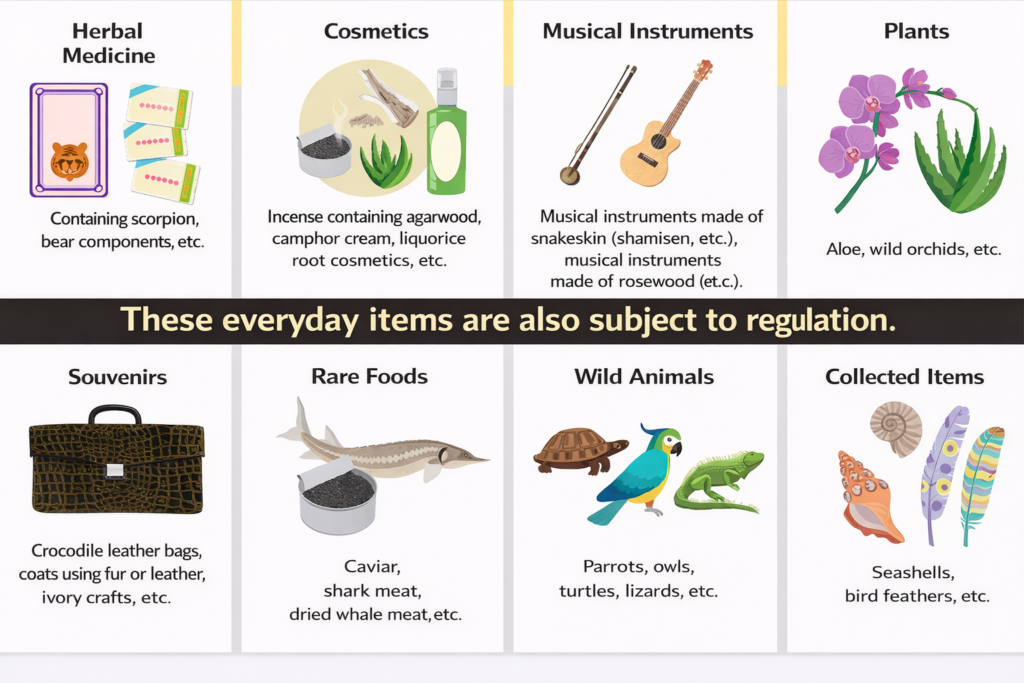
Restricted or prohibited cargo may include hazardous materials, flamma
Impact of Aluminum Shortage and Future Outlook

The global aluminum shortage shapes industrial dynamics across sectors, influencing production costs, supply chain resilience, and long-term strategic planning. This section analyzes how different industries are affected, explores price trends and market forecasts, and examines how policy and regulatory measures may shape the aluminum landscape in the coming years. By understanding these factors, companies can adapt procurement, pricing, and inventory strategies to mitigate risk and capitalize on opportunities in a tight aluminum market.
Industry-wide Effects
Aluminum shortages reverberate through manufacturing cost structures and competitiveness. Transportation, packaging, and consumer electronics sectors face elevated input costs due to billet and sheet shortages, prompting substitution with alternative alloys or composites, and accelerating R&D into lightweight materials. Automotive and aerospace industries experience longer lead times and production pauses, which can trigger cascading delays in OEM schedules and aftersales services. Construction and infrastructure projects encounter budget overruns as aluminum components such as cladding, façades, and extrusion profiles become scarcer. However, supply constraints also incentivize process optimization, greater recycling rates, and the adoption of circular economy practices. Companies with diversified supplier bases, robust procurement analytics, and nearshoring capabilities are better positioned to withstand volatility.
On the positive side, the shortage stimulates innovation in alloy development, recycling technologies, and energy-efficient smelting processes. Firms that invest in end-to-end material management—ranging from scrap collection to closed-loop recycling—can reduce raw material exposure and improve overall sustainability profiles. Global trade dynamics, including freight costs and import tariffs, further shape industry responses, with some regions accelerating local production or selective strategic stockpiling to buffer against shocks.
Price Trends and Market Forecast
Prices for primary aluminum and downstream products have shown persistent upward pressure due to supply tightness, energy costs, and logistical bottlenecks. Near-term volatility is likely, driven by smelter restarts, shipments from key producing regions, and speculative activity. Long-term forecasts suggest gradual normalization as new capacities come online and recycling infrastructure scales, but this depends on energy policy, environmental regulations, and geopolitical stability. Market watchers should monitor inventory levels, London Metal Exchange (LME) pricing signals, and regional demand surges—from automotive electrification to packaging demand in emerging markets. For buyers and sellers, hedging strategies, long-term offtake agreements, and flexible contract terms can help stabilize margins amid oscillating costs.
In practice, contractors and manufacturers may experience wider spreads between reported market prices and actual landed costs due to freight, duties, and handling charges. Businesses should factor in energy prices, currency fluctuations, and potential policy shifts when modeling scenarios. A proactive approach combines forward-looking procurement, diversified suppliers, and investment in lightweighting technologies to cushion the impact of ongoing price volatility.
Policy and Regulatory Impacts
Policy landscapes significantly influence the aluminum market, affecting supply chains and pricing. Environmental regulations targeting carbon intensity in energy-intensive smelting operations can constrain production, elevating costs or accelerating transitions to low-emission technologies. Trade policies, export controls, and anti-dumping measures in major aluminum-producing nations shape global flow patterns and regional price differentials. Government incentives for recycling infrastructure, scrap utilization, and domestic capacity expansion can shift investment toward more sustainable production and more resilient supply chains.
Regulatory developments to watch include: (1) stricter emissions standards for smelters and alumina refineries, (2) incentives or mandates for recycled content in consumer and industrial products, (3) tariffs or quotas affecting primary aluminum imports, and (4) safe and compliant cross-border logistics practices to ensure timely delivery while meeting environmental and worker-safety requirements. Organizations that align procurement strategies with anticipated policy trajectories can reduce compliance risk and maintain steadier supply streams.
Introducing Affordable Freight Solutions from Japan to Overseas Markets

In a global economy where Japanese products enjoy steady demand across diverse regions, choosing a cost-effective and reliable shipping partner is essential. This section outlines why Japan remains a competitive source and how an integrated freight service can streamline purchasing and international delivery. We highlight the advantages of a one-stop solution that combines procurement, inspection, packaging, transportation, and customs support, ensuring competitive pricing, faster lead times, and risk-free cross-border operations for both individuals and businesses.
Why Japanese Products Will Continue to See Growing Overseas Demand
Japan’s reputation for quality, innovation, and reliability drives sustained international interest across electronics, fashion, appliances, and specialty goods. Key drivers include:
– Superior product quality and durable design that appeals to discerning buyers worldwide.
– Wide range of authentic, limited, and second-hand items available through trusted Japanese marketplaces and retailers.
– Strong global brands and the appeal of “Made in Japan” authenticity across consumer electronics, cosmetics, and lifestyle products.
– Efficient logistics and robust compliant processes that reduce risk and ensure timely delivery.
A proficient proxy purchasing service connects international buyers with the best sources in Japan, ensuring access to新品,中古, and exclusive items across major platforms like Amazon.co.jp, Rakuten, Yahoo! Shopping, Mercari, Uniqlo, BicCamera, ZOZOTOWN, Yahoo Auctions, and Lohaco. By leveraging our expansive sourcing network, buyers can obtain high-demand items at competitive prices while benefiting from consolidated shipping and streamlined customs handling.
Recommendations: Exporting from Japan and Importing to Other Countries with a Single Freight Partner
For seamless cross-border trade, consider a freight partner that offers end-to-end services: purchase assistance, quality inspection, packaging, international shipping (air and sea), customs clearance, and final delivery. The benefits include:
– Consolidated pricing with no intermediary markups due to in-house logistics capabilities.
– Global reach to 200+ countries, accommodating individuals and corporate clients alike.
– Expertise in export and import compliance, enabling risk reduction and optimal routing.
– One-stop service that reduces coordination complexity, speeds up lead times, and provides transparent tracking.
Practical steps to engage such a service:
1) Identify your target markets and product categories; 2) Leverage our procurement network to source items in Japan; 3) Opt for inspection and packaging aligned with your shipping method; 4) Choose the appropriate transit mode (air for speed, sea for cost); 5) Rely on our customs expertise to minimize delays; 6) Utilize door-to-door delivery and tracking for peace of mind.
Strategic Responses and Industry Initiatives

In the face of aluminum shortages, forward-thinking companies are rapidly adapting their procurement strategies, materials usage, and production workflows. This chapter outlines practical approaches being implemented across industries to mitigate risk, reduce costs, and maintain competitiveness. By exploring alternative materials, boosting recycling, and optimizing production systems, businesses can strengthen resilience and sustain growth in a volatile market.
Exploring Alternative Materials
To reduce dependency on primary aluminum, many manufacturers are evaluating viable substitute materials that balance performance, weight, and cost. Approaches include adopting high-strength polymers, magnesium alloys, or aluminum alloys with recycled content to preserve ductility and strength. In sectors such as automotive and aerospace, engineers are re-designing parts to leverage lightweight composites or optimized geometries that lower aluminum demand without sacrificing safety. When considering alternatives, firms assess total lifecycle costs, supply stability, recyclability, and compatibility with existing manufacturing lines. Early-stage feasibility studies, pilot trials, and supplier collaboration are essential to minimize risk and ensure seamless integration into production.
Strengthening Recycling Streams
Recycling presents a robust pathway to alleviate supply constraints while supporting sustainability goals. Companies are expanding scrap collection programs, investing in advanced sorting and smelting technologies, and partnering with recyclers to achieve high-purity aluminum feedstock. Circular economy principles enable the reuse of aluminum components from end-of-life products and manufacturing scrap, reducing reliance on primary ingots. Industry leaders are setting targets for recycled content, improving traceability, and implementing closed-loop processes that shorten the time from scrap to usable input. Enhanced recycling not only stabilizes supply but also lowers energy consumption and carbon emissions, contributing to long-term cost advantages.
Optimizing Production and Supply Chains
Efficient production planning and resilient supply chains are critical amid aluminum shortages. Firms are adopting advanced planning systems, diversifying supplier bases, and increasing stock buffers for critical alloys. Process optimization—such as tighter tolerance control, improved forging and casting techniques, and automation—reduces waste and defects, improving overall yield. Collaboration with downstream customers and logistics partners helps synchronize demand signals with production capacity, smoothing cycles and mitigating volatility. Moreover, companies are investing in digital twins and predictive maintenance to minimize downtime, extend equipment life, and ensure consistent quality across batches. These measures collectively enhance responsiveness, reduce lead times, and protect margins during tight aluminum markets.
About International Shipping Rates from Japan

◇ Shipping rate table (price per kg)
Japan → United States (U.S./North America/Central America)
※ UPS fastest service level with tracking number. ※
※ We can also handle EMS, International ePacket, air mail, SAL, and sea freight via Japan Post—please let us know if you prefer these options..
※ UPS fastest service level with tracking number ※
【United States (U.S./North America/Central America) Export Preferred Rates】
・1kg :4,030円
1.5kg :4,451円
2kg :4,963円
2.5kg :5,409円
3kg :5,889円
3.5kg :6,271円
4kg :6,701円
4.5kg :7,164円
5kg :7,580円
5.5kg :7,674円
6kg :7,878円
6.5kg :8,160円
7kg :8,317円
7.5kg :8,601円
8kg :8,727円
8.5kg :8,867円
9kg :9,087円
9.5kg :9,306円
10kg :9,464円
10.5 :18,790円
11kg : 19,257円
11.5kg:19,526円
12kg : 19,760円
12.5kg: 20,094円
13kg : 20,431円
13.5kg: 20,798円
14kg : 21,132円
14.5kg: 21,432円
15kg : 21,904円
15.5kg: 22,204円
16kg : 22,571円
16.5kg: 22,877円
17kg : 23,242円
17.5kg: 23,578円
18kg : 23,946円
18.5kg: 24,183円
19kg : 24,449円
19.5kg: 24,851円
20kg : 25,388円
・21-49kg :900円/ per 1kg
・50-99kg :710円/ per 1kg
・100-299kg:620円/ per 1kg
・300-499kg:615円/ per 1kg
・500-999kg:610円/ per 1kg
・1000-5000kg:605円/ per 1kg
Canada Export Shipping Rates (Discount Contract Rates)
The following are our special discounted shipping rates for exporting parcels from Japan to Canada. These rates are designed for international shipments using reliable courier services with secure customs clearance.
| Weight | Shipping Cost |
|---|---|
| 1 kg | 4,030 JPY |
| 1.5 kg | 4,451 JPY |
| 2 kg | 4,963 JPY |
| 2.5 kg | 5,409 JPY |
| 3 kg | 5,889 JPY |
| 3.5 kg | 6,271 JPY |
| 4 kg | 6,701 JPY |
| 4.5 kg | 7,164 JPY |
| 5 kg | 7,580 JPY |
| 5.5 kg | 7,674 JPY |
| 6 kg | 7,878 JPY |
| 6.5 kg | 8,160 JPY |
| 7 kg | 8,317 JPY |
| 7.5 kg | 8,601 JPY |
| 8 kg | 8,727 JPY |
| 8.5 kg | 8,867 JPY |
| 9 kg | 9,087 JPY |
| 9.5 kg | 9,306 JPY |
| 10 kg | 9,464 JPY |
| 10.5 kg | 18,790 JPY |
| 11 kg | 19,257 JPY |
| 11.5 kg | 19,526 JPY |
| 12 kg | 19,760 JPY |
| 12.5 kg | 20,094 JPY |
| 13 kg | 20,431 JPY |
| 13.5 kg | 20,798 JPY |
| 14 kg | 21,132 JPY |
| 14.5 kg | 21,432 JPY |
| 15 kg | 21,904 JPY |
| 15.5 kg | 22,204 JPY |
| 16 kg | 22,571 JPY |
| 16.5 kg | 22,877 JPY |
| 17 kg | 23,242 JPY |
| 17.5 kg | 23,578 JPY |
| 18 kg | 23,946 JPY |
| 18.5 kg | 24,183 JPY |
| 19 kg | 24,449 JPY |
| 19.5 kg | 24,851 JPY |
| 20 kg | 25,388 JPY |
Bulk Shipping Rates
| Weight Range | Rate per kg |
|---|---|
| 21 – 49 kg | 900 JPY / kg |
| 50 – 99 kg | 710 JPY / kg |
| 100 – 299 kg | 620 JPY / kg |
| 300 – 499 kg | 615 JPY / kg |
| 500 – 999 kg | 610 JPY / kg |
| 1,000 – 5,000 kg | 605 JPY / kg |
These international shipping rates allow businesses and individuals to ship goods from Japan to Canada efficiently and cost-effectively. Large-volume shipments receive significantly reduced per-kilogram rates, making them ideal for e-commerce exports, bulk cargo, and commercial logistics.
Discount Export Shipping Rates from Japan (Asia & International Cargo)
Below are our special discounted international cargo shipping rates for exporting goods from Japan. These bulk shipping prices are ideal for businesses, e-commerce sellers, and logistics companies shipping large cargo volumes overseas.
Hong Kong Export Shipping Rates
| 21 – 50 kg | 750 JPY / kg |
| 50 – 100 kg | 550 JPY / kg |
| 100 – 299 kg | 400 JPY / kg |
| 300 – 999 kg | 380 JPY / kg |
| 1000 – 2000 kg | 350 JPY / kg |
| Over 2000 kg | 320 JPY / kg |
South Korea Export Shipping Rates
| 21 – 50 kg | 850 JPY / kg |
| 50 – 100 kg | 650 JPY / kg |
| 100 – 299 kg | 520 JPY / kg |
| 300 – 999 kg | 510 JPY / kg |
| 1000 – 2000 kg | 500 JPY / kg |
| Over 2000 kg | 490 JPY / kg |
Taiwan Export Shipping Rates
| 21 – 50 kg | 850 JPY / kg |
| 50 – 100 kg | 650 JPY / kg |
| 100 – 299 kg | 520 JPY / kg |
| 300 – 999 kg | 510 JPY / kg |
| 1000 – 2000 kg | 500 JPY / kg |
| Over 2000 kg | 490 JPY / kg |
China (Northern Region: Shanghai, Zhejiang etc.) Export Shipping Rates
| 21 – 50 kg | 850 JPY / kg |
| 50 – 100 kg | 650 JPY / kg |
| 100 – 299 kg | 520 JPY / kg |
| 300 – 999 kg | 510 JPY / kg |
| 1000 – 2000 kg | 500 JPY / kg |
| Over 2000 kg | 490 JPY / kg |
China (Southern Region: Guangdong, Fujian etc.) Export Shipping Rates
| 21 – 50 kg | 1350 JPY / kg |
| 50 – 100 kg | 1150 JPY / kg |
| 100 – 299 kg | 980 JPY / kg |
| 300 – 999 kg | 970 JPY / kg |
| 1000 – 2000 kg | 960 JPY / kg |
| Over 2000 kg | 950 JPY / kg |
Macau Export Shipping Rates
| 21 – 50 kg | 850 JPY / kg |
| 50 – 100 kg | 650 JPY / kg |
| 100 – 299 kg | 520 JPY / kg |
| 300 – 999 kg | 510 JPY / kg |
| 1000 – 2000 kg | 500 JPY / kg |
| Over 2000 kg | 490 JPY / kg |
Southeast Asia Export Shipping Rates (Malaysia / Vietnam / Philippines / Singapore / Thailand)
| 21 – 49 kg | 600 JPY / kg |
| 50 – 99 kg | 480 JPY / kg |
| 100 – 299 kg | 360 JPY / kg |
| 300 – 499 kg | 358 JPY / kg |
| 500 – 999 kg | 350 JPY / kg |
| 1000 – 2000 kg | 348 JPY / kg |
India & Australia Export Shipping Rates
| 21 – 49 kg | 1000 JPY / kg |
| 50 – 99 kg | 890 JPY / kg |
| 100 – 299 kg | 750 JPY / kg |
| 300 – 499 kg | 730 JPY / kg |
| 500 – 999 kg | 720 JPY / kg |
| 1000 – 2000 kg | 690 JPY / kg |
Europe Export Shipping Rates (Spain / Germany / France / Italy)
| 21 – 49 kg | 1200 JPY / kg |
| 50 – 99 kg | 990 JPY / kg |
| 100 – 299 kg | 850 JPY / kg |
| 300 – 499 kg | 830 JPY / kg |
| 500 – 999 kg | 820 JPY / kg |
| 1000 – 2000 kg | 790 JPY / kg |
These discounted cargo shipping rates from Japan are ideal for bulk shipments, international trade, and cross-border e-commerce. Businesses shipping larger volumes benefit from significantly reduced per-kilogram costs, making global logistics more efficient and affordable.
The above rates are unit prices per kilogram. Please refer to the examples on the right for the shipping cost rate by weight.
In addition to the above shipping fees, a fuel surcharge will apply. Monthly or weekly fuel surcharge fees are charged depending on the carrier you use.
Any duties, import taxes, etc. incurred during local customs clearance will be billed by the carrier to the consignee.
How it works
We offer good service.worldwide-courier provides international logistics and international shipping (air freight) services that arrange shipping on behalf of trading businesses.
The United States・We support imports and exports not only with China and Hong Kong, but also Korea, the U.S., Europe, Southeast Asia, India, Africa, and many other countries.

By using major couriers (FedEx/UPS/DHL), we provide stable and speedy delivery, and with the overwhelmingly low shipping rates offered by worldwide-courier, we help reduce your existing delivery costs and overall procurement costs.
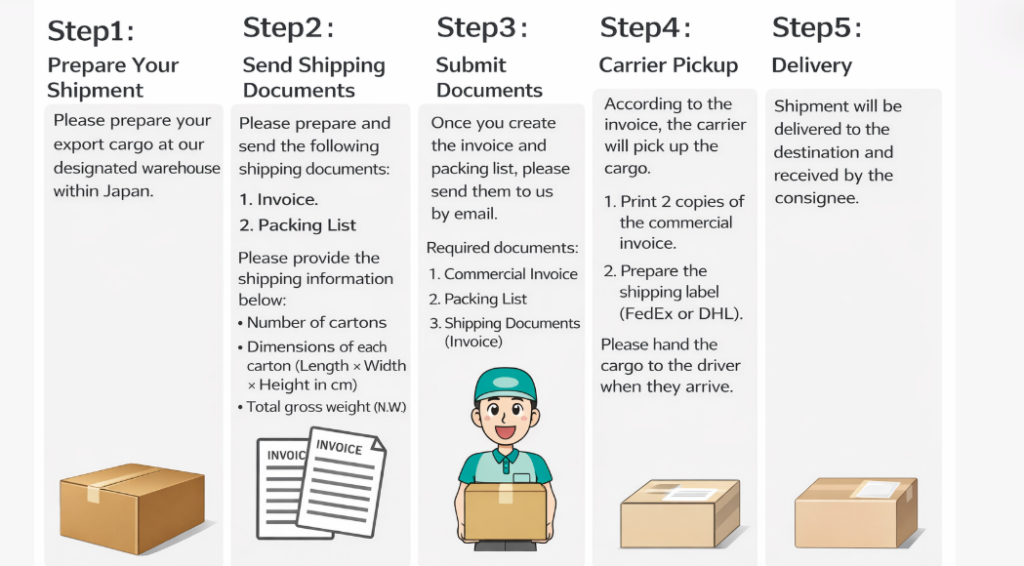
Step 1: Prepare the shipment
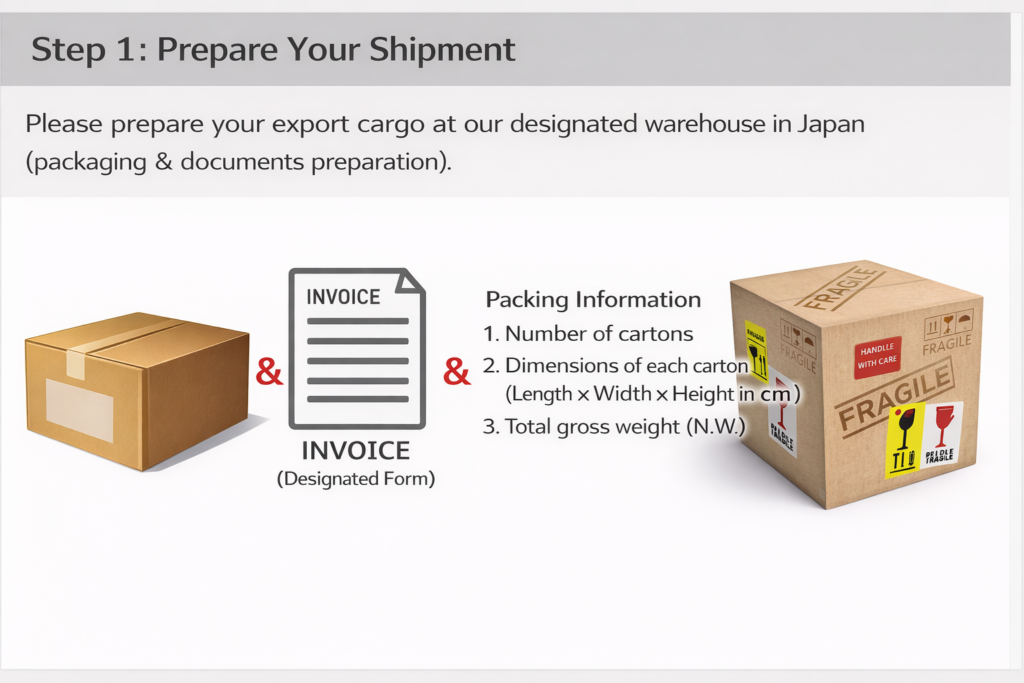
Prepare the shipment at the domestic pickup location (packing & document preparation).
Step 2: Email the shipment documents (invoice and packing information) to us.
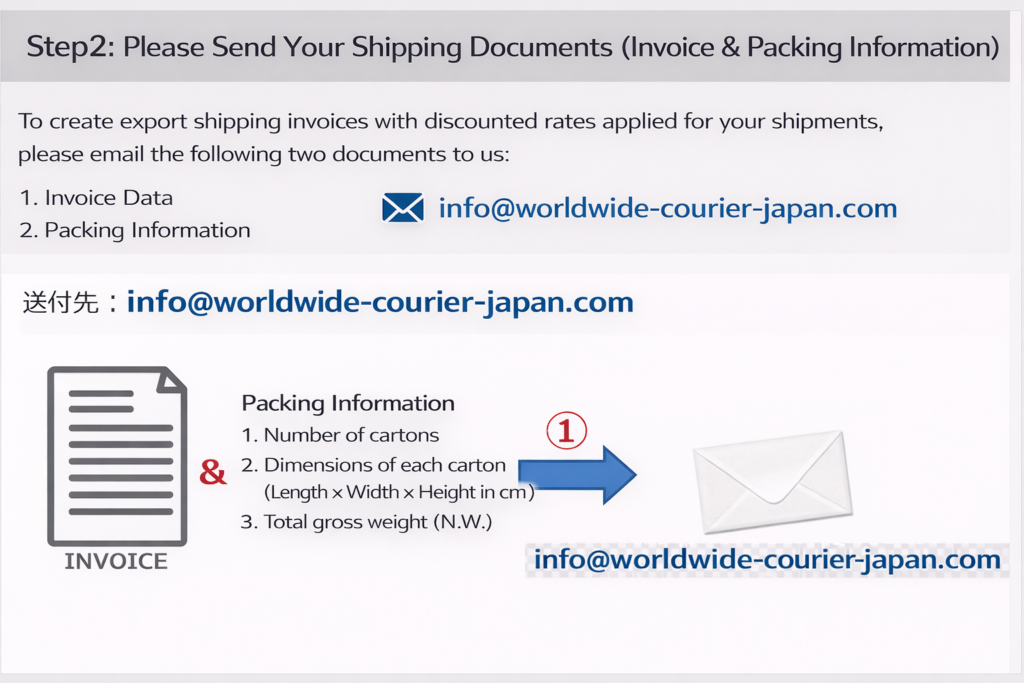
We will create the shipping documents using the special discounted rate provided for each customer. Please email the following two documents as attachments to our office.
1. “Invoice”
2. “Packing List”
Send to: info@worldwide-courier-japan.com
< Items that often end up missing on the invoice >
1. Postal code (shipper side)
2. Contact person name (shipper side)
3. Pickup phone number (shipper side)
※ The above three items are required to create the documents.
If any of this information is missing, we cannot create the documents, so please confirm in advance and submit your request accordingly.
< Required information on the packing list >
1. Total number of cartons
2. The three dimensions of each carton: length (cm), width (cm), height (cm)
3. Total weight (N.W.): total weight after packing
※ In some cases, the packing list lacks the above information. As it is required for document creation, please confirm in advance before requesting.
※ If you do not have a packing list, please confirm the above information with the shipper and share it with us.
< About “Chargeable Weight” used to determine shipping fees >
Based on IATA (International Air Transport Association) standards, the larger of the “actual weight after packing” and the “dimensional (volumetric) weight after packing” is adopted as the “chargeable weight.”
Step 3: We email two required documents for shipment (air waybill and invoice) to your shipper.
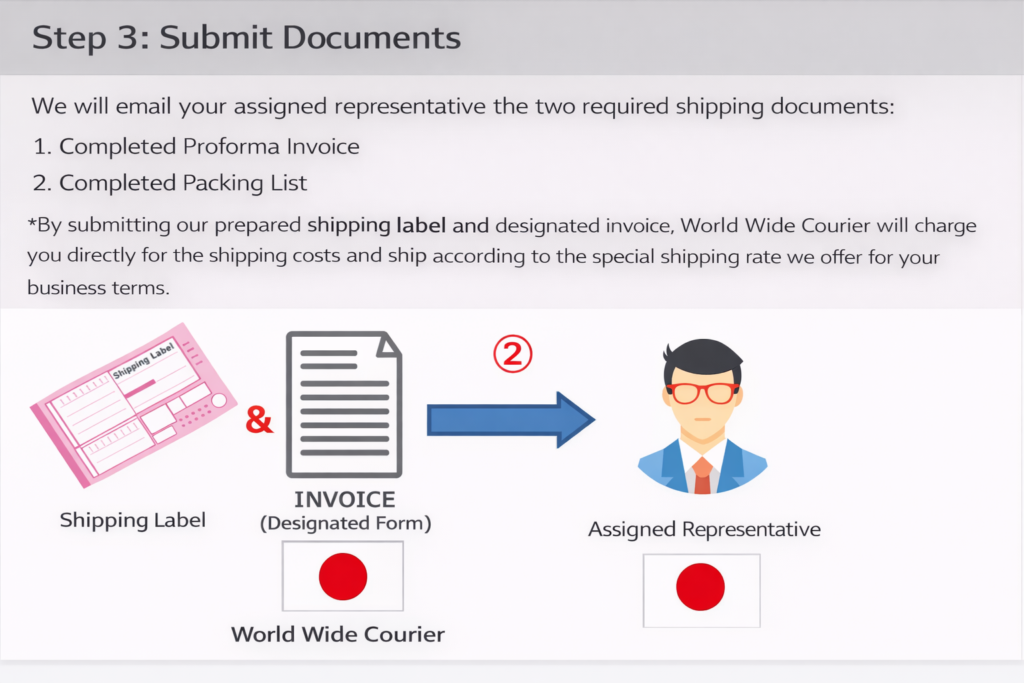
We will email two required documents for shipment (air waybill and invoice) to your 담당者.
1. Confirm any missing information in the “Invoice” and “Packing List” you provided.
2. Based on the above, we will prepare the “Air Waybill” and “Invoice (specified form)” on our side and email them to your 담당者.
※ By shipping using the “Air Waybill” and “Invoice (specified form)” created by us, the shipping charges will be billed to us. This enables you to ship using the applicable rate provided for each customer. Under your individual 거래 조건, we will invoice you for the shipping fees.
Step 4: The carrier picks up the shipment from the pickup location / domestic warehouse, and the shipment is dispatched
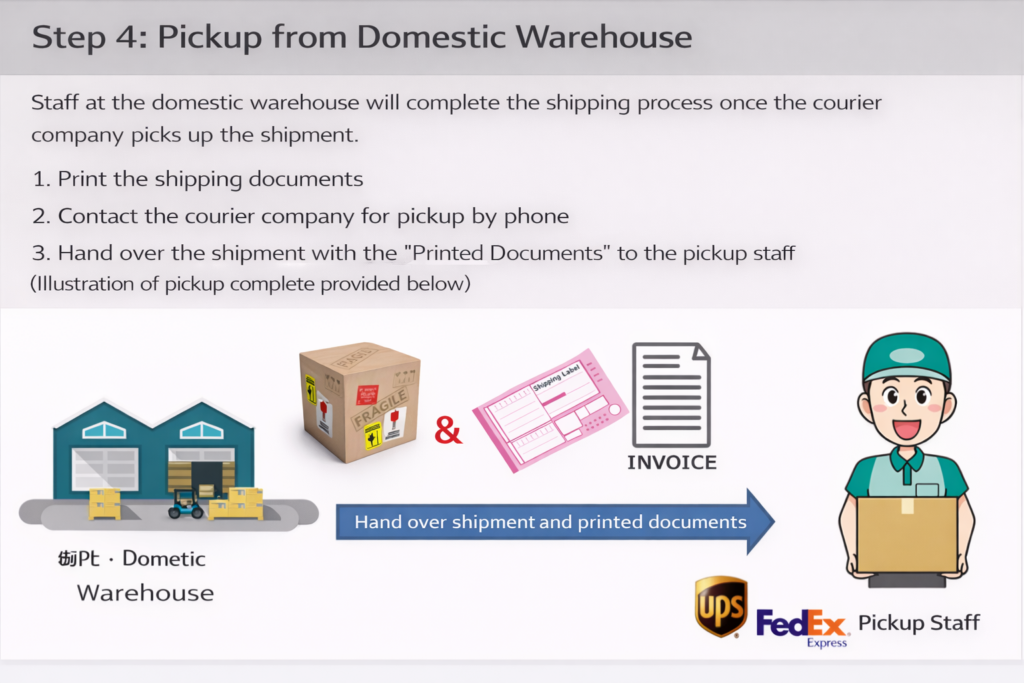
At the domestic pickup location:
1. Print the documents
2. Call the carrier to request pickup
3. Hand the “cargo” and the “two printed documents” to the pickup staff to complete dispatch
Step 5: Delivery and receipt of the cargo
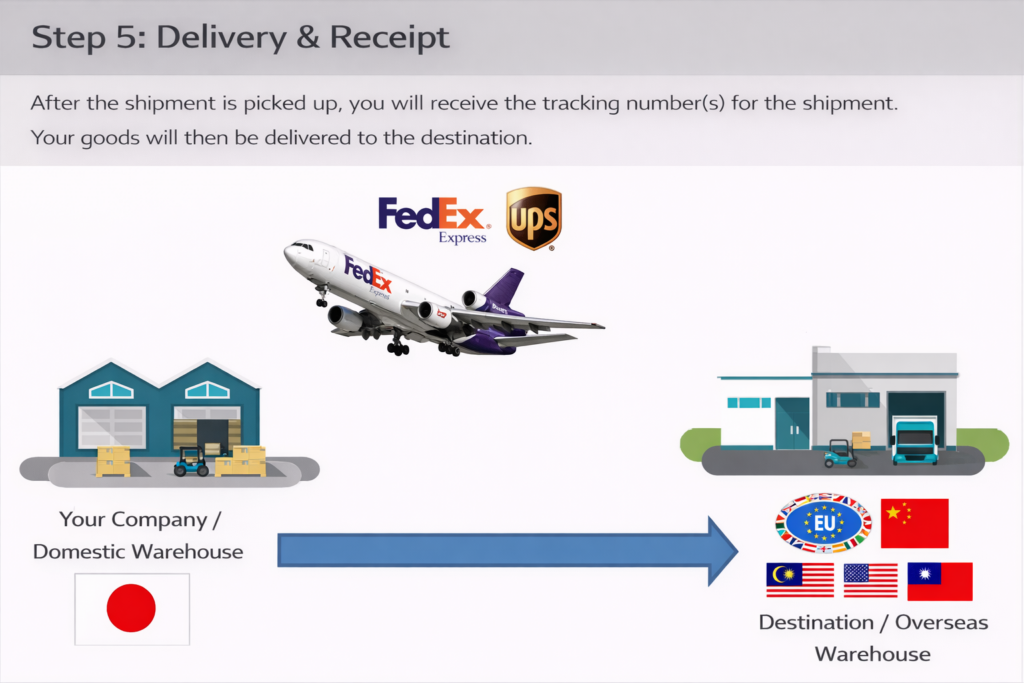
After dispatch, we will provide the tracking number. Your goods will then be delivered.
worldwide-courier provides low-cost delivery from Japan to the United States (U.S./USA) by air and sea. We support both exports and imports, so worldwide-courier reponce pls.
If you provide the information below, we can create the local shipping label.
Input format
◇ Pickup information (From)
1. Company name (or full name)
2. Contact person name
3. Postal code
4. Address
5. Phone number
※ This is the information for the location where the pickup will actually be made.
◇ Delivery address (To)
1. Company name (or full name) (※ Please 반드시 write in English.)
2. Contact person name (※ Please 반드시 write in English.)
3. Postal code
4. Address (※ Please 반드시 write in English.)
5. Phone number
◇ Packing information
1. Number of cartons
2. Total weight
3. Three dimensions of each carton (length, width, height in cm)
◇ Invoice information
・Product name (Please 반드시 write in English.)
・Unit price (Either currency is fine)
・Quantity
If you provide the above information, we can arrange the shipment. worldwide-courier offers low-cost delivery from Japan to the United States (U.S./USA) by air and sea. We support both exports and imports, so worldwide-courier reponce pls.
We look forward to your request.
Please let us know your current shipping frequency and shipping costs, if any.
Regarding your planned shipping date:
If you can also tell us around when you plan to ship, it will make the process smoother.
You can ship at the above rates.
For exports, we can create the shipping documents if you reply with the completed invoice as an attachment, or if you provide the information below.
◇ Pickup information (From)
1. Company name (or full name)
2. Contact person name
3. Postal code
4. Address
5. Phone number
※ This is the information for the location where the pickup will actually be made.
◇ Delivery address (To)
1. Company name (or full name) (※ Please 반드시 write in English.)
2. Contact person name (※ Please 반드시 write in English.)
3. Postal code
4. Address (※ Please 반드시 write in English.)
5. Phone number
◇ Packing information
1. Number of cartons
2. Total weight
3. Three dimensions of each carton (length, width, height in cm)
◇ Invoice information
・Product name (Please 반드시 write in English.)
・Unit price (Either currency is fine)
・Quantity
We will also guide you through the transaction flow.
Transaction flow (detailed version)
< Flow >
1. Please reply with the invoice.
2. If there are no issues with the information, we will book the pickup.
※ Pickup can be arranged as early as the next business day after your package is ready. (We typically book a window around 11:00–17:00.)
< Details: Export cargo transaction flow (Japan → destination country) >
The pickup process is as follows.
1. Please contact us after you finish packing your shipment.
2. Please prepare the invoice and packing information (number of cartons, weight, and three dimensions per carton).
※ 2-1. Shipper (Japan side): address, postal code, name, phone number, company name
2-2. Consignee (delivery destination): local address, postal code, name, phone number, company name
2-3. Product name and unit price
3. After we confirm (2) and there are no issues, we will arrange the pickup.
4. Within 1–2 business days, the carrier will come to your指定 location for pickup.
* We will email you the electronic data for the air waybill, so please hand the invoice and air waybill together with the package to the pickup staff.
5. Shipment is dispatched.
7. Local customs clearance processing (personal / commercial)
8. If there are no issues, the shipment clears customs.
9. Delivery is completed.
* Steps 5–8 typically take about 2–5 days to arrive if there are no issues.
* You will receive a tracking number as a shipment record.
Breakdown of Applicable Charges
1. Freight charges and fuel surcharge
2. Import duties, VAT/GST, customs clearance fees, and other local charges in the destination country, if applicable
The chargeable weight is calculated based on the larger of the actual weight and volumetric weight after packing.
Knowledge About Restricted and Prohibited Items
Certain items may be restricted or prohibited for international shipping depending on the destination country and carrier regulations. These may include dangerous goods, flammable materials, compressed gases, liquids, medicines, medical devices, firearms, tobacco products, perishables, seeds, plants, animals, chemicals, valuables, and CITES-regulated items.
In addition to the items listed above, other products may also be restricted depending on local import regulations. Some items may have shipping limitations, licensing requirements, or value restrictions.
Please contact us in advanc
Affordable and Reliable International Freight Forwarding Partners: A Practical Guide

In an era of global trade, choosing the right freight forwarder is crucial for cost efficiency, reliability, and timely delivery. This guide, crafted for international buyers and exporters, distills practical criteria, cost-reduction tactics, and a curated list of reputable forwarders to help you streamline cross-border operations while maintaining high service quality.
Key selection criteria and benchmarking standards
Selecting a freight forwarder involves assessing a combination of capabilities, reliability, and value. Prioritize the following criteria: Benchmarking should include comparing total cost of ownership, service levels, transit times, and claim ratios. Conduct pilot shipments to verify performance before committing to long-term contracts.
Cost-reduction strategies for overseas shipments
To maximize savings without sacrificing reliability, apply these tactics:
- Leverage consolidated shipments: Combine multiple small orders into a single consolidated shipment to lower per-unit freight and handling fees.
- Optimize routing and mode selection: Choose the most cost-effective mode (air vs. sea) based on weight, volume, and required speed; consider slower but cheaper ports and routing options.
- Negotiate shipper-specific rates: Build strategic, multi-year relationships to access volume discounts, preferred carrier agreements, and surcharge waivers.
- Improve packaging efficiency: Use compact, standardized packaging to increase container utilization and reduce dimensional weight charges.
- Consolidate customs brokerage: Use a single forwarder with in-house brokerage to reduce miscommunication, delays, and variable brokerage fees.
- Prepaid vs. collect option evaluation: Analyze the total cost impact of prepaid duties and taxes versus recipient-paid, and optimize for cash flow.
- Optimize documentation: Accurate commercial invoices, HS codes, and EORI/EDI compliance prevent delays and fines that erode savings.
- Inventory and demand planning: Align procurement with forecasted demand to minimize expedited shipments and storage costs.
- Digitalized processes: Adopt online portals for quotes, booking, and documents to reduce administrative overhead and improve accuracy.
- Risk management and insurance: Use appropriate cargo insurance to protect against loss or damage, avoiding over-insurance while ensuring coverage.
Combining these approaches with a trusted partner who can provide visibility and proactive issue resolution will yield meaningful cost reductions while maintaining service quality.
Recommended overseas freight forwarding companies
Below is a curated list of reputable international freight forwarders known for reliability, global reach, and comprehensive service offerings. When evaluating, consider their compatibility with your product categories, destination markets, and scale needs. (Note: Availability and service terms may vary by region; contact them directly for tailored proposals.)
1) GlobalLink Logistics
Why it stands out: Strong global network, end-to-end solutions, and transparent pricing. Offers consolidate-friendly options and robust tracking tools.
2) PacificBridge Freight
Why it stands out: Competitive ocean and air rates with flexible routing and reliable customs support, ideal for mid-sized e-commerce shipments.
3) Atlas Worldwide Cargo
Why it stands out: Comprehensive import/export compliance expertise, risk management, and scalable services for growing businesses.
4) NorthStar Transport & Logistics
Why it stands out: Advanced digital platform, proactive exception handling, and strong coverage in key Asia-Pacific and North American routes.
5) OceanRoute Freight
Why it stands out: Cost-conscious options for large-volume shipments, effective packaging optimization, and strong claims resolution history.
6) Skyline Global Forwarding
Why it stands out: Fast transit times for prioritized shipments, reliable documentation support, and experienced handling of cross-border ecommerce orders.
7) EastWest Logistics Partners
Why it stands out: Deep customs expertise across multiple jurisdictions, with tailored solutions for complex regulatory environments.
For startups and SMBs seeking broader options, many reputable forwarders offer additional coverage beyond the list above. If you would like, I can tailor a shortlist based on your origin-destination pairs, commodity types, and volume targets.
Practical Guidelines for Successful Overseas Transportation

In today’s global marketplace, efficient overseas transportation hinges on meticulous preparation, precise execution, and proactive risk management. This section outlines concrete, actionable practices across documentation, regulatory compliance, packaging and logistics optimization, and contingency strategies. By aligning these elements with a reliable, end-to-end international shipping partner, businesses can minimize delays, reduce costs, and enhance customer satisfaction.
Documentation and Regulatory Checkpoints
Comprehensive documentation is the backbone of smooth cross-border shipments. Start with a shipment-specific checklist to ensure accuracy and compliance at every stage:
Key documents include commercial invoices, packing lists, certificates of origin, and airway bills or bill of lading. Verify that product classifications align with HS codes to determine duties and import requirements. For regulated items, confirm licenses, permits, and any prohibitions specific to the destination country. Ensure that quantities, weights, and dimensions match the carrier’s documentation to avoid discrepancies during customs clearance. Digital copies should be stored in a centralized portal accessible to your team and the logistics partner, enabling real-time updates and audit trails.
Best practices:
- Pre-fill documents with standardized data templates to reduce errors.
- Coordinate with suppliers to verify product specifications and country-specific restrictions.
- Prepare additional declarations for controlled items (e.g., chemicals, electronics, perishables) to expedite clearance.
- Maintain currency- or region-specific customs information to anticipate changes in tariffs or import controls.
Packaging and Transportation Optimization
Optimal packaging protects cargo, enhances load efficiency, and reduces damage risk. Tailor packaging to product characteristics, mode of transport (air or sea), and the destination’s handling standards. Consider moisture control, impact protection, and stacking limitations to maximize space while maintaining product integrity. Collaborate with your logistics partner to select appropriate packaging materials, palletization, and labeling that meet carrier and customs requirements.
Optimization strategies:
- Consolidate smaller shipments into a single, well-protected container to lower per-unit costs.
- Use standardized dimensions for easier handling and faster port processing.
- Employ leak- or dust-proof packaging for sensitive items; implement desiccants for humidity control where needed.
- Attach clear, multilingual handling instructions and barcodes for seamless scanning and tracing.
- Plan routes and transit times with contingency buffers to absorb potential delays without compromising delivery windows.
Troubleshooting and Risk Management
Anticipating risks and having a robust response plan minimizes disruptions and protects service levels. Establish a proactive risk matrix covering common scenarios: documentation gaps, customs holds, carrier delays, and cargo damage.
Recommended practices:
- Conduct pre-shipment audits to catch missing documents, incorrect classifications, or non-compliant packaging.
- Implement real-time tracking and proactive communication protocols with customers and suppliers.
- Maintain insured coverage that matches cargo value and risk exposure; review coverage terms regularly with your insurer.
- Develop escalation paths with defined roles, contact points, and response times for each risk category.
- Run regular drills or tabletop exercises with the logistics partner to validate contingency plans.
Future Outlook and Key Preparations

In a rapidly evolving global landscape, aligning your business and personal strategies with long-term trends is essential. This section outlines how to craft a sustainable, forward-looking plan for the next 3–5 years, considering market dynamics, regulatory shifts, and technological advancements in cross-border trade and logistics. By integrating proactive risk management with agile execution, Japanese products can continue to reach overseas markets efficiently and profitably.
Developing a Long-Term Strategy
1) Define a clear value proposition for global buyers: emphasize speed, cost efficiency, reliability, and end-to-end support. Position your offering as a one-stop solution for buying Japanese products, translating to higher perceived value and repeat business.
2) Segment markets by growth potential and risk: identify regions with rising demand for specific product categories (electronics, automotive parts, fashion, collectibles) and weigh regulatory complexity, currency stability, and logistical hurdles.
3) Build a resilient supply and logistics network: diversify supplier sources within Japan, establish fallback routes, and maintain buffer inventory for critical items. Leverage a trusted proxy purchasing and forwarding service to minimize lead times and reduce landed costs.
4) Invest in technology and data analytics: implement demand forecasting, real-time shipment tracking, and automated compliance checks to streamline operations and improve decision-making.
5) Focus on sustainability and risk governance: set targets for packaging optimization, emissions reduction, and contingency planning for disruptions (natural disasters, port congestion, regulatory changes).
6) Scale through strategic partnerships: collaborate with e-commerce platforms, manufacturers, and distributors to expand product access, secure preferential terms, and enhance service coverage across 200+ countries.
Demand Forecasting and Inventory Management
1) Use multi-scenario planning: consider best-case, base-case, and worst-case demand scenarios, incorporating macroeconomic indicators, seasonality, and product lifecycle stages.
2) Align procurement with anticipated demand: synchronize sourcing decisions with forecast accuracy to avoid overstock and stockouts. Maintain flexible SKU strategies to adapt to market shifts.
3) Adopt just-in-time and safety stock where appropriate: for high-turn items and time-sensitive goods, maintain lean inventories complemented by safety buffers for strategic products.
4) Implement advanced analytics for pricing and promotions: dynamic pricing aligned with demand signals can optimize margins while sustaining competitiveness.
5) Optimize warehousing and fulfillment: leverage regional hubs, cross-docking, and automated sorting to shorten lead times and reduce handling costs. Integrate with a robust domestic and international shipping network to ensure smooth transitions from purchase to delivery.
6) Enhance transparency with customers: provide accurate ETA, order visibility, and proactive risk alerts to boost trust and reduce inquiries, supporting higher customer satisfaction and loyalty.
Actions for Enterprises and Individuals Right Now
1) Assess and document core capabilities: map your strengths in product sourcing, payment handling, compliance knowledge, and cross-border shipping. Identify gaps and assign owners with clear milestones.
2) Establish a near-term roadmap: set 6–12 month goals for expanding supplier networks, entering new markets, and improving delivery speed and reliability. Prioritize initiatives with high impact on landed cost and customer experience.
3) Strengthen compliance and risk management: ensure up-to-date understanding of export controls, customs duties, sanctions, and product safety standards. Create standardized checklists to avoid delays and penalties.
4) Invest in scalable logistics solutions: partner with experienced international forwarders who offer end-to-end services from procurement to delivery, reducing complexity and enabling seamless growth.
5) Focus on customer-centric service enhancements: offer value-added services such as quality inspection, secure packaging, and reliable after-sales support to differentiate from competitors.
6) Start small, scale thoughtfully: test new markets or product lines with pilot shipments, measure outcomes, and iterate based on data-driven insights. Leverage feedback to refine processes and expand gradually.
uying Japanese Products from Overseas – Easy, Safe, and Reliable Worldwide Delivery
Many Japanese online stores do not offer international shipping. However, customers overseas can still purchase authentic Japanese products easily by using a professional Japan proxy shopping service.
A proxy shopping service purchases products on behalf of international customers in Japan and ships them overseas. This allows buyers worldwide to shop from popular Japanese marketplaces such as Amazon Japan, Rakuten, Mercari, and Yahoo Auctions, even when those stores do not ship internationally.
Our service can also combine multiple orders into a single shipment, which can significantly reduce international shipping costs. This is one of the most efficient ways to buy from Japan while keeping total costs low.
We introduce Worldwide-Courier.
①Shipping service
We offer Worldwide-Courier, providing low-cost delivery from Japan to Malta and worldwide by air and sea. We support both exports from Japan and imports into Japan, so please feel free to contact us for a consultation or inquiry.
We are one of the most affordable logistics companies in Japan. We provide competitive shipping rates and reliable international delivery services.
email:info@worldwide-courier-japan.com
wechat:tradingjapankei
tel:+81-3-6300-5745
We provide international export logistics from Japan to over 200 countries worldwide. As one of Japan’s most cost-effective shipping companies, we help reduce transportation costs between Japan and your country with competitive pricing and dependable service. We utilize trusted global carriers such as UPS and FedEx to ensure fast, secure, and trackable delivery.
Payment is accepted via Wise or major credit cards for safe and convenient international transactions. You can easily contact us through LINE, WhatsApp, email, or our online inquiry form.
If you are looking for affordable Japan export shipping, a reliable Japanese logistics partner, and lower international freight costs, we are your best choice. Contact us today and start saving on your shipments from Japan.
With the current weak Japanese yen (JPY), overseas customers can significantly reduce their total product purchasing and international shipping costs from Japan.
Because our Japan-origin freight forwarding rates are based in Japanese yen, overseas businesses and individual buyers can benefit from favorable exchange rates, resulting in lower effective costs for air freight, sea freight, proxy shopping, and international shipping services.
If you are looking for cheap shipping from Japan, low-cost air or ocean freight, or reliable customs clearance support, now is an excellent time to take advantage of the favorable currency difference.
Contact us today for a free consultation and a competitive shipping quotation.
②Japan product agent service
We can buy Japanese products and ship them to countries worldwide.
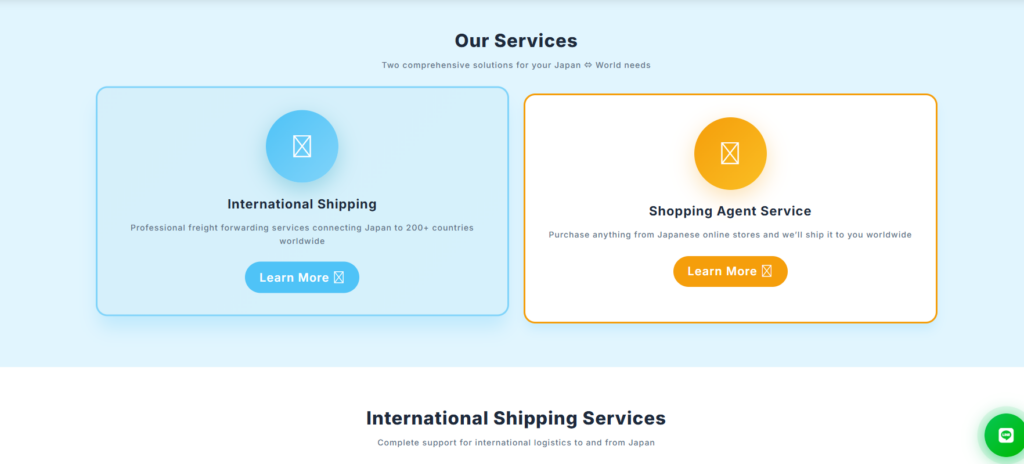
We provide both international shipping and purchasing services, so we can handle both the purchase of products in Japan and the shipment to your country.
Buy Authentic Japanese Products with Our Trusted Shopping Agent Service. We help customers worldwide purchase items directly from popular Japanese online stores such as Amazon Japan, Rakuten, Yahoo! Shopping, Mercari, and more. If a store does not ship internationally, we buy on your behalf and deliver safely to your country. Enjoy access to exclusive Japanese brands, limited editions, electronics, fashion, cosmetics, and collectibles at competitive prices. Our service offers secure payments, careful inspection, reliable packaging, and fast international shipping.
Japanese Product Shopping Agent Service – Buy from Japan and Ship Worldwide
Our Japanese Shopping Agent Service allows customers around the world to purchase authentic products directly from Japan. Many Japanese online stores do not ship internationally, which makes it difficult for overseas buyers to access popular and exclusive Japanese products. Our service solves this problem by purchasing items on your behalf and shipping them safely to your country.
We support a wide range of popular Japanese online marketplaces and retail stores. Whether you are looking for fashion, electronics, cosmetics, collectibles, hobby items, anime goods, daily-use products, or limited Japanese products, we can help you purchase them and arrange reliable international shipping.
We can also help you purchase products from smaller Japanese websites, specialty stores, local shops, and suppliers that may not support overseas customers. In many cases, if the product can be bought in Japan, we can help you buy it. This makes our service ideal for customers in Malta who want flexible access to almost anything sold in Japan.
Our service is suitable for:
• personal shopping from Japan
• Japan proxy buying
• e-commerce sourcing
• wholesale and bulk orders
• limited-edition and hard-to-find Japanese products
• combined shipping to reduce international delivery costs
CTA: If you have a product link, product name, screenshot, or shopping list, send it to us through our contact form. We will check availability, provide support, and help you buy and ship your items from Japan smoothly and safely.
Supported Japanese Shopping Platforms
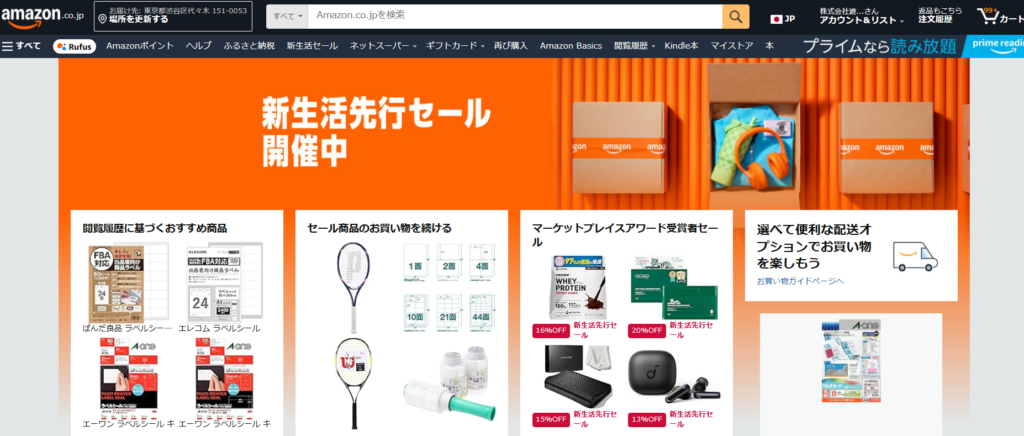
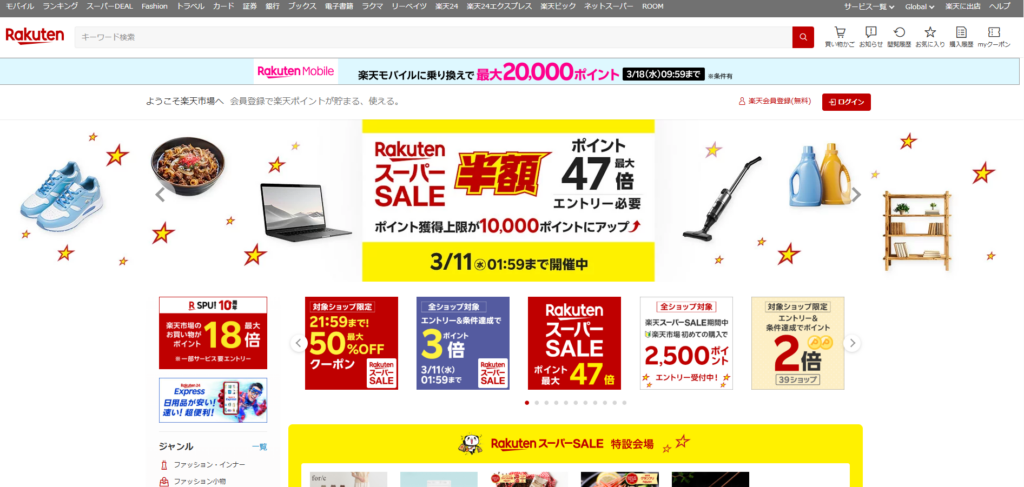
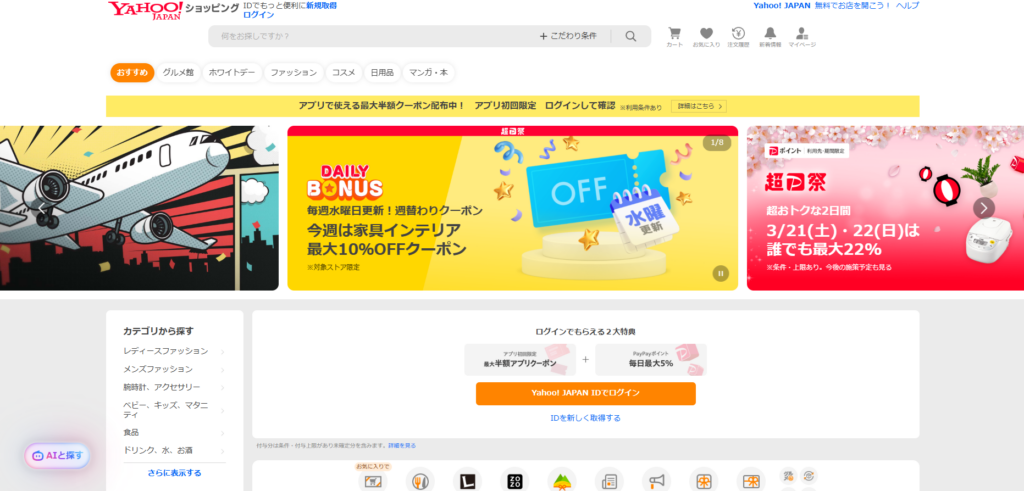
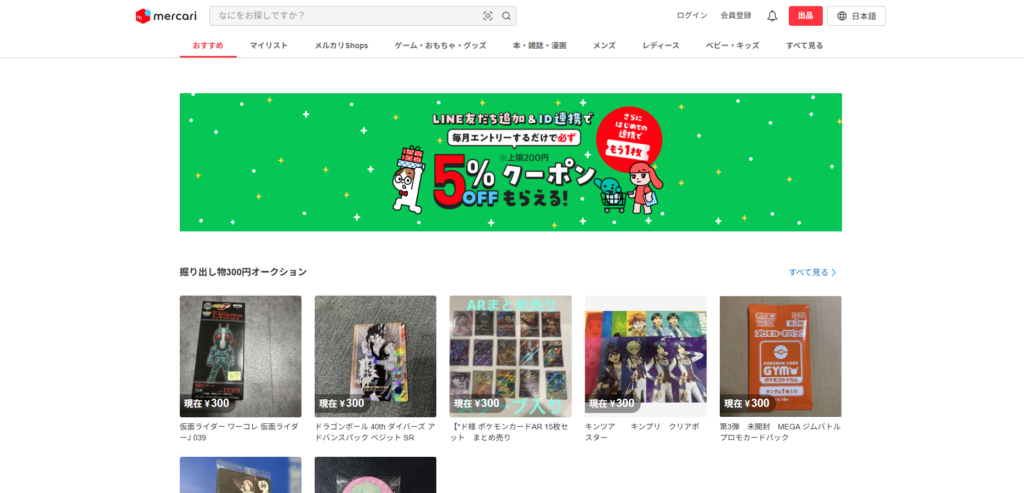

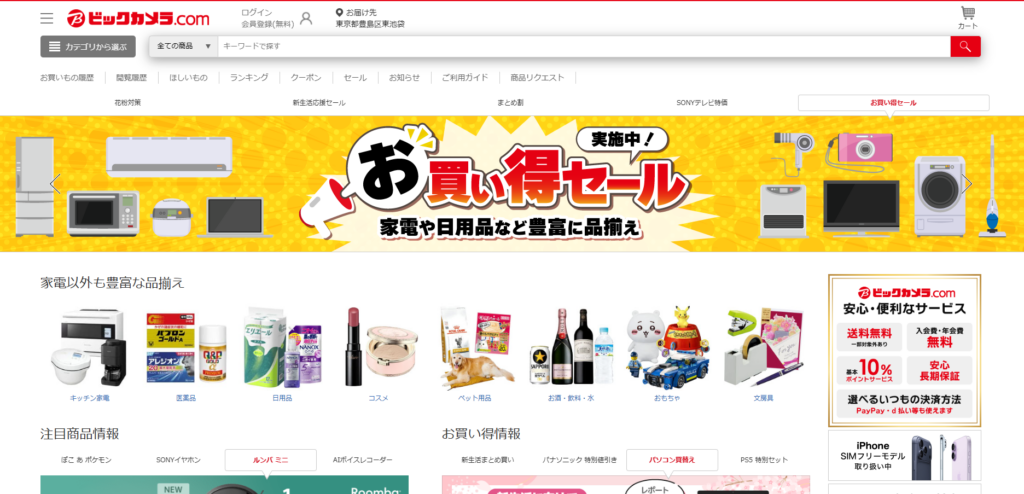
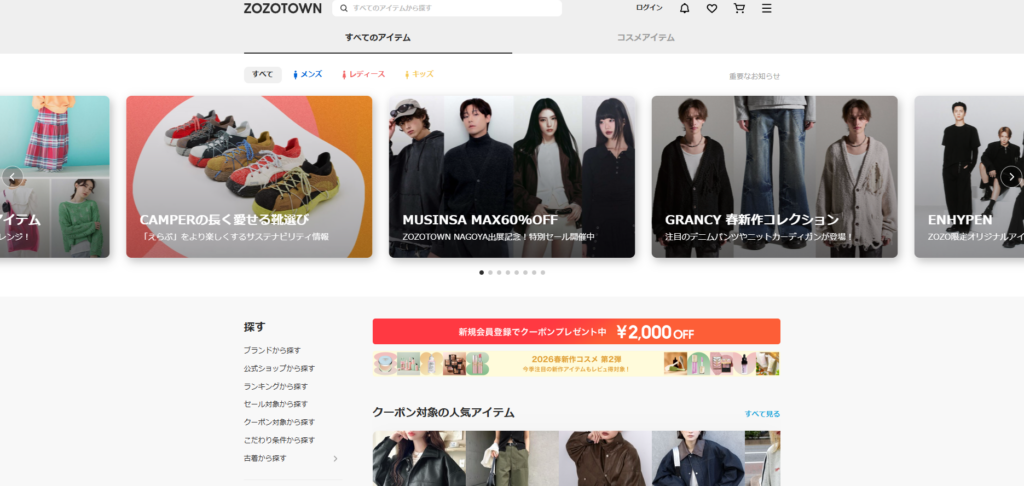
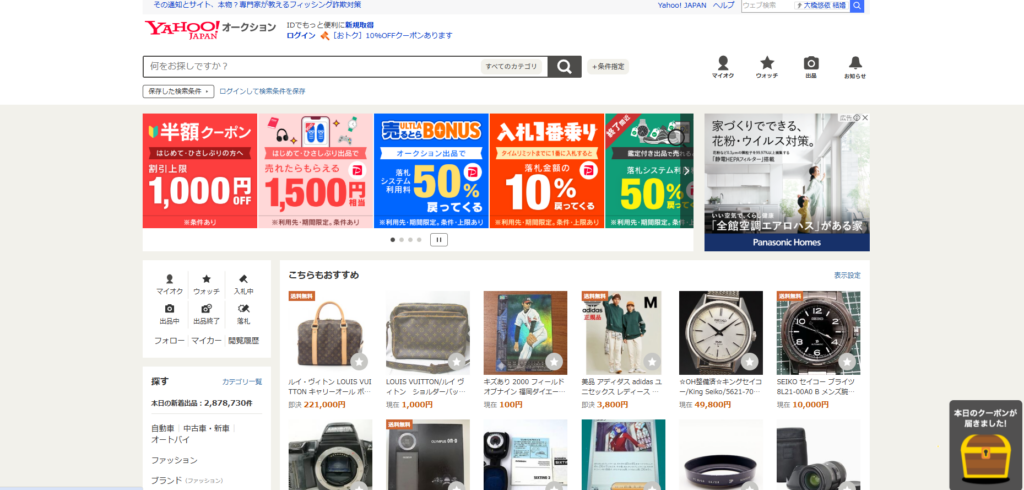
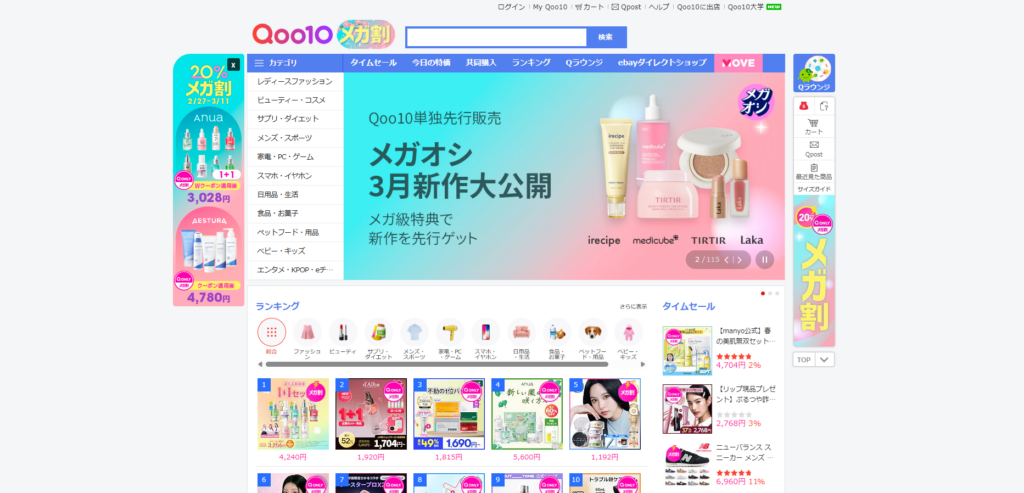
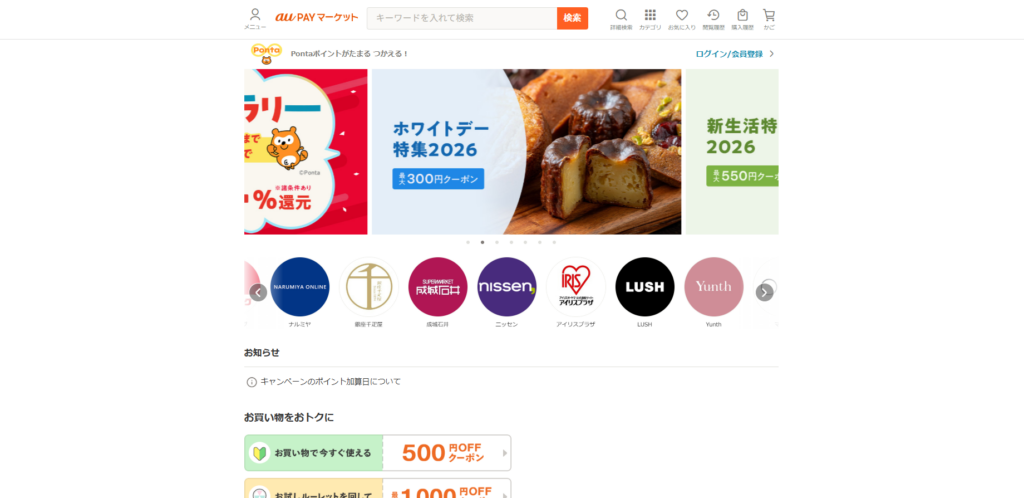
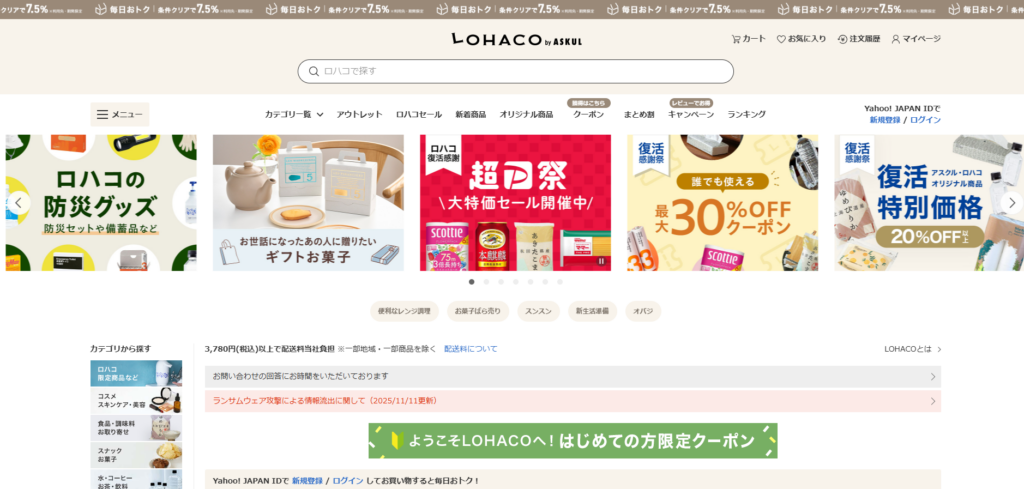
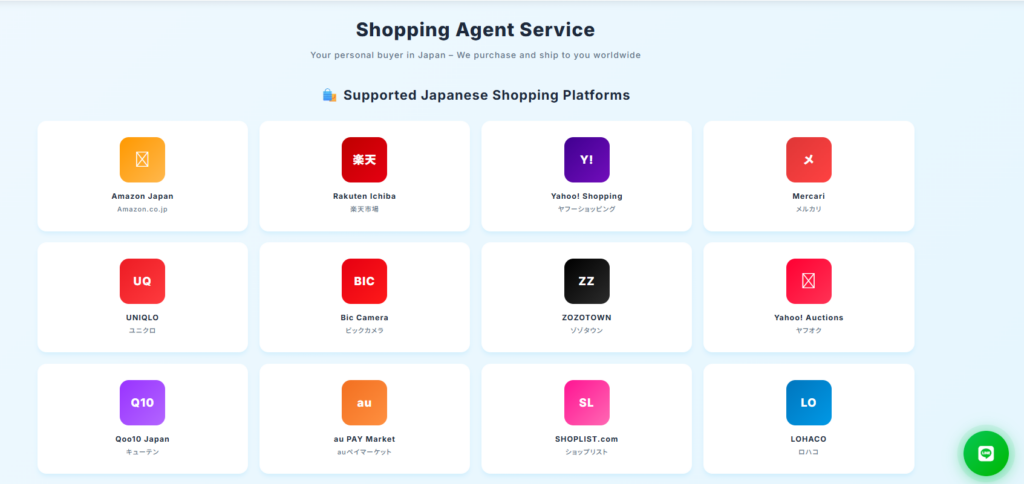
These platforms offer a huge variety of Japanese products that are highly popular worldwide. From the latest Japanese fashion brands to high-quality electronics, cosmetics, lifestyle goods, hobby items, and unique collectibles, you can access many of Japan’s best online stores through our purchasing service.
Even if the product you want is not listed on one of the major platforms above, you can still contact us. We can often assist with purchases from smaller Japanese websites, independent online shops, brand-specific stores, and selected offline products available in Japan. This makes our service highly flexible for customers who want to buy almost anything from Japan.
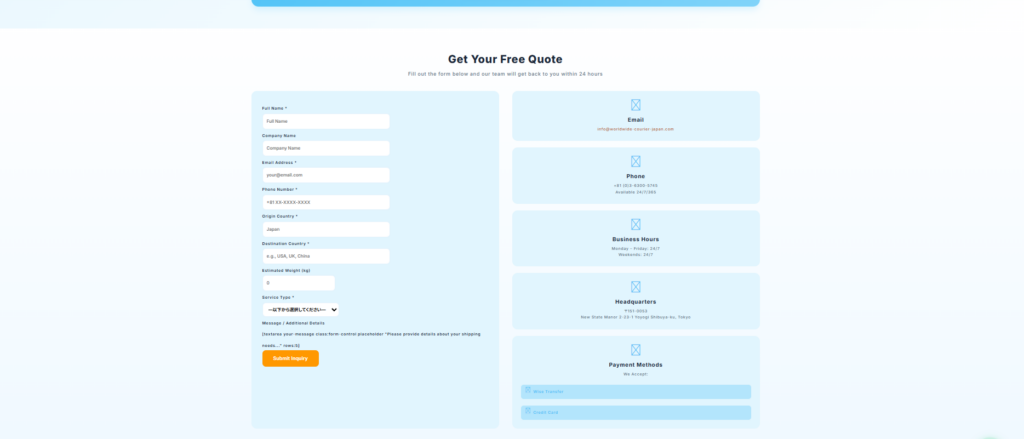
Contact us through the form below. Please send us your order item links or shopping list. Orders can be placed by chat or email, whichever is more convenient for you.
Important Operational Notes
All shipment information must be provided accurately before dispatch. Incorrect or incomplete information may result in shipment delays, additional costs, or reprocessing fees.
Customers are required to provide carton dimensions and weight in advance, as shipping costs are calculated based on chargeable weight (actual weight vs volumetric weight).
For shipments involving special materials such as wooden packaging, additional processing fees may apply depending on carrier requirements.
While standard shipping fees are clearly defined, any exceptional charges imposed by carriers will be billed separately as actual expenses.
Final Summary and Business Advantage
Shipping from the USA to Japan requires a complete understanding of logistics processes, cost structures, and operational conditions. By preparing accurate documentation, optimizing packaging, and selecting the right logistics partner, businesses can significantly reduce costs while ensuring fast and reliable delivery.
For companies involved in international trade, mastering these logistics fundamentals is essential for maintaining competitive pricing, improving supply chain efficiency, and expanding successfully into the Japanese market.
Introducing Worldwide Courier Japan – Your Trusted International Shipping & Import/Export Logistics Partner.
Worldwide Courier Japan provides low-cost international shipping services both from Japan to worldwide destinations and from overseas to Japan. We specialize in global import and export logistics, offering reliable air freight and sea freight solutions for businesses and individuals.
Our services cover export shipping from Japan as well as import shipping into Japan, including commercial cargo, e-commerce shipments, bulk freight, and personal packages. Whether you need to ship goods overseas or import products into Japan, we provide efficient, fast, and cost-effective logistics solutions.
If you are searching for cheap international shipping from Japan, import shipping to Japan, reliable freight forwarding companies in Japan, or global logistics services, Worldwide Courier Japan is your ideal partner. Contact us today for a free consultation.
Why Choose Worldwide Courier Japan for International Shipping & Import Services?
We offer competitive international shipping rates for both exports from Japan and imports into Japan. Our logistics experts help you choose the most efficient and affordable shipping method, whether via express courier, air cargo, or sea freight. We support small parcels, bulk shipments, and commercial cargo with optimized cost and delivery speed.
As one of the most cost-effective logistics companies in Japan, we help you reduce shipping costs for both outbound and inbound logistics while ensuring secure and reliable delivery worldwide.
Email: info@worldwide-courier-japan.com
WeChat: tradingjapankei
Tel: +81-3-6300-5745
We work with global carriers such as UPS and FedEx to provide fast, secure, and trackable international delivery services. Our network enables seamless shipping from Japan to the world and smooth import logistics into Japan from overseas.
We accept secure payments via Wise and major credit cards. Contact us easily via LINE, WhatsApp, email, or our online inquiry form for quick support and shipping quotations.
If you are looking for cheap shipping from Japan, import services to Japan, reliable freight forwarding in Japan, or cost-effective international logistics solutions, Worldwide Courier Japan is your best choice.
We support both exporting Japanese products worldwide and importing goods from overseas into Japan with efficient and affordable logistics solutions.
We provide both international shipping services and Japan purchasing (shopping agent) services.
Buy authentic Japanese products with our trusted shopping agent service. We also support importing products into Japan from overseas suppliers. Whether you are sourcing goods globally or purchasing from Japan, we handle procurement, inspection, packaging, and international delivery.
We support major platforms such as Amazon, Rakuten, Yahoo! Shopping, and Mercari. If international shipping is not available, we purchase on your behalf and deliver safely worldwide or import into Japan.
Enjoy secure payments, reliable logistics, and professional support for both export and import operations.
Contact us here:
https://worldwide-courier-japan.com/#contact