Leverage the insights from the guide to understand how to export matcha efficiently and cost-effectively. This article clarifies the essential steps, key terms, and regulatory requirements for exporting matcha from Japan, helping overseas buyers and cross-border sellers navigate documentation, inspections, and labeling with confidence. Readers will learn practical workflows—from pre-shipment preparation and document collection to customs declarations and post-shipment handling—that save time and reduce costs. The piece also highlights how a reliable Japan forwarding service can streamline end-to-end logistics, including collection from anywhere in Japan, comprehensive export support, and door-to-door delivery to 200+ countries. Real-world scenarios illustrate how to ship directly to EC marketplaces, consolidate multiple orders, or procure from Japanese suppliers, while comparisons underscore the value of a one-stop forwarding partner who handles packing, inspection, and customs clearance. This guide equips exporters and cross-border traders with actionable strategies to maintain product quality, meet labeling and safety standards, and achieve faster, cheaper international shipping.
- Foundations of Matcha Export
- How to Place an Order (Easy Japan Proxy Buying & International Shipping)
- Japanese Product Shopping Agent Service – Buy from Japan and Ship Worldwide
- Supported Japanese Shopping Platforms
- Structured Guide to the Practical Flow of Export Procedures
- Cost-Effective Partners for Overseas Shipping from Japan
- Necessary Documents and Quality Requirements
- About International Shipping Rates from Japan
- Canada Export Shipping Rates (Discount Contract Rates)
- Discount Export Shipping Rates from Japan (Asia & International Cargo)
- Hong Kong Export Shipping Rates
- South Korea Export Shipping Rates
- Taiwan Export Shipping Rates
- China (Northern Region: Shanghai, Zhejiang etc.) Export Shipping Rates
- China (Southern Region: Guangdong, Fujian etc.) Export Shipping Rates
- Macau Export Shipping Rates
- Southeast Asia Export Shipping Rates (Malaysia / Vietnam / Philippines / Singapore / Thailand)
- India & Australia Export Shipping Rates
- Europe Export Shipping Rates (Spain / Germany / France / Italy)
- How it works
- Step 1: Prepare the shipment
- Step 2: Email the shipment documents (invoice and packing information) to us.
- Step 3: We email two required documents for shipment (air waybill and invoice) to your shipper.
- Step 4: The carrier picks up the shipment from the pickup location / domestic warehouse, and the shipment is dispatched
- Step 5: Delivery and receipt of the cargo
- Input format
- Transaction flow (detailed version)
- Breakdown of Applicable Charges
- Knowledge About Restricted and Prohibited Items
- Choosing a Cost-Effective and Reliable Forwarding Service
- Overseas Export Practical Q&A
Foundations of Matcha Export

Exporting matcha from Japan combines premium product value with complex regulatory requirements and efficient logistics. This section introduces the essential framework for successfully delivering authentic matcha to international buyers, covering the high-level steps, key terminology, and regulatory landscape. Building a solid foundation helps cross-border sellers minimize risk, optimize costs, and meet the expectations of global consumers who seek quality, safety, and reliable delivery.
Essential steps for exporting matcha
Exporting matcha involves a sequence of coordinated activities from product preparation to final delivery. Start with confirming product specifications to preserve flavor and color, including grade, origin, aroma, moisture, and particle size. Establish packaging that protects color and aroma during transit and complies with destination labeling requirements. Develop a clear bill of materials (BOM) and production certificates to demonstrate quality and origin for importers and authorities.
Next, secure compliance with Japanese export controls, including export declarations, phytosanitary considerations if applicable, and accurate product classification under the HS code system. Prepare commercial documentation: commercial invoice, packing list, certificate of origin, and any required quality or safety attestations. Coordinate with a reliable logistics partner to choose air or sea transport based on cost, urgency, and product sensitivity. Finally, manage customs clearance in the destination country, including tariff assessment, conformity checks, and handling of duties and taxes, ensuring on-time delivery to the buyer.
Throughout the process, maintain transparent communication with buyers, provide traceable shipment data, and implement robust handling practices to protect delicate green tea aroma and vibrant color. By standardizing procedures—from supplier onboarding to post-shipment visibility—exporters can scale matcha exports while maintaining consistency across international markets.
Key terms and overview of regulations
Understanding common terms and regulatory concepts is critical for smooth matcha exports. Key terms include:
- HS Code: The Harmonized System classification for matcha powders, which influences duties and import controls.
- Certificate of Origin: A document certifying the product’s country of origin, often used to claim preferential duty treatment.
- Phytosanitary Certificate: Sometimes required if plant-based products pose natural risk; confirms pest and disease-free status.
- Import Permits and Compliance: Destination country requirements for food imports, including product safety standards and labeling rules.
- Food Safety Standards: Compliance with international or country-specific standards (e.g., maximum pesticide residues, packaging and labeling guidelines).
- Labeling and Language Requirements: Destination-specific labeling in local languages, including ingredients, allergens, and origin.
- Shelf-life and Storage Conditions: Guidance on storage temperatures and best-by dates to preserve freshness and aroma.
Regulatory landscape varies by country but typically includes food safety checks, packaging and labeling compliance, and documentation for customs clearance. Proactive due diligence—such as verifying supplier certifications, conducting internal QA, and coordinating with a capable forwarding partner—helps prevent delays and ensures a positive reception from overseas buyers. Aligning product specs, documentation, and regulatory readiness creates a reliable foundation for successful matcha exports.
Japan product agent service
We can buy Japanese products and ship them to countries worldwide.
We provide both international shipping and purchasing services, so we can handle both the purchase of products in Japan and the shipment to your country.
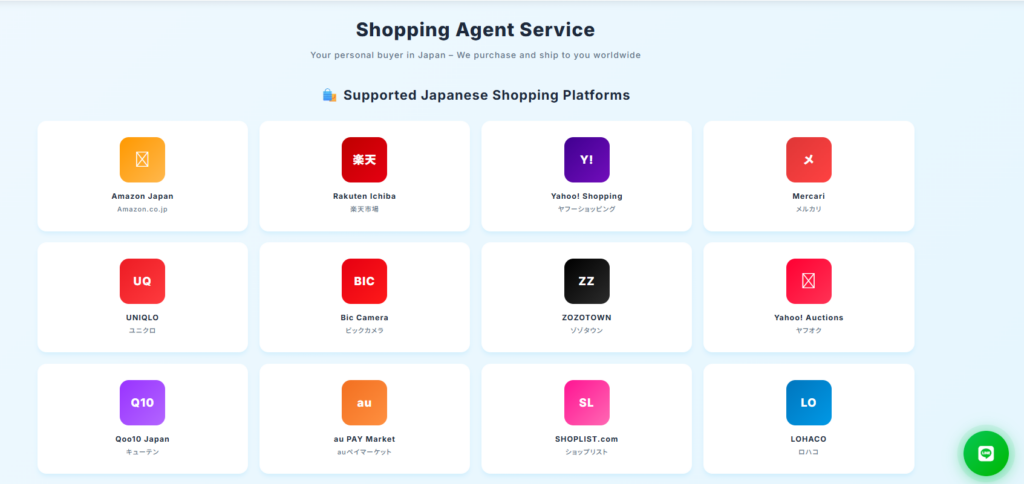
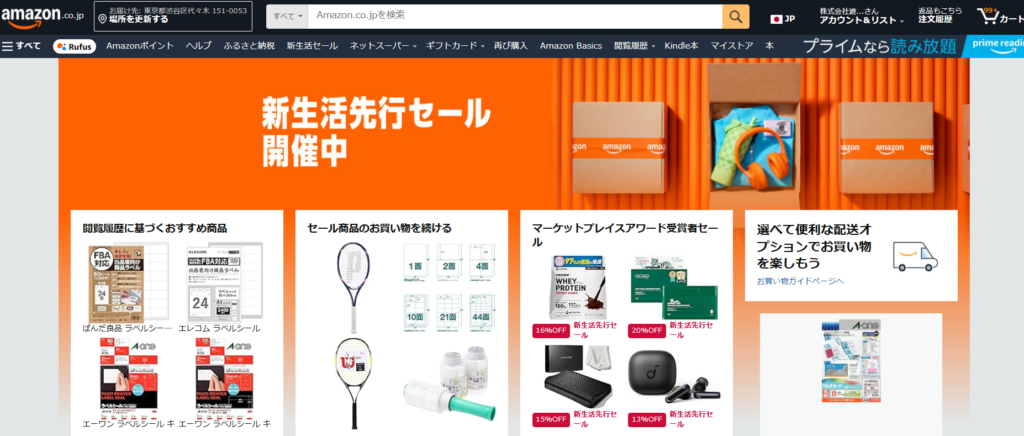
Buy Authentic Japanese Products with Our Trusted Shopping Agent Service. We help customers worldwide purchase items directly from popular Japanese online stores such as Amazon Japan, Rakuten, Yahoo! Shopping, Mercari, and more. If a store does not ship internationally, we buy on your behalf and deliver safely to your country. Enjoy access to exclusive Japanese brands, limited editions, electronics, fashion, cosmetics, and collectibles at competitive prices. Our service offers secure payments, careful inspection, reliable packaging, and fast international shipping.
How to Place an Order (Easy Japan Proxy Buying & International Shipping)
To place an order, please send us the required information via email, LINE, or our contact form. Once we confirm your details, we will issue a proforma invoice with a complete cost breakdown.
Required Information for Your Order
- Product URL(s) from Japanese websites (e.g., Amazon Japan, Rakuten, Mercari)
- Quantity (number of items)
- Delivery Address (full address including postal code and phone number)
- Preferred Delivery Schedule (desired shipping date or deadline)
Order Process
- Send your order details via email, LINE, or contact form
- Receive a proforma invoice including product cost, service fee, and shipping cost
- Confirm your order and complete payment
- We purchase the items from Japan on your behalf
- Your products are shipped safely to your destination
Why Choose Our Japan Proxy Buying Service?
- Access to popular Japanese marketplaces and exclusive products
- Affordable international shipping rates
- Secure payment and professional handling
- Reliable support for global customers and businesses
Contact us today to start your order and enjoy fast, reliable access to authentic Japanese products.
Japanese Product Shopping Agent Service – Buy from Japan and Ship Worldwide
Our Japanese Shopping Agent Service allows customers around the world to purchase authentic products directly from Japan. Many Japanese online stores do not ship internationally, which makes it difficult for overseas buyers to access popular and exclusive Japanese products. Our service solves this problem by purchasing items on your behalf and shipping them safely to your country.
We support a wide range of popular Japanese online marketplaces and retail stores. Whether you are looking for fashion, electronics, cosmetics, collectibles, hobby items, anime goods, daily-use products, or limited Japanese products, we can help you purchase them and arrange reliable international shipping.
We can also help you purchase products from smaller Japanese websites, specialty stores, local shops, and suppliers that may not support overseas customers. In many cases, if the product can be bought in Japan, we can help you buy it. This makes our service ideal for customers in Malta who want flexible access to almost anything sold in Japan.
Our service is suitable for:
• personal shopping from Japan
• Japan proxy buying
• e-commerce sourcing
• wholesale and bulk orders
• limited-edition and hard-to-find Japanese products
• combined shipping to reduce international delivery costs
CTA: If you have a product link, product name, screenshot, or shopping list, send it to us through our contact form. We will check availability, provide support, and help you buy and ship your items from Japan smoothly and safely.
Supported Japanese Shopping Platforms
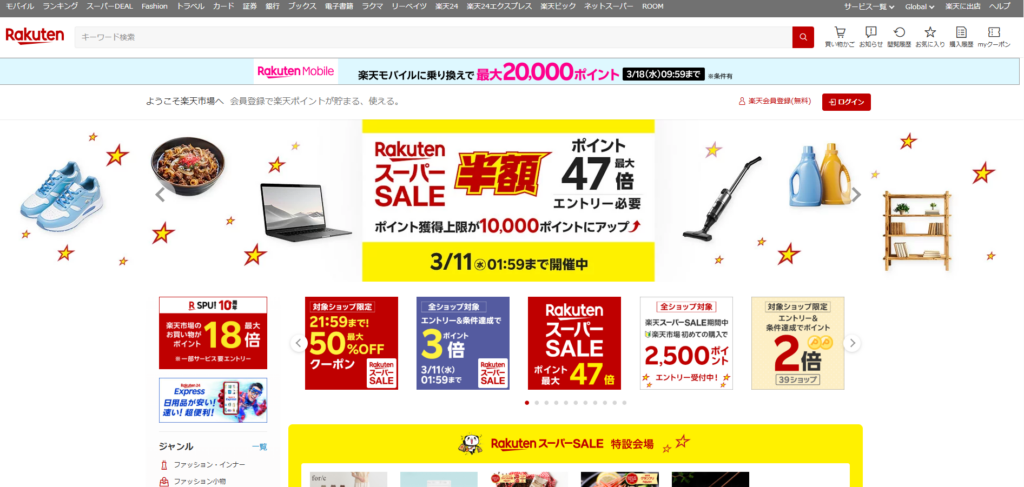
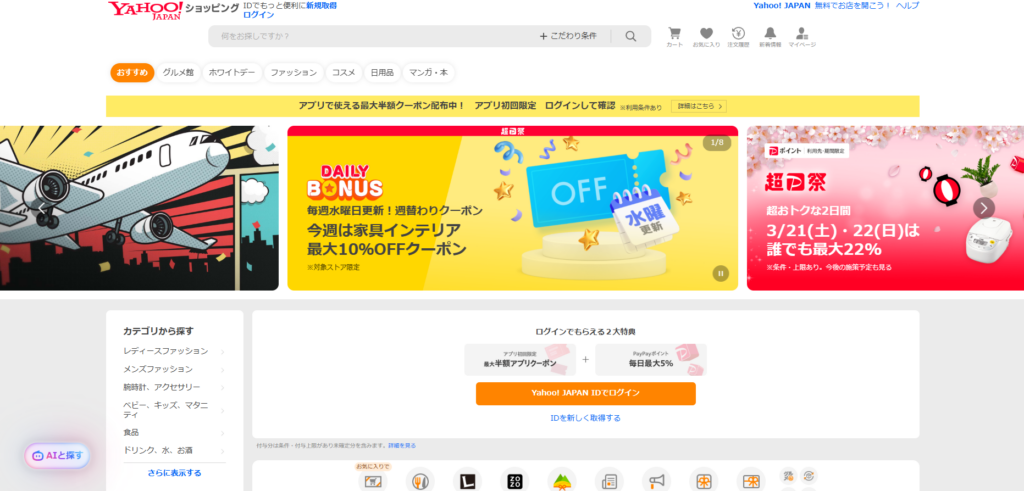
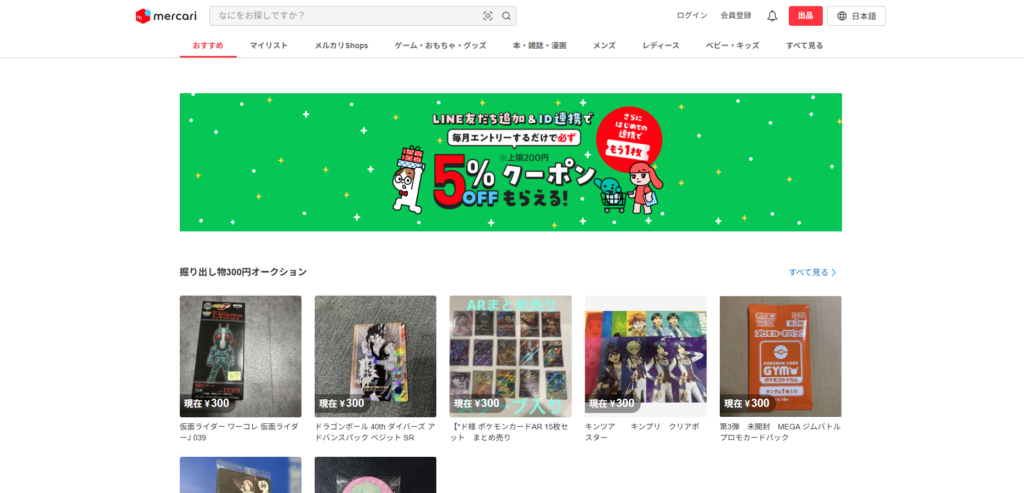

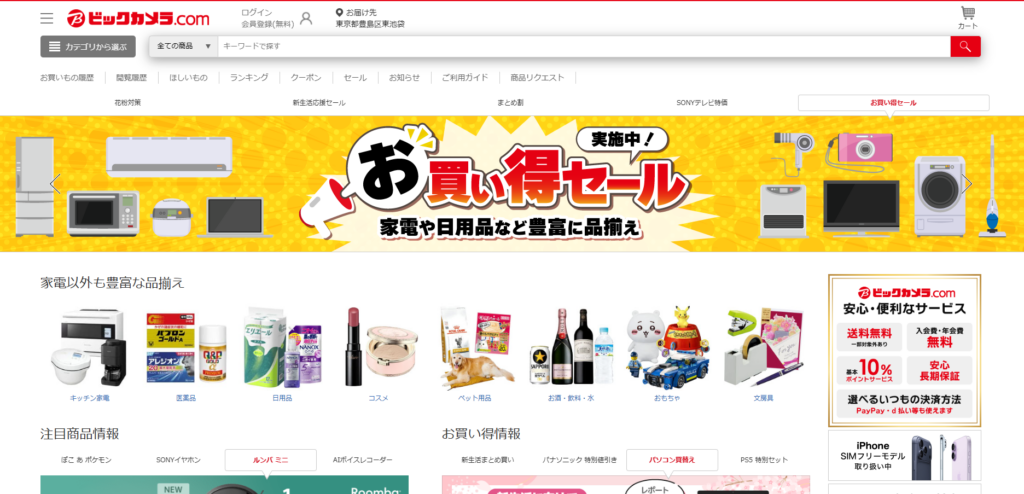
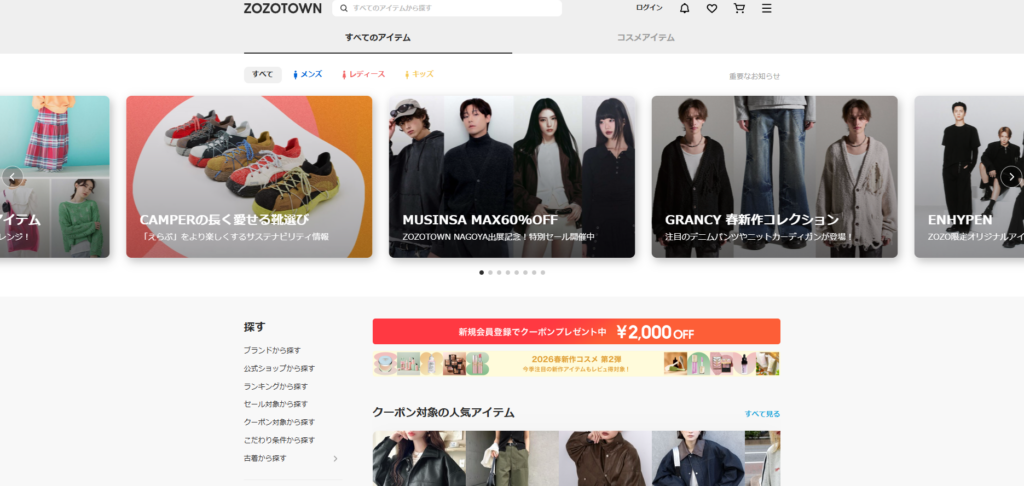
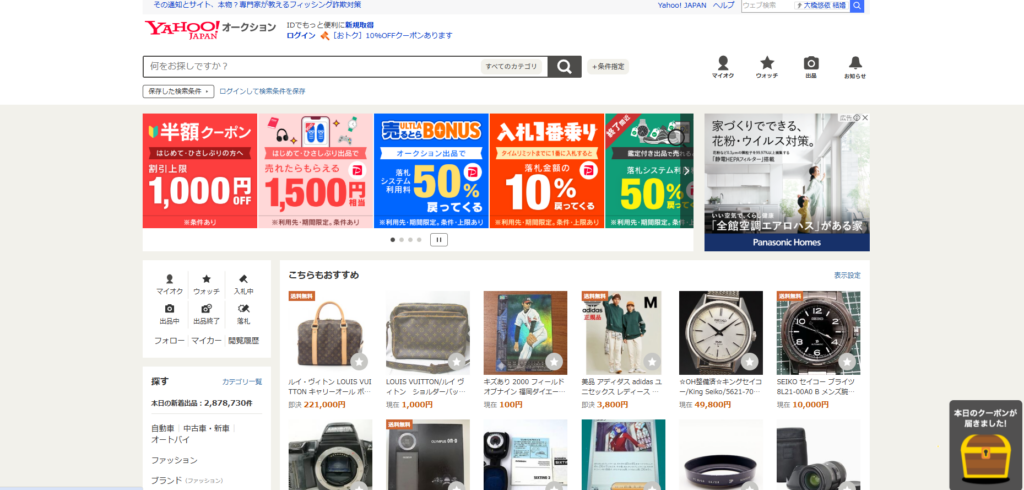
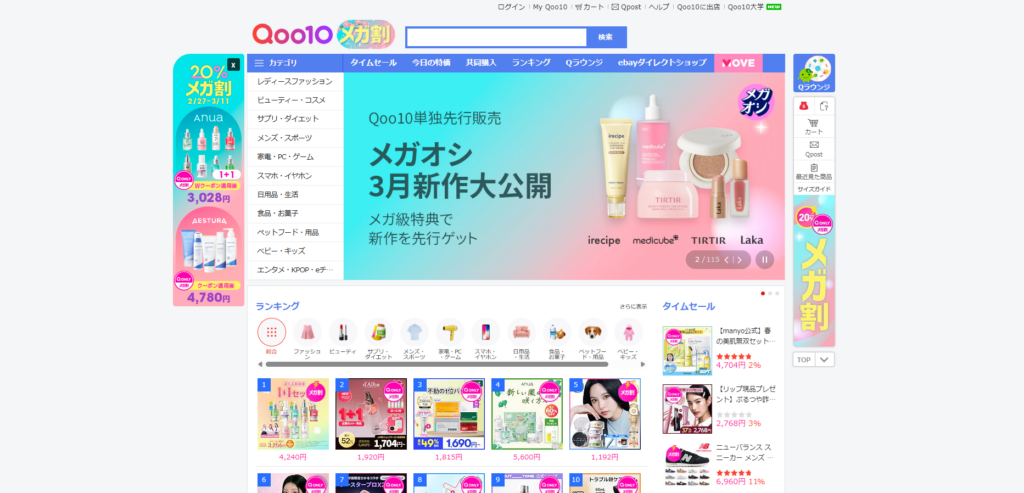
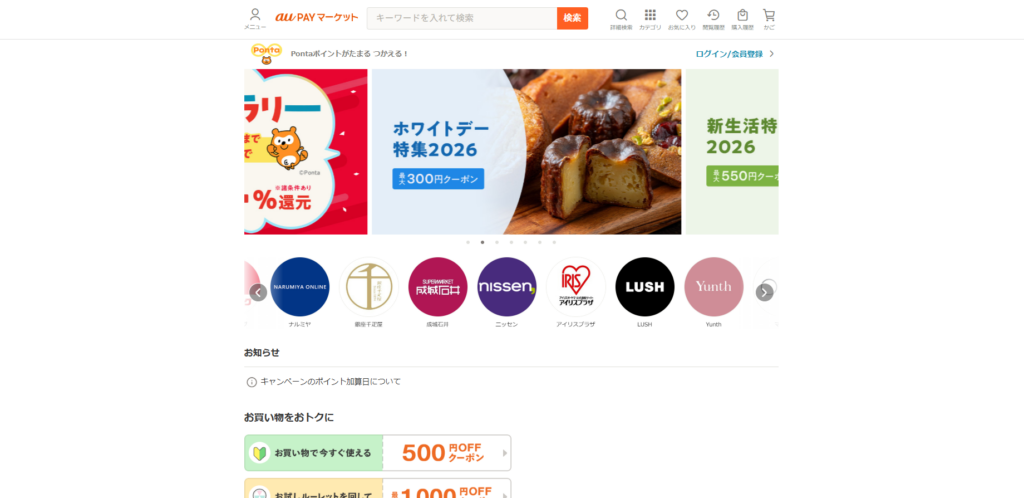
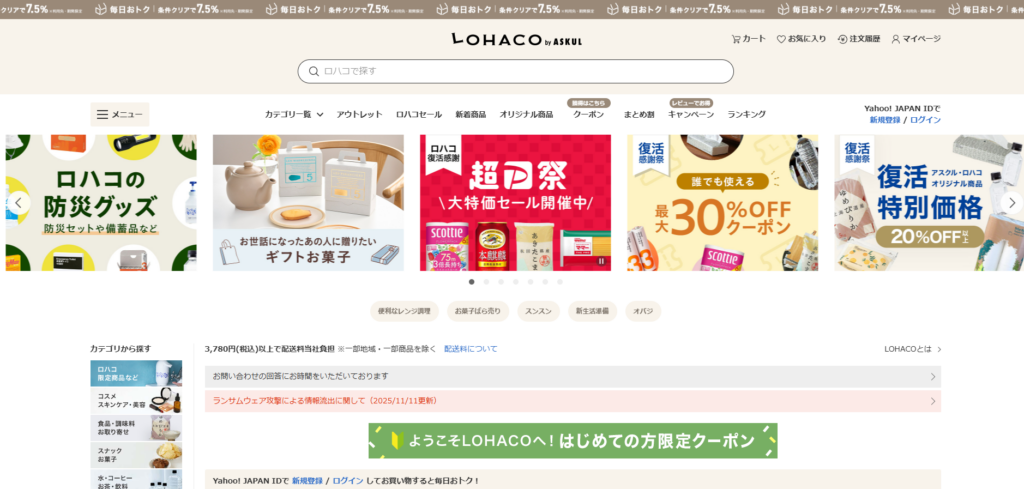
These platforms offer a huge variety of Japanese products that are highly popular worldwide. From the latest Japanese fashion brands to high-quality electronics, cosmetics, lifestyle goods, hobby items, and unique collectibles, you can access many of Japan’s best online stores through our purchasing service.
Even if the product you want is not listed on one of the major platforms above, you can still contact us. We can often assist with purchases from smaller Japanese websites, independent online shops, brand-specific stores, and selected offline products available in Japan. This makes our service highly flexible for customers who want to buy almost anything from Japan.
Contact us through the form below. Please send us your order item links or shopping list. Orders can be placed by chat or email, whichever is more convenient for you.
Structured Guide to the Practical Flow of Export Procedures

Understanding the end-to-end export process is essential for seamless shipments from Japan to international destinations. This section breaks down the steps into three stages: pre-shipment preparation and product information, documentation and application flow, and the export declaration and customs procedures. Each stage highlights actionable actions, key documents, and practical tips to minimize delays and ensure compliance across 200+ destinations.
Pre-shipment preparation and product information alignment
Effective export starts long before a carrier is booked. Begin with a comprehensive product profile that captures essential details for customs, buyers, and logistics partners. This includes product classification (HS code), material composition, value, weight, dimensions, country of origin, and any regulatory certifications. Align packaging standards with both international regulations and buyer requirements to prevent delays at customs or during transit. Establish a single source of truth for product data by maintaining updated records in your ERP or product catalog, and ensure variations (colors, sizes, materials) are clearly specified to avoid incorrect classifications.
Key actions: – Determine the correct HS code for every item and verify classification using official tariff schedules. – Compile material safety data sheets (MSDS) and any required test certificates, especially for chemicals, electronics, or food-related products. – Define packaging, labeling, and barcoding practices that meet international norms (GS1 standards where applicable). – Prepare commercial and pro forma invoices with accurate descriptions, harmonized units, and incoterms aligned to the buyer’s terms. – Confirm origin declarations and preferente/FTA eligibility if your customers benefit from reduced duties.
Practical tips: – Create a product information sheet (PIS) for internal sharing and external inquiries; include image references, model numbers, and packaging sketches. – Perform a quick regulatory check for destination countries to anticipate product-specific prohibitions or additional licenses.
Documentation preparation and application flow
Accurate and timely documentation accelerates customs clearance and reduces the risk of holds. The core documents typically include commercial invoices, packing lists, certificates of origin, and relevant export licenses. Depending on the product and destination, additional documents such as inspection certificates, phytosanitary certificates, or conformity assessments may be required. Establish a standardized document package template and assign ownership for each item to prevent bottlenecks.
Document checklist: – Commercial invoice: precise buyer and seller details, unit price, total value, incoterms, currency, and payment terms. – Packing list: itemization by carton, gross/net weight, dimensions, and marking on each package. – Certificate of origin or supplier declaration: verifies country of origin for tariff treatment. – Export license or endorsement: required for dual-use goods, strategic materials, or controlled items. – Insurance certificate (if applicable): indicates coverage type and value. – Other destination-specific forms: import permits, special certificates, or conformity attestations.
Application flow: 1) Collect all product and order data from sales and procurement teams. 2) Generate documents in standardized templates with accurate metadata. 3) Obtain any required endorsements or stamps from relevant authorities or chambers of commerce. 4) Submit necessary documents to the chosen carrier, freight forwarder, or customs broker as part of the shipment booking. 5) Share the full document package with the overseas recipient if required, ensuring language and format align with destination country expectations.
Practical tips: – Use an automated document generation system to reduce human error and speed up processing. – Maintain version control for documents to track amendments and ensure the latest revisions are used.
Export declaration and customs procedures
Export declarations and customs formalities are the final gatekeepers before goods depart. In Japan, exporters may need to complete export declarations through the relevant export control system, and freight forwarders or customs brokers can handle the submission on your behalf. Key steps include validating shipment classifications, ensuring proper valuation, and coordinating with the customs authority for clearance. Timely communication with your forwarder and the buyer is essential to align schedules and avoid demurrage or storage charges.
Core steps: – Validate classification and valuation: confirm HS codes, pricing, and duties are correctly represented in the declaration. – Prepare and file export declarations: include the invoice, packing list, and any required licenses. – Confirm origin and compliance checks: satisfy origin verification and any required certifications. – Coordinate shipment release: ensure the carrier has all required documents to load and transport the cargo, and confirm ETA and routing with the buyer.
Common challenges and mitigations: – Misclassification risks: double-check HS codes with a customs broker or official tariff resources; incorrect codes can cause duty mischarges or imports delays. – Documentation gaps: create a pre-departure checklist to verify all forms are present and accurate. – Regulatory changes: subscribe to updates from customs authorities and industry associations to stay current on rules affecting your products.
By following these structured steps—rigorous pre-shipment preparation, precise documentation, and proactive customs coordination—export procedures become smoother, faster, and more reliable for both Japanese exporters and overseas buyers. To discuss tailored export flows for your products and destinations, contact Worldwide Courier Japan for expert guidance and end-to-end support.
Cost-Effective Partners for Overseas Shipping from Japan
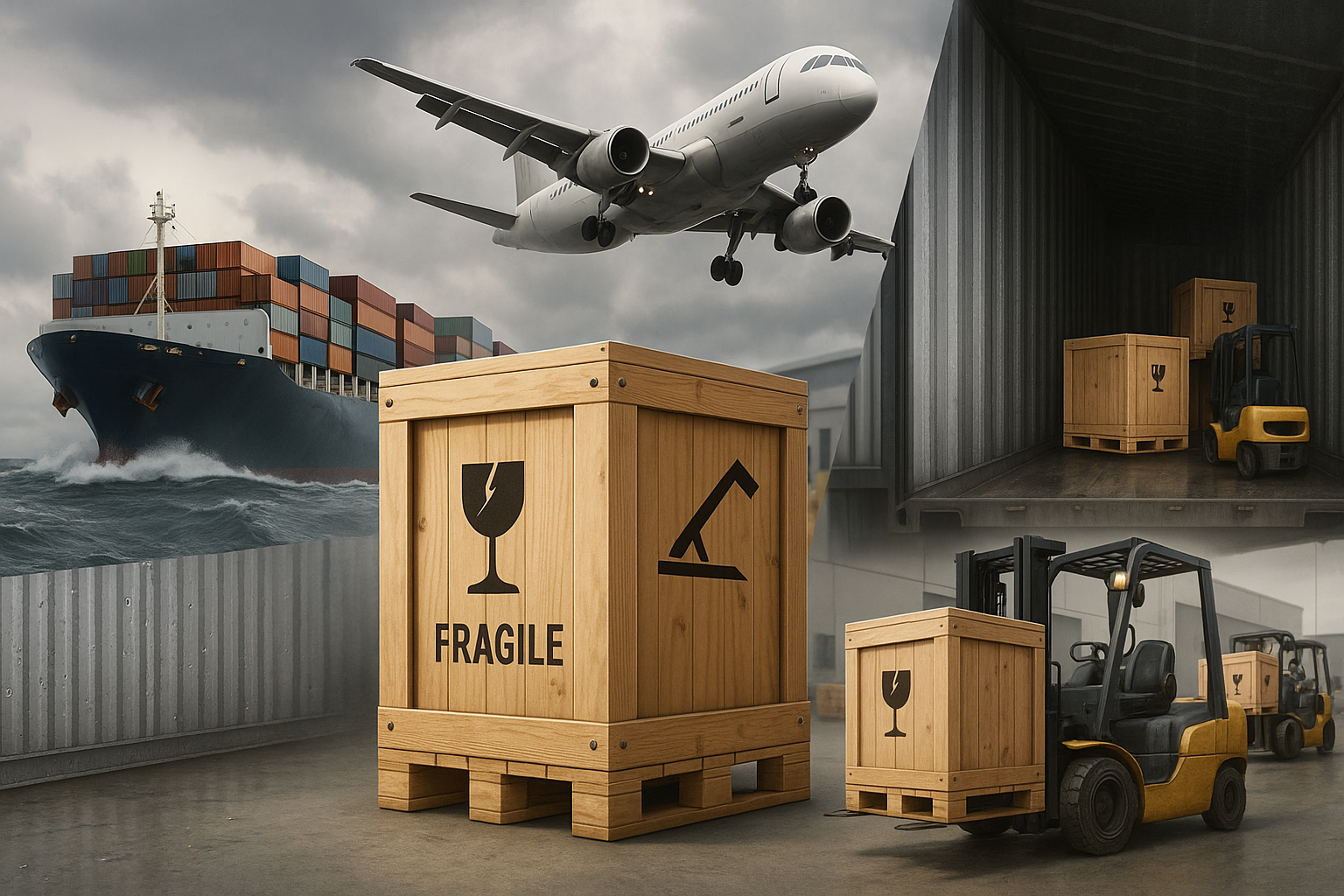
For international buyers and sellers, finding a reliable shipping partner that can handle Japan-to-overseas shipments at competitive rates is crucial. A strong forwarding solution combines nationwide pickup, streamlined export procedures, and efficient delivery to destinations worldwide. This section outlines why Japanese products remain in high demand abroad, introduces a capable carrier that supports both exporting from Japan and importing to Japan, and highlights reputable services that assist with procurement in Japan. The goal is to help overseas buyers and cross-border sellers optimize logistics, reduce costs, and accelerate time-to-market.
Why Japanese Product Demand Will Continue to Grow Globally
Japanese goods are known for quality, innovation, and reliability, spanning electronics, cosmetics, fashion, and traditional crafts. Global buyers increasingly seek authentic Japanese items, especially those with strong brand trust and certification. Factors driving sustained demand include: strong consumer brands, rigorous quality control, and a growing appreciation for Japan-made periphery products such as household goods and specialty foods. As e-commerce and cross-border marketplaces expand, overseas buyers flock to Japan for exclusive products, limited editions, and authentic sourcing. For exporters, this sustained demand supports stable volume forecasts, improved supplier negotiation power, and opportunities for high-value shipments with predictable transit times when paired with a dependable forwarding partner.
Recommended Transport Solutions: Export from Japan and Import to Japan with One Reliable Partner
Choosing a single logistics provider that offers both export from Japan and import into Japan ensures smoother customs workflows, better routing options, and integrated end-to-end visibility. A leading forwarder should provide: nationwide pickup, consolidation, export documentation, customs clearance, and delivery to overseas warehouses or end customers. For companies requiring procurement support, the partner should also offer sourcing assistance in Japan, quality checks, and compliant labeling. Benefits include lower total landed cost, simplified communication, and faster delivery cycles, enabling you to scale cross-border trade with confidence.
Introducing Japanese Procurement and Forwarding Experts for Your Needs
When sourcing from Japan, leveraging a reliable Japanese procurement and forwarding service can reduce lead times and procurement risk. A strong partner will align with your target markets, provide Japanese supplier verification, and coordinate shipping from multiple suppliers to a single export port or directly to your overseas customers. They should also handle the full spectrum of export and import procedures, including packaging optimization to minimize damage, documentation accuracy, and customs compliance. By combining procurement support with end-to-end forwarding, you gain a seamless supply chain that keeps inventory flowing and customers satisfied.
Necessary Documents and Quality Requirements

In international trade, meeting documentation and quality standards is crucial to ensure smooth customs clearance, compliance, and customer satisfaction. This chapter outlines the essential paperwork, labeling, and certification considerations for exporting products from Japan. Clear, accurate documentation reduces delays, avoids penalties, and supports reliable cross-border fulfillment.
Ingredient and Raw Material Disclosure and Labeling Requirements
Transparent disclosure of ingredients and raw materials is mandatory for many consumer products, particularly food, cosmetics, and chemical goods. Key practices include:
– Recipe transparency: List all ingredients in descending order by weight, including additives, preservatives, and allergens, in the official language of the destination country if required. Use standardized INCI names where applicable to reduce confusion.
– allergen labeling: Highlight common allergens (e.g., wheat, soy, nuts, dairy) according to the target market’s regulations. For the EU and US, adhere to established allergen declaration rules; for Japan’s exports, include a bilingual or English label when necessary for import partners.
– import-friendly sourcing: Ensure suppliers provide original certificates of composition, batch numbers, and material safety data sheets (MSDS) for chemical components. Attach this information to the shipment or make it readily accessible via a digital portal.
– weight and unit accuracy: Use precise net and gross weights, with metric units (kg, g) and product dimensions clearly listed on the label. Ensure the labeling format matches the destination’s packaging standards.
– traceability labels: Implement lot numbers and barcodes to enable end-to-end traceability from origin to consignee, supporting recalls or quality inquiries if needed.
– translations and harmonization: Provide accurate translations of labels and ingredient lists to avoid misinterpretation. Consider harmonizing terminology across shipments to reduce re-labeling costs.
Safety, Inspection, and Certification Essentials
Exported goods often require safety assessments, third-party testing, and official certifications to meet importers’ requirements and local regulations. Focus areas include:
– product safety conformity: Confirm compliance with applicable safety standards (e.g., electrical safety, mechanical integrity, toy safety, cosmetics regulations). Keep certificates on file and present them during inspections.
– third-party testing: Obtain independent lab test reports for critical properties such as heavy metals, allergens, microbiological limits, or chemical residues. Maintain test reports by batch for easy reference.
– certification marks and validity: Ensure certificates (e.g., CE, UL, GOST, Phytosanitary, FCM for cosmetics) are current and properly issued. Validate scope, product category, and expiration dates before shipment.
– packaging and labeling compliance: Align packaging materials with local regulations (e.g., carton labeling, safety warnings, recyclable symbols). Use tamper-evident seals where required to enhance product integrity.
– import clearance documents: Prepare certificates of origin, commercial invoices, packing lists, and any required sanitary or phytosanitary certificates. These documents facilitate faster customs processing and reduce hold times.
– risk mitigation: For products with potential health or environmental impacts, implement compliance risk assessments, maintain supplier declarations, and establish corrective action procedures for any non-conformities.
About International Shipping Rates from Japan

◇ Shipping rate table (price per kg)
Japan → United States (U.S./North America/Central America)
※ UPS fastest service level with tracking number. ※
※ We can also handle EMS, International ePacket, air mail, SAL, and sea freight via Japan Post—please let us know if you prefer these options..
※ UPS fastest service level with tracking number ※
【United States (U.S./North America/Central America) Export Preferred Rates】
・1kg :4,030円
1.5kg :4,451円
2kg :4,963円
2.5kg :5,409円
3kg :5,889円
3.5kg :6,271円
4kg :6,701円
4.5kg :7,164円
5kg :7,580円
5.5kg :7,674円
6kg :7,878円
6.5kg :8,160円
7kg :8,317円
7.5kg :8,601円
8kg :8,727円
8.5kg :8,867円
9kg :9,087円
9.5kg :9,306円
10kg :9,464円
10.5 :18,790円
11kg : 19,257円
11.5kg:19,526円
12kg : 19,760円
12.5kg: 20,094円
13kg : 20,431円
13.5kg: 20,798円
14kg : 21,132円
14.5kg: 21,432円
15kg : 21,904円
15.5kg: 22,204円
16kg : 22,571円
16.5kg: 22,877円
17kg : 23,242円
17.5kg: 23,578円
18kg : 23,946円
18.5kg: 24,183円
19kg : 24,449円
19.5kg: 24,851円
20kg : 25,388円
・21-49kg :900円/ per 1kg
・50-99kg :710円/ per 1kg
・100-299kg:620円/ per 1kg
・300-499kg:615円/ per 1kg
・500-999kg:610円/ per 1kg
・1000-5000kg:605円/ per 1kg
Canada Export Shipping Rates (Discount Contract Rates)
The following are our special discounted shipping rates for exporting parcels from Japan to Canada. These rates are designed for international shipments using reliable courier services with secure customs clearance.
| Weight | Shipping Cost |
|---|---|
| 1 kg | 4,030 JPY |
| 1.5 kg | 4,451 JPY |
| 2 kg | 4,963 JPY |
| 2.5 kg | 5,409 JPY |
| 3 kg | 5,889 JPY |
| 3.5 kg | 6,271 JPY |
| 4 kg | 6,701 JPY |
| 4.5 kg | 7,164 JPY |
| 5 kg | 7,580 JPY |
| 5.5 kg | 7,674 JPY |
| 6 kg | 7,878 JPY |
| 6.5 kg | 8,160 JPY |
| 7 kg | 8,317 JPY |
| 7.5 kg | 8,601 JPY |
| 8 kg | 8,727 JPY |
| 8.5 kg | 8,867 JPY |
| 9 kg | 9,087 JPY |
| 9.5 kg | 9,306 JPY |
| 10 kg | 9,464 JPY |
| 10.5 kg | 18,790 JPY |
| 11 kg | 19,257 JPY |
| 11.5 kg | 19,526 JPY |
| 12 kg | 19,760 JPY |
| 12.5 kg | 20,094 JPY |
| 13 kg | 20,431 JPY |
| 13.5 kg | 20,798 JPY |
| 14 kg | 21,132 JPY |
| 14.5 kg | 21,432 JPY |
| 15 kg | 21,904 JPY |
| 15.5 kg | 22,204 JPY |
| 16 kg | 22,571 JPY |
| 16.5 kg | 22,877 JPY |
| 17 kg | 23,242 JPY |
| 17.5 kg | 23,578 JPY |
| 18 kg | 23,946 JPY |
| 18.5 kg | 24,183 JPY |
| 19 kg | 24,449 JPY |
| 19.5 kg | 24,851 JPY |
| 20 kg | 25,388 JPY |
Bulk Shipping Rates
| Weight Range | Rate per kg |
|---|---|
| 21 – 49 kg | 900 JPY / kg |
| 50 – 99 kg | 710 JPY / kg |
| 100 – 299 kg | 620 JPY / kg |
| 300 – 499 kg | 615 JPY / kg |
| 500 – 999 kg | 610 JPY / kg |
| 1,000 – 5,000 kg | 605 JPY / kg |
These international shipping rates allow businesses and individuals to ship goods from Japan to Canada efficiently and cost-effectively. Large-volume shipments receive significantly reduced per-kilogram rates, making them ideal for e-commerce exports, bulk cargo, and commercial logistics.
Discount Export Shipping Rates from Japan (Asia & International Cargo)
Below are our special discounted international cargo shipping rates for exporting goods from Japan. These bulk shipping prices are ideal for businesses, e-commerce sellers, and logistics companies shipping large cargo volumes overseas.
Hong Kong Export Shipping Rates
| 21 – 50 kg | 750 JPY / kg |
| 50 – 100 kg | 550 JPY / kg |
| 100 – 299 kg | 400 JPY / kg |
| 300 – 999 kg | 380 JPY / kg |
| 1000 – 2000 kg | 350 JPY / kg |
| Over 2000 kg | 320 JPY / kg |
South Korea Export Shipping Rates
| 21 – 50 kg | 850 JPY / kg |
| 50 – 100 kg | 650 JPY / kg |
| 100 – 299 kg | 520 JPY / kg |
| 300 – 999 kg | 510 JPY / kg |
| 1000 – 2000 kg | 500 JPY / kg |
| Over 2000 kg | 490 JPY / kg |
Taiwan Export Shipping Rates
| 21 – 50 kg | 850 JPY / kg |
| 50 – 100 kg | 650 JPY / kg |
| 100 – 299 kg | 520 JPY / kg |
| 300 – 999 kg | 510 JPY / kg |
| 1000 – 2000 kg | 500 JPY / kg |
| Over 2000 kg | 490 JPY / kg |
China (Northern Region: Shanghai, Zhejiang etc.) Export Shipping Rates
| 21 – 50 kg | 850 JPY / kg |
| 50 – 100 kg | 650 JPY / kg |
| 100 – 299 kg | 520 JPY / kg |
| 300 – 999 kg | 510 JPY / kg |
| 1000 – 2000 kg | 500 JPY / kg |
| Over 2000 kg | 490 JPY / kg |
China (Southern Region: Guangdong, Fujian etc.) Export Shipping Rates
| 21 – 50 kg | 1350 JPY / kg |
| 50 – 100 kg | 1150 JPY / kg |
| 100 – 299 kg | 980 JPY / kg |
| 300 – 999 kg | 970 JPY / kg |
| 1000 – 2000 kg | 960 JPY / kg |
| Over 2000 kg | 950 JPY / kg |
Macau Export Shipping Rates
| 21 – 50 kg | 850 JPY / kg |
| 50 – 100 kg | 650 JPY / kg |
| 100 – 299 kg | 520 JPY / kg |
| 300 – 999 kg | 510 JPY / kg |
| 1000 – 2000 kg | 500 JPY / kg |
| Over 2000 kg | 490 JPY / kg |
Southeast Asia Export Shipping Rates (Malaysia / Vietnam / Philippines / Singapore / Thailand)
| 21 – 49 kg | 600 JPY / kg |
| 50 – 99 kg | 480 JPY / kg |
| 100 – 299 kg | 360 JPY / kg |
| 300 – 499 kg | 358 JPY / kg |
| 500 – 999 kg | 350 JPY / kg |
| 1000 – 2000 kg | 348 JPY / kg |
India & Australia Export Shipping Rates
| 21 – 49 kg | 1000 JPY / kg |
| 50 – 99 kg | 890 JPY / kg |
| 100 – 299 kg | 750 JPY / kg |
| 300 – 499 kg | 730 JPY / kg |
| 500 – 999 kg | 720 JPY / kg |
| 1000 – 2000 kg | 690 JPY / kg |
Europe Export Shipping Rates (Spain / Germany / France / Italy)
| 21 – 49 kg | 1200 JPY / kg |
| 50 – 99 kg | 990 JPY / kg |
| 100 – 299 kg | 850 JPY / kg |
| 300 – 499 kg | 830 JPY / kg |
| 500 – 999 kg | 820 JPY / kg |
| 1000 – 2000 kg | 790 JPY / kg |
These discounted cargo shipping rates from Japan are ideal for bulk shipments, international trade, and cross-border e-commerce. Businesses shipping larger volumes benefit from significantly reduced per-kilogram costs, making global logistics more efficient and affordable.
The above rates are unit prices per kilogram. Please refer to the examples on the right for the shipping cost rate by weight.
In addition to the above shipping fees, a fuel surcharge will apply. Monthly or weekly fuel surcharge fees are charged depending on the carrier you use.
Any duties, import taxes, etc. incurred during local customs clearance will be billed by the carrier to the consignee.
How it works
We offer good service.worldwide-courier provides international logistics and international shipping (air freight) services that arrange shipping on behalf of trading businesses.
The United States・We support imports and exports not only with China and Hong Kong, but also Korea, the U.S., Europe, Southeast Asia, India, Africa, and many other countries.

By using major couriers (FedEx/UPS/DHL), we provide stable and speedy delivery, and with the overwhelmingly low shipping rates offered by worldwide-courier, we help reduce your existing delivery costs and overall procurement costs.
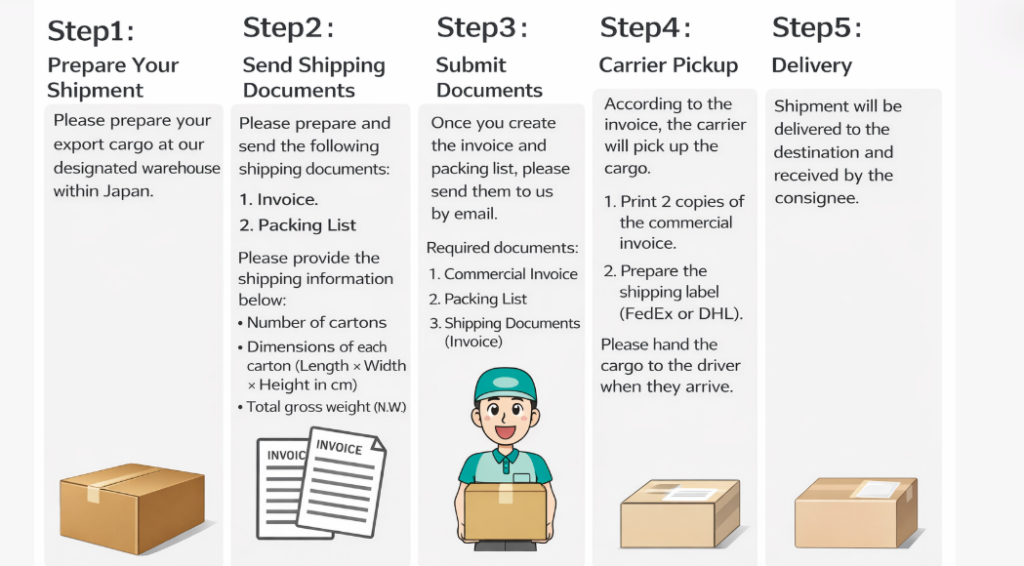
Step 1: Prepare the shipment
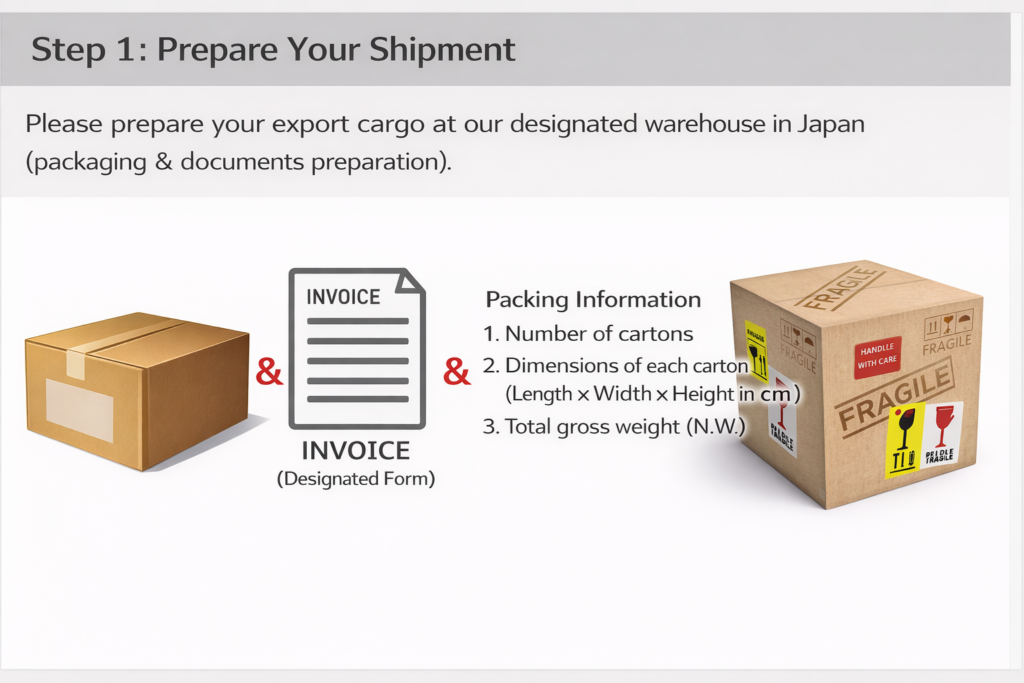
Prepare the shipment at the domestic pickup location (packing & document preparation).
Step 2: Email the shipment documents (invoice and packing information) to us.
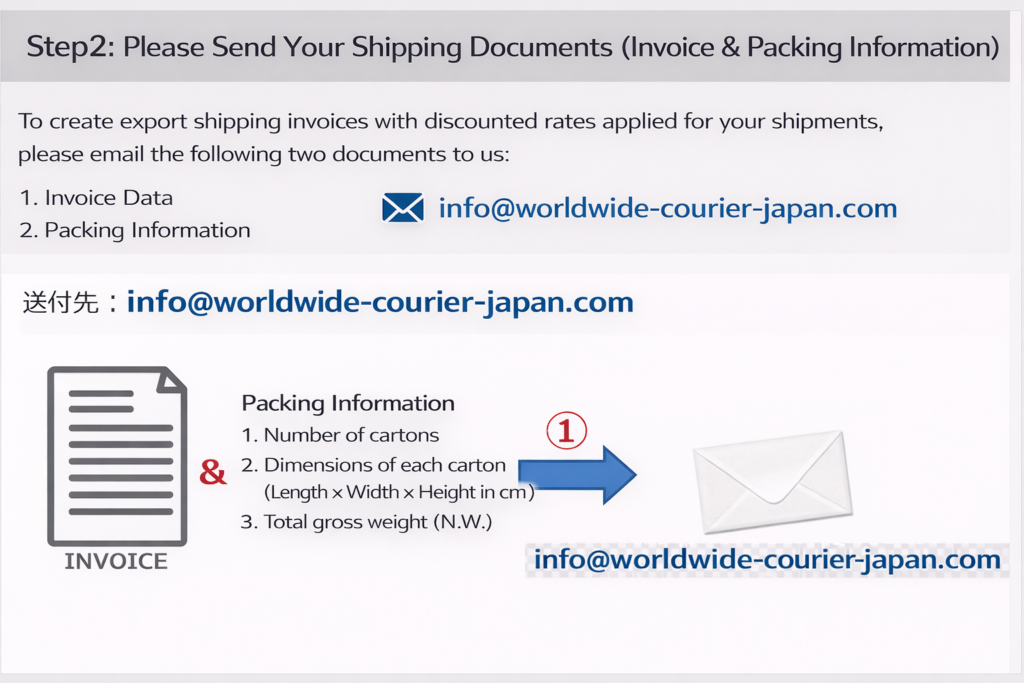
We will create the shipping documents using the special discounted rate provided for each customer. Please email the following two documents as attachments to our office.
1. “Invoice”
2. “Packing List”
Send to: info@worldwide-courier-japan.com
< Items that often end up missing on the invoice >
1. Postal code (shipper side)
2. Contact person name (shipper side)
3. Pickup phone number (shipper side)
※ The above three items are required to create the documents.
If any of this information is missing, we cannot create the documents, so please confirm in advance and submit your request accordingly.
< Required information on the packing list >
1. Total number of cartons
2. The three dimensions of each carton: length (cm), width (cm), height (cm)
3. Total weight (N.W.): total weight after packing
※ In some cases, the packing list lacks the above information. As it is required for document creation, please confirm in advance before requesting.
※ If you do not have a packing list, please confirm the above information with the shipper and share it with us.
< About “Chargeable Weight” used to determine shipping fees >
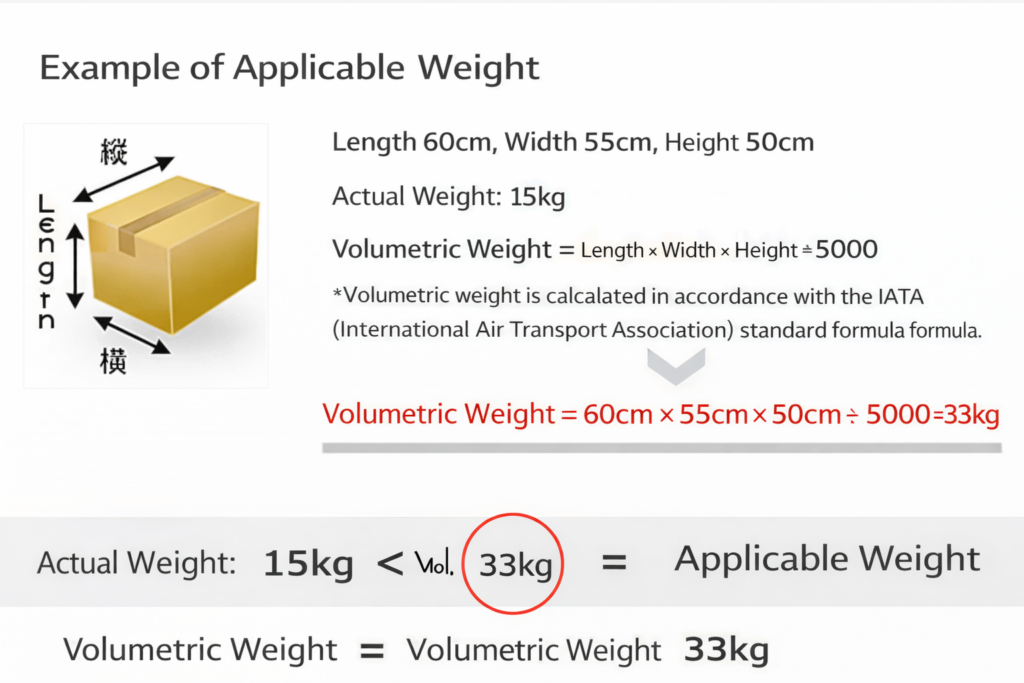
Based on IATA (International Air Transport Association) standards, the larger of the “actual weight after packing” and the “dimensional (volumetric) weight after packing” is adopted as the “chargeable weight.”
Step 3: We email two required documents for shipment (air waybill and invoice) to your shipper.
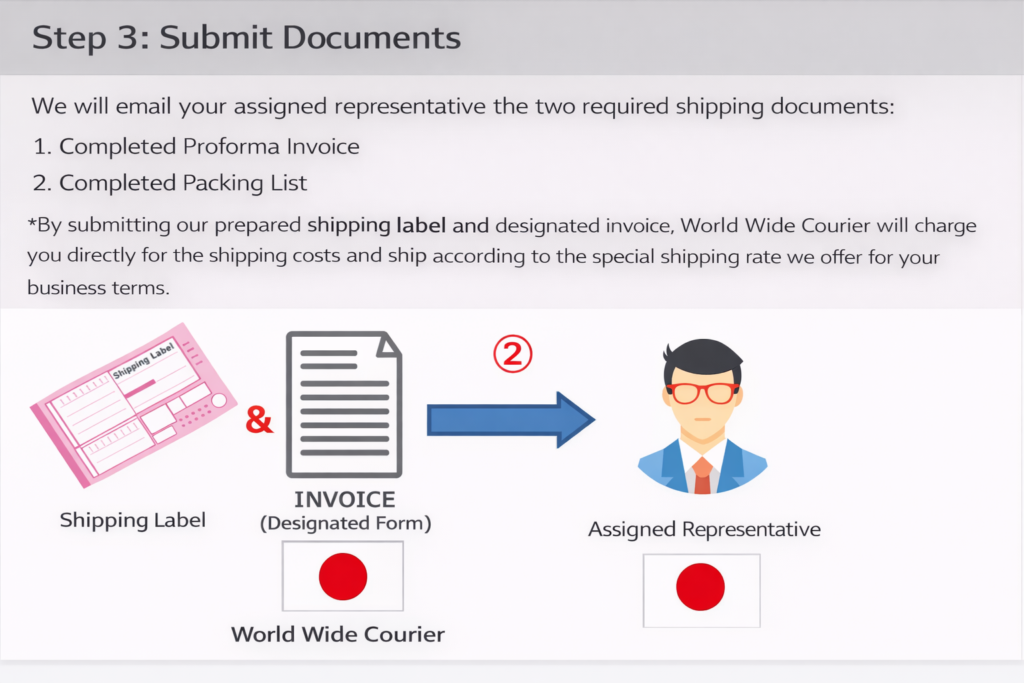
We will email two required documents for shipment (air waybill and invoice) to your 담당者.
1. Confirm any missing information in the “Invoice” and “Packing List” you provided.
2. Based on the above, we will prepare the “Air Waybill” and “Invoice (specified form)” on our side and email them to your 담당者.
※ By shipping using the “Air Waybill” and “Invoice (specified form)” created by us, the shipping charges will be billed to us. This enables you to ship using the applicable rate provided for each customer. Under your individual 거래 조건, we will invoice you for the shipping fees.
Step 4: The carrier picks up the shipment from the pickup location / domestic warehouse, and the shipment is dispatched
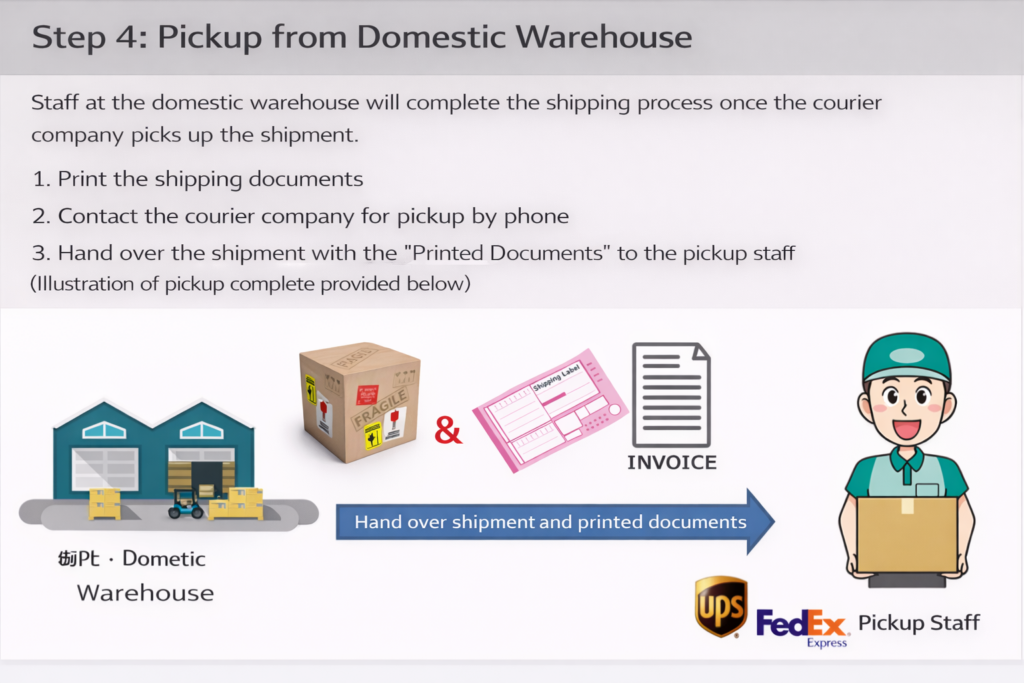
At the domestic pickup location:
1. Print the documents
2. Call the carrier to request pickup
3. Hand the “cargo” and the “two printed documents” to the pickup staff to complete dispatch
Step 5: Delivery and receipt of the cargo
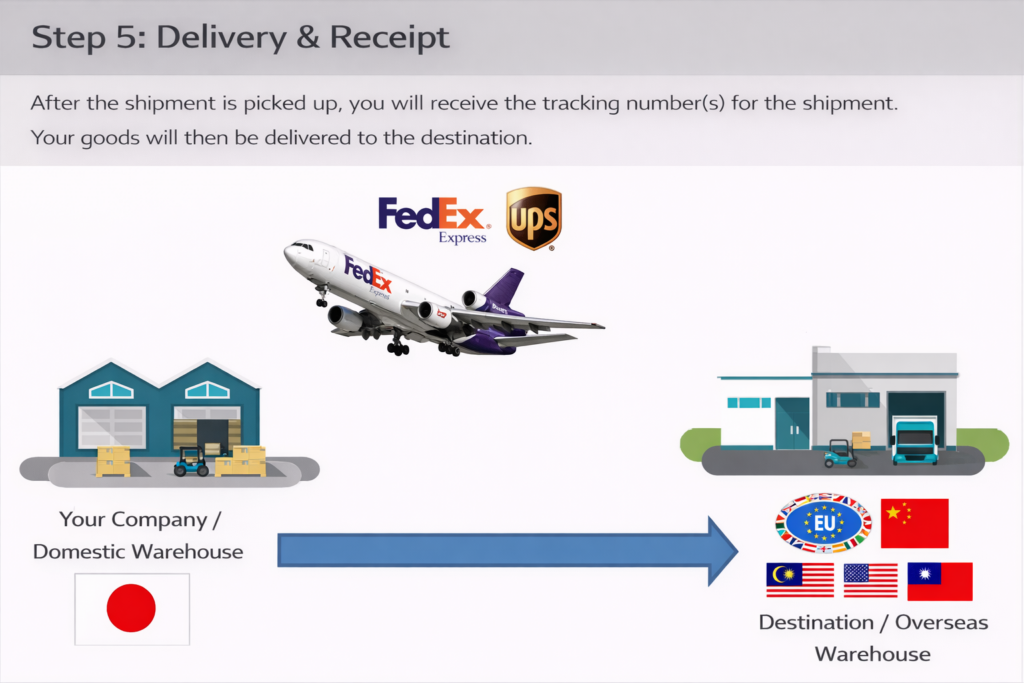
After dispatch, we will provide the tracking number. Your goods will then be delivered.
worldwide-courier provides low-cost delivery from Japan to the United States (U.S./USA) by air and sea. We support both exports and imports, so worldwide-courier reponce pls.
If you provide the information below, we can create the local shipping label.
Input format
◇ Pickup information (From)
1. Company name (or full name)
2. Contact person name
3. Postal code
4. Address
5. Phone number
※ This is the information for the location where the pickup will actually be made.
◇ Delivery address (To)
1. Company name (or full name) (※ Please 반드시 write in English.)
2. Contact person name (※ Please 반드시 write in English.)
3. Postal code
4. Address (※ Please 반드시 write in English.)
5. Phone number
◇ Packing information
1. Number of cartons
2. Total weight
3. Three dimensions of each carton (length, width, height in cm)
◇ Invoice information
・Product name (Please 반드시 write in English.)
・Unit price (Either currency is fine)
・Quantity
If you provide the above information, we can arrange the shipment. worldwide-courier offers low-cost delivery from Japan to the United States (U.S./USA) by air and sea. We support both exports and imports, so worldwide-courier reponce pls.
We look forward to your request.
Please let us know your current shipping frequency and shipping costs, if any.
Regarding your planned shipping date:
If you can also tell us around when you plan to ship, it will make the process smoother.
You can ship at the above rates.
For exports, we can create the shipping documents if you reply with the completed invoice as an attachment, or if you provide the information below.
◇ Pickup information (From)
1. Company name (or full name)
2. Contact person name
3. Postal code
4. Address
5. Phone number
※ This is the information for the location where the pickup will actually be made.
◇ Delivery address (To)
1. Company name (or full name) (※ Please 반드시 write in English.)
2. Contact person name (※ Please 반드시 write in English.)
3. Postal code
4. Address (※ Please 반드시 write in English.)
5. Phone number
◇ Packing information
1. Number of cartons
2. Total weight
3. Three dimensions of each carton (length, width, height in cm)
◇ Invoice information
・Product name (Please 반드시 write in English.)
・Unit price (Either currency is fine)
・Quantity
We will also guide you through the transaction flow.
Transaction flow (detailed version)
< Flow >
1. Please reply with the invoice.
2. If there are no issues with the information, we will book the pickup.
※ Pickup can be arranged as early as the next business day after your package is ready. (We typically book a window around 11:00–17:00.)
< Details: Export cargo transaction flow (Japan → destination country) >
The pickup process is as follows.
1. Please contact us after you finish packing your shipment.
2. Please prepare the invoice and packing information (number of cartons, weight, and three dimensions per carton).
※ 2-1. Shipper (Japan side): address, postal code, name, phone number, company name
2-2. Consignee (delivery destination): local address, postal code, name, phone number, company name
2-3. Product name and unit price
3. After we confirm (2) and there are no issues, we will arrange the pickup.
4. Within 1–2 business days, the carrier will come to your指定 location for pickup.
* We will email you the electronic data for the air waybill, so please hand the invoice and air waybill together with the package to the pickup staff.
5. Shipment is dispatched.
7. Local customs clearance processing (personal / commercial)
8. If there are no issues, the shipment clears customs.
9. Delivery is completed.
* Steps 5–8 typically take about 2–5 days to arrive if there are no issues.
* You will receive a tracking number as a shipment record.
Breakdown of Applicable Charges
1. Freight charges and fuel surcharge
2. Import duties, VAT/GST, customs clearance fees, and other local charges in the destination country, if applicable
The chargeable weight is calculated based on the larger of the actual weight and volumetric weight after packing.
Knowledge About Restricted and Prohibited Items
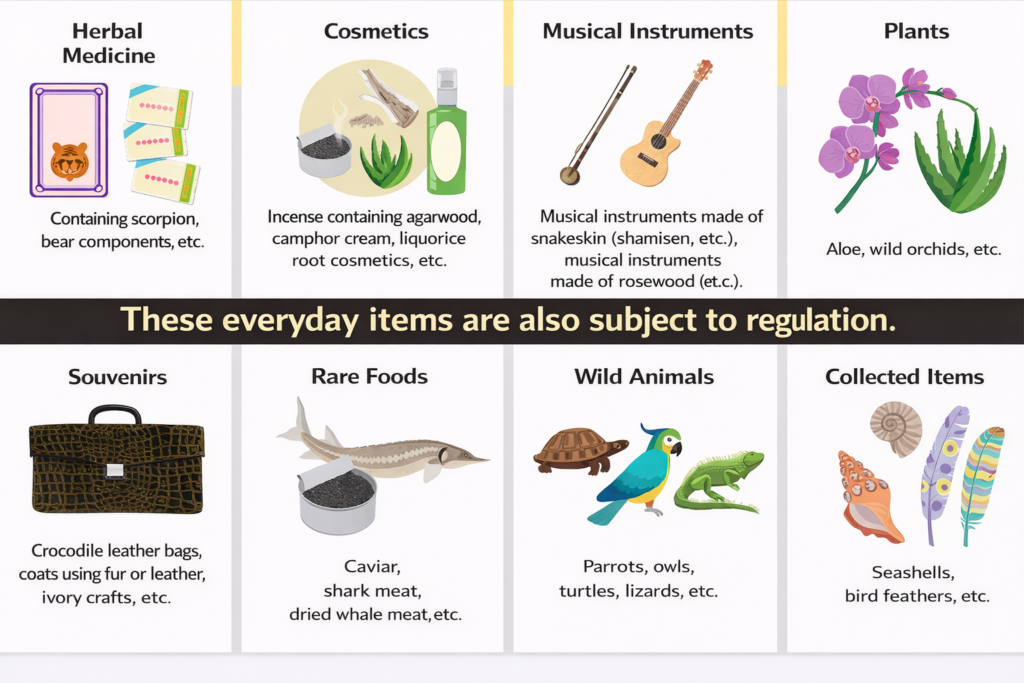
Certain items may be restricted or prohibited for international shipping depending on the destination country and carrier regulations. These may include dangerous goods, flammable materials, compressed gases, liquids, medicines, medical devices, firearms, tobacco products, perishables, seeds, plants, animals, chemicals, valuables, and CITES-regulated items.
In addition to the items listed above, other products may also be restricted depending on local import regulations. Some items may have shipping limitations, licensing requirements, or value restrictions.
Please contact us in advance if you are unsure whether your items can be shipped internationally from Japan.
That concludes our overview of international shipping from Japan to overseas destinations.
Choosing a Cost-Effective and Reliable Forwarding Service

When expanding into international markets, selecting an affordable yet dependable forwarding partner is crucial. A well-chosen Japan forwarding service can streamline pick-up from any location in Japan, consolidate shipments, and handle all export procedures, ensuring timely delivery to buyers overseas. This section provides practical strategies to reduce international shipping costs while maintaining high service quality, with a focus on the advantages of a one-stop forwarding solution that covers pickup, inspection, packing, shipping, and customs clearance.
Points to reduce international shipping costs
Strategic cost reduction starts with a clear understanding of the factors that influence international freight prices. Key considerations include carrier selection (air vs. sea), transit times, packaging efficiency, dimensional weight, and consolidated shipments. By partnering with a forwarding service that can optimize route planning and leverage bulk-rate pricing with airlines and carriers, clients can achieve significant savings. Additional savings come from:
– Flexible pickup options across Japan to minimize last-mile charges and maximize consolidation opportunities.
– Accurate product categorization and packaging optimization to reduce dimensional weight and damage risks.
– End-to-end logistics management, eliminating the need for multiple intermediaries and their markups.
– Access to groupage (LCL) or FCL strategies for ocean freight when volume permits, along with priority handling for time-sensitive items.
– Transparent, itemized quotes without hidden fees, enabling precise budgeting and comparison.
For ecommerce sellers, aligning fulfillment strategies with the forwarding service’s capabilities—such as direct drops to international fulfillment centers or Amazon FBA networks—can further trim costs while preserving delivery speed and reliability.
Reliability assessment and contract tips
Reliability is the cornerstone of a successful international shipment program. Here are practical criteria and contract tips to ensure you partner with a trustworthy forwarding service:
– Proven track record: Look for 10+ years of experience in cross-border logistics, with documented case studies across diverse industries, including electronics, fashion, and consumer goods.
– Comprehensive service scope: A true one-stop solution should cover pickup nationwide, inspection, packaging, shipping, customs clearance, and final delivery, reducing risk and complexity.
– Global network and compliance: Verify coverage to 200+ countries, clear knowledge of export regulations, and up-to-date certifications and compliance capabilities (product safety, labeling, and document accuracy).
– Transparent pricing and SLAs: Request a detailed service level agreement (SLA) outlining transit times, pickup windows, damage policy, insurance options, and escalation procedures. Ensure no surprise charges and a clear process for dispute resolution.
– Risk management and support: Confirm proactive damage prevention measures, professional packing standards, and accessible customer support with multilingual capabilities for international clients.
– Data and visibility: Seek real-time tracking, proactive status notifications, and documentation accessibility (invoices, packing lists, and customs documents) to maintain oversight throughout the journey.
– Insurance and liability terms: Understand coverage levels, deductibles, and the process for filing claims. A robust policy reduces financial exposure for high-value goods or fragile items.
– Flexibility for volume and seasonality: Ensure the provider can scale with peak seasons, offer warehousing or consolidation options, and adapt to changing import/export regulations without service disruption.
– Clear contract clauses: Include performance guarantees, remedies for delays or loss, termination rights, and transition plans to minimize business risk when switching providers.
By evaluating these criteria and negotiating a comprehensive contract, you can build a reliable, cost-efficient cross-border logistics program that supports growing international sales while safeguarding shipments from origin to destination.
Overseas Export Practical Q&A

Shipping from Japan to international destinations involves a mix of logistics, compliance, and market nuances. This section provides concise, actionable guidance to help overseas buyers, cross-border sellers, and Japanese suppliers navigate common issues and answers to frequently asked questions. The focus remains on a seamless, end‑to‑end Japan forwarding service approach, delivering reliable, cost-effective international shipments with professional support.
Common troubles and practical remedies
Across 해외(international) routes, several recurring challenges emerge. Here are the typical problems and effective remedies that a Japan forwarding service can offer to mitigate risk and expedite delivery.
1) Delays in pickup or transit
– Cause: Peak seasons, carrier capacity constraints, or incomplete paperwork.
– Remedy: Coordinate real-time pickup scheduling, use prioritized lanes for time-sensitive goods, and ensure all documents are accurate before submission to avoid hold-ups. Leverage a single point of contact for updates and proactive notification.
2) Customs clearance holdups
– Cause: Incomplete commercial documents, misclassified items, or restricted goods.
– Remedy: Prepare complete commercial invoices, packing lists, origin certificates, and HS codes. Engage experienced customs brokers to handle declarations and duty/tax optimization while ensuring compliance with destination country requirements.
3) Damaged or lost cargo
– Cause: Inadequate packaging, rough handling, or improper labeling.
– Remedy: Implement robust damage‑preventive packaging, apply clear handling marks, and secure insurance options. Include insurable value aligned with item risk and destination requirements.
4) Inventory or warehouse discrepancies
– Remedy: Conduct pre-shipment inspections, maintain accurate stock records, and perform post-shipment reconciliations. Use scannable identifiers and batch tracking to reduce mis-picks and mis-shipments.
5) Labeling and product compliance issues
– Remedy: Verify labeling for each destination (language, safety warnings, ingredient lists, and regulatory marks). Prepare translation-ready labels when needed and maintain updated compliance checklists for target markets.
6) Unexpected fees or surcharges
– Remedy: Obtain a transparent, itemized quote upfront. Monitor rate changes and confirm all line-haul, terminal, and documentation charges in advance. Discuss options for consolidating shipments to reduce per-unit costs.
7) Express needs vs. standard timelines
– Remedy: Define service level expectations in the contract, choose the appropriate shipping mode (air vs. sea), and use a route that balances speed and cost. Maintain contingency plans for expedited scenarios.
8) Issues with returns or reverse logistics
– Remedy: Establish clear return channels, pre-approved return destinations, and simple processes for reshipping or disposal. Align reverse logistics with regional regulations and duties handling.
9) Currency and payment friction
– Remedy: Use consistent invoicing in a preferred currency where possible, and offer escrow or letter-of-credit options for large corporate orders to minimize exchange risk and payment disputes.
10) Communication gaps with overseas partners
– Remedy: Use a dedicated account manager, provide multilingual documentation when necessary, and offer regular status updates via email or a customer portal. Establish escalation paths to resolve issues quickly.
Frequently asked questions and answers
Q1: What precisely does a Japan forwarding service include for international shipments?
A1: A comprehensive service covers pickup from a Japanese supplier or warehouse, consolidation if needed, export documentation, customs clearance (Japan and destination country), route optimization, insurance options, packaging, and final delivery to the overseas recipient or warehouse. It eliminates multiple handoffs and reduces total transit time and cost.
Q2: How can I reduce shipping costs when exporting from Japan?
A2: Benefits come from direct carrier pricing, consolidated shipments, and optimized routing. By avoiding multiple intermediaries, you save brokerage fees and handling charges. We tailor routes and modes (air or sea) to balance speed and cost for each order.
Q3: What documents are required for customs clearance?
A3: Typically, commercial invoice, packing list, bill of lading or airway bill, origin certificate if needed, HS codes, and product-specific certifications or safety documents. Precise requirements depend on the destination country and product type.
Q4: How is product compliance handled for different markets?
A4: We maintain up-to-date knowledge of regulatory labeling, safety standards, and restricted items for target markets. We verify labeling language, ingredient lists, and regulatory marks before shipment, and can provide translation and certification support where needed.
Q5: What happens if a shipment is delayed at customs?
A5: Our team communicates with customs brokers, provides missing documents promptly, and may adjust the route or shipping mode. We monitor the clearance process and keep you informed of any required actions to minimize delays.
Q6: Can you handle returns or reverse logistics from overseas?
A6: Yes. We define a clear reverse logistics flow, including return channels, inspection, refurbishing or disposal, and restocking if applicable. We coordinate outbound and inbound movements to streamline reverse processes.
Q7: How is insurance managed?
A7: We offer cargo insurance options based on the value and risk profile of the goods. Insurance can cover loss, damage, and shortages during transit. Coverage details are clarified in the service agreement.
Q8: Are there restrictions on certain products for export from Japan?
A8: Some items may face export controls, dual-use restrictions, or destination-specific prohibitions. Our team verifies product eligibility and ensures compliant handling and documentation to avoid sanctions or seizures.
Q9: How long does it typically take to export goods to overseas destinations?
A9: Transit times vary by mode and destination. Sea shipments may take weeks; air shipments are faster but costlier. We optimize routes and handling to meet target delivery dates while keeping you informed of any changes.
Q10: How do I get a quote or start a shipment?
A10: You can submit details through our inquiry page, and a dedicated account manager will provide a tailored quote and timeline. We offer end-to-end support from pickup in Japan to final delivery overseas, ensuring a smooth, transparent process.